





What's Happening?
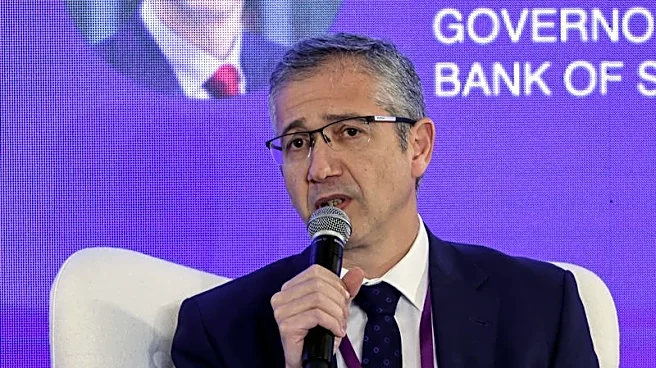
Pablo Hernández de Cos, the general manager of the Bank for International Settlements (BIS), is reportedly set to become the next president of the European Central Bank (ECB). This appointment, which follows the backing of a majority of eurozone governments
and the withdrawal of support for rival candidate Klaas Knot, is expected to take effect on February 7. Hernández de Cos is known for his critical stance on stablecoins, which he articulated at the Jackson Hole Economic Symposium. He has argued that stablecoins, in their current form, are not a credible means of payment at scale and has expressed concerns that widespread adoption of U.S. dollar-backed stablecoins could undermine monetary sovereignty and weaken domestic monetary policy transmission. Conversely, he has shown greater receptiveness to central bank digital currencies (CBDCs), advocating for a digital euro to foster payment innovation and protect Europe's monetary sovereignty.
Why It's Important?
The potential leadership of Pablo Hernández de Cos at the ECB carries significant implications for the future of digital currencies and monetary policy, particularly in the U.S. and global financial landscape. His skepticism towards stablecoins, especially those backed by the U.S. dollar, suggests a potential push for stricter regulations or alternative digital payment systems within the eurozone. This could impact the global adoption and utility of U.S. dollar-backed stablecoins, potentially limiting their reach and influence. His support for a digital euro, on the other hand, could accelerate the development and implementation of CBDCs, setting a precedent that other major economies, including the U.S., might feel compelled to follow. This shift could lead to increased competition in the digital currency space and influence the strategic decisions of U.S. financial institutions and policymakers regarding their own digital currency initiatives.
What's Next?
Following his anticipated appointment, Pablo Hernández de Cos is expected to lead the ECB's digital euro project, with a pilot phase planned for 2027 and a potential launch in 2029, pending legislative approval. This timeline suggests that the ECB will be a frontrunner in the global CBDC race, potentially influencing the pace and direction of similar initiatives in the U.S. and other countries. His leadership will likely involve continued advocacy for the digital euro and a critical assessment of stablecoins, which could shape regulatory frameworks and market dynamics for digital assets. The U.S. financial sector and policymakers will be closely observing these developments, as the ECB's actions could necessitate strategic responses to maintain competitiveness and address potential impacts on the U.S. dollar's international role.
Beyond the Headlines
The impending leadership of Pablo Hernández de Cos at the ECB highlights a broader global debate about the future of money and the role of central banks in a rapidly digitizing economy. His views underscore the tension between privately issued digital assets like stablecoins and state-backed digital currencies. The concern that U.S. dollar-backed stablecoins could undermine monetary sovereignty in other nations raises fundamental questions about financial globalization and national control over economic policy. This development could accelerate a global trend towards CBDCs, potentially leading to a more fragmented digital currency landscape where different regions adopt their own digital currencies, each with distinct policy objectives and regulatory frameworks. This could have long-term implications for international trade, cross-border payments, and the stability of the global financial system.