






What's Happening?
Pony Ma Huateng, the founder of Tencent, has commissioned the Róng Museum of Art in Shenzhen, China, as a private venture with a public mission. Designed by architect Ole Scheeren of Buro Ole Scheeren, the 4,500-square-meter facility is part of the larger
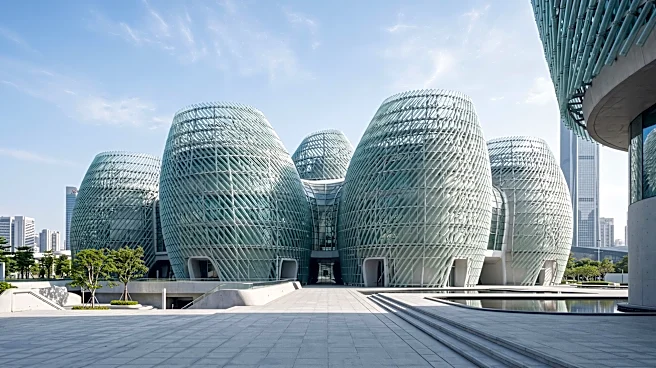
Houhai Hybrid Campus, a mixed-use development by Tenova Future. The museum, set to open next year, aims to be a cultural hub in Shenzhen, a city rapidly developing its cultural infrastructure. Scheeren designed the museum to be visually enticing and permeable, with five acorn-shaped pavilions that lift exhibition spaces to the third floor, creating a public plaza at ground level. The building's unique cladding of parametrically designed glass tubes is intended to diffuse sunlight and enhance environmental performance, while also serving as a communicative layer.
Why It's Important?
The Róng Museum of Art represents a significant contribution to Shenzhen's cultural landscape, a city that is actively building its public cultural component. Unlike many private museums that focus on personal collections, this institution is designed with a public mission, aiming to make a cultural contribution to the wider city. This initiative by a prominent tech figure like Pony Ma highlights a growing trend of private investment in public cultural infrastructure, particularly in rapidly developing urban centers. The museum's design, which prioritizes public engagement and accessibility, challenges traditional museum models by creating an inviting and interactive space. Its integration within a mixed-use development also reflects a broader urban planning strategy that combines living, working, leisure, and cultural elements into cohesive ecosystems.
What's Next?
The Róng Museum of Art is slated to open next year, with high-profile curator Pi Li leading the institution. Its success will depend on its ability to attract and engage the public in a city that does not have a long history of museum-going. The museum's design, which dedicates nearly half of its floor area to other uses like retail, is intended to ensure constant public activity and financial viability, especially given the challenges faced by other private art museums in China. The project also signals a continued trend of tech companies investing in civic infrastructure, with other Buro Ole Scheeren projects for tech firms in Shenzhen, such as Tencent Helix and Shenzhen Wave, also incorporating cultural and public spaces.
Beyond the Headlines
This development reflects a maturing mindset among tech leaders regarding their contributions to urban development. Unlike earlier tech campuses that were often insular, these new projects integrate cultural venues and public spaces into the heart of the city, fostering a more holistic urban environment. The Róng Museum of Art's emphasis on public mission over private collection ownership also suggests a shift in philanthropic approaches within the tech industry. The architectural choices, such as manufacturing glass tubes in China to reduce ecological footprint and tailoring designs to local capabilities, highlight a conscious effort towards sustainable and regionally integrated development. This project could serve as a model for how private entities, particularly those from the tech sector, can contribute to the cultural and civic fabric of rapidly growing cities.