



What's Happening?
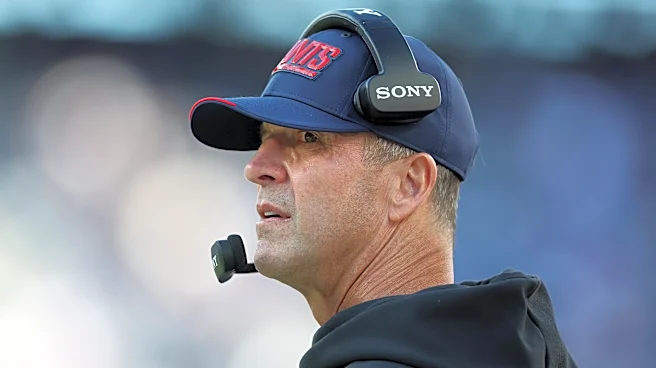
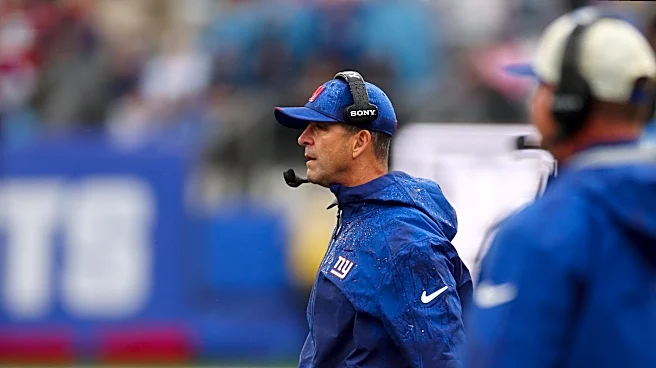
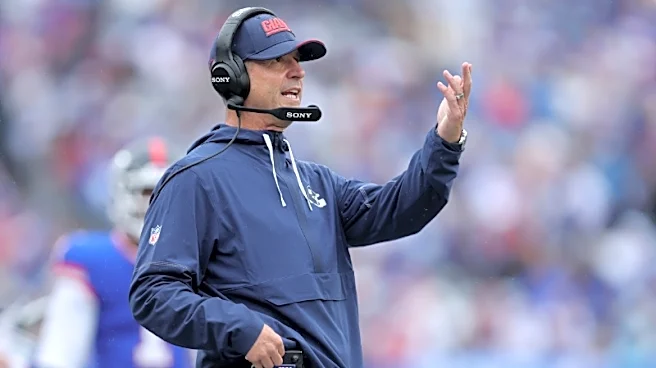
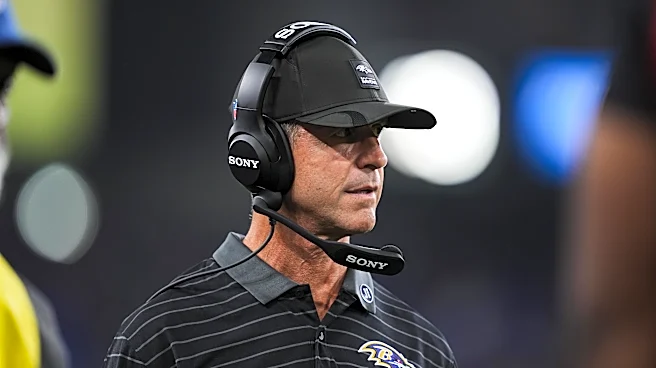
New York Giants head coach John Harbaugh confirmed he directly contacted Tennessee Titans owner Amy Adams Strunk as part of the team's efforts to explore trade options, specifically for defensive lineman Jeffery Simmons. This move, which bypassed traditional
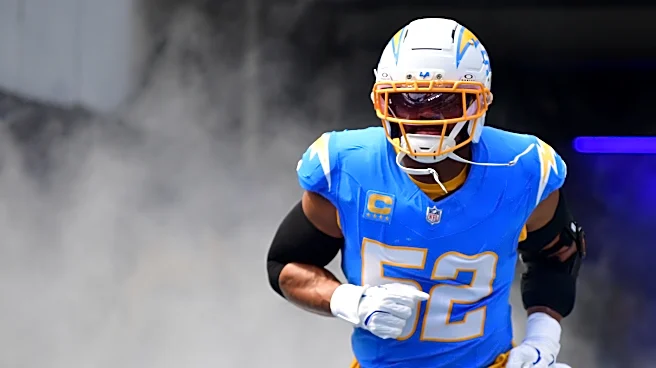
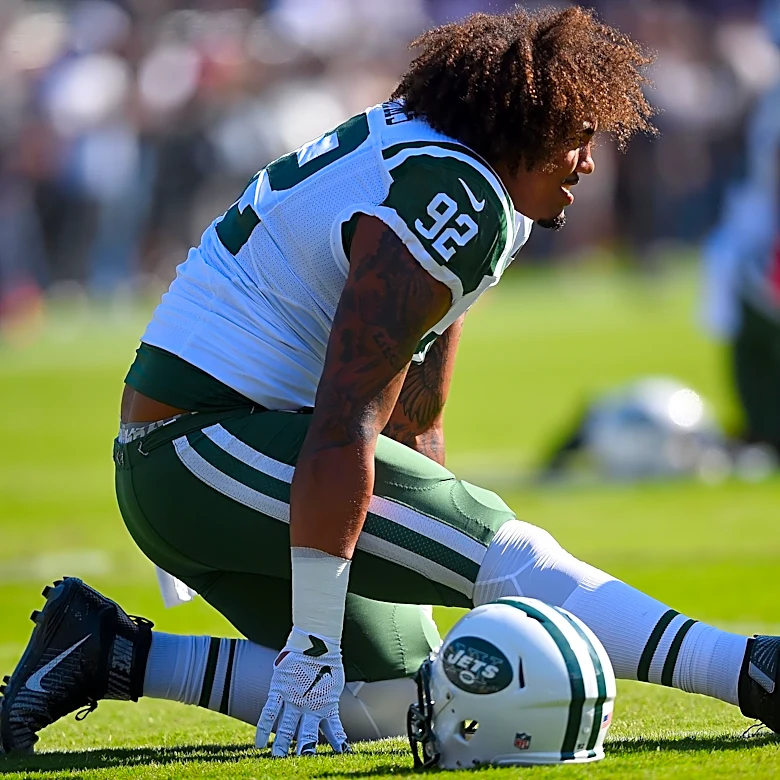
general manager-to-general manager communication, drew anonymous criticism within the league. Harbaugh, however, dismissed the criticism, stating that the Giants are not bound by informal restrictions on who can communicate during trade discussions. He emphasized that the organization is 'turning over every stone' and is open to conversations at all levels to improve the team. According to Jonathan Jones of The Athletic, this direct outreach occurred after Titans general manager Mike Borgonzi had reportedly rebuffed Giants GM Joe Schoen regarding Simmons. Simmons was ultimately traded to the Chicago Bears.
Why It's Important?
This incident highlights a potential shift or challenge to established communication protocols within the National Football League (NFL) during trade negotiations. While direct owner-to-owner or coach-to-owner communication might be seen as unconventional, Harbaugh's defense suggests a more aggressive and less formal approach to team building. This could set a precedent for other teams to bypass traditional channels if they feel their general managers are being stonewalled. For the Giants, it underscores their commitment to being 'aggressive' in the trade market, indicating a strong desire to acquire talent to bolster their roster, especially as they contend for the NFC East title. The outcome of the Simmons trade, with him going to the Bears, also shows that even direct high-level intervention doesn't guarantee a deal, but it does signal a team's intent.
What's Next?
While the specific trade for Jeffery Simmons did not materialize for the Giants, Harbaugh's public stance indicates that the team will continue to pursue all avenues for player acquisition, regardless of traditional etiquette. Other NFL teams and executives will likely observe how this direct communication strategy impacts future trade deadlines and inter-team relations. It could lead to more direct high-level engagement in future negotiations, or it might reinforce the importance of established general manager roles. The Giants will continue to focus on their current season, with Harbaugh stating that trade discussions are not his primary focus during the bye week, but rather supporting GM Joe Schoen in making the team better.
Beyond the Headlines
The controversy surrounding Harbaugh's call touches upon the unwritten rules and professional etiquette that govern interactions in highly competitive environments like the NFL. While formal rules dictate many aspects of the league, informal norms often dictate how business is conducted. Harbaugh's willingness to challenge these norms, and his public justification, could be interpreted as a strategic move to gain an advantage or simply a reflection of his belief in a more direct, results-oriented approach. This situation also raises questions about the power dynamics between owners, general managers, and head coaches in player personnel decisions, and how those dynamics might evolve in an increasingly aggressive and competitive league landscape.