







What's Happening?
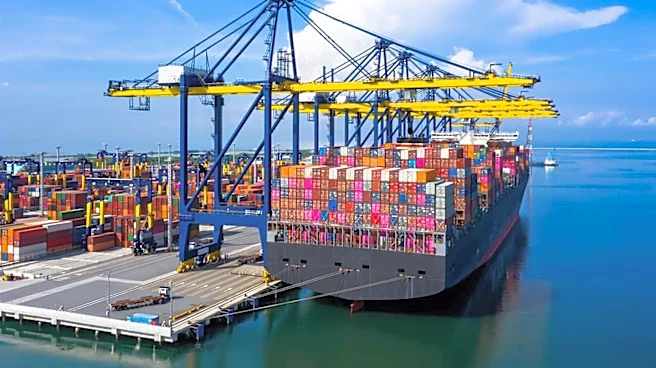
Global commerce is experiencing persistent disruptions due to shifting trade policies, geopolitical tensions, port congestion, and labor shortages, making traditional supply chain models unsustainable. A new report by DP World and Supply Chain Dive, titled
'How Retailers Are Rewiring Supply Chains to Handle Rising Costs, Risks and Uncertainty,' surveyed 100 retail supply chain leaders. The research indicates that 95% of these leaders consider disruption to be extremely or very important to their organizations. Furthermore, 57% reported experiencing transportation bottlenecks or port congestion in 2025. In response to these challenges, 60% of respondents are adjusting inventory management practices due to tariffs and changing trade policies, while 80% are diversifying or changing suppliers to mitigate material and component shortages. The focus has shifted from simply recovering from disruptions to building supply chains that can adapt as events unfold, emphasizing flexibility over predictability.
Why It's Important?
The shift in retail supply chain strategy from efficiency to adaptability has significant implications for the U.S. economy and consumers. Traditional models, which prioritized cost control and just-in-time inventory, left businesses vulnerable to interruptions. The current approach, focusing on dynamic routing, supplier diversification, and integrated logistics, aims to enhance resilience. This means that while costs might initially increase due to more complex networks, the goal is to ensure product availability and stability in the face of ongoing global uncertainties. For U.S. industries, this translates to a need for greater investment in supply chain technology and partnerships. Consumers may experience more stable product availability but could also face price adjustments as companies absorb the costs of building more resilient, albeit more complex, supply chains. The emphasis on diversification also suggests potential shifts in global trade patterns and increased demand for domestic or near-shore suppliers.
What's Next?
Retailers are expected to continue investing in strategies that enhance supply chain flexibility and resilience. This includes further adjustments to inventory management, continued diversification of suppliers, and optimization of transportation routes to manage costs and tariff impacts. The report highlights that 74% of retail supply chain leaders are already adjusting routing due to tariffs, and 53% are optimizing routes for cost management. This trend suggests a sustained focus on strategic transportation capabilities. Collaboration across the logistics ecosystem, including integrated logistics partners, will become increasingly crucial for coordinating warehousing, distribution, and accessing alternative solutions during disruptions. The future will likely see more interconnected supply chains, where the ability to adapt quickly to unforeseen events will be a key competitive advantage for businesses.
Beyond the Headlines
The ongoing transformation of retail supply chains reflects a deeper systemic shift in global commerce, moving away from a singular focus on cost-efficiency towards a more holistic view of risk management and adaptability. This evolution has ethical and strategic dimensions. Ethically, it prompts questions about fair labor practices and environmental sustainability across diversified supply networks, as companies seek new partners. Strategically, it could lead to a re-evaluation of globalization, with a potential increase in regionalized supply chains to reduce geopolitical risks and transportation vulnerabilities. The long-term implications include a potential reshaping of international trade agreements and a greater emphasis on domestic manufacturing capabilities, impacting employment and industrial policy within the U.S. The ability of businesses to navigate this complex landscape will determine their long-term viability and influence broader economic stability.