





What's Happening?
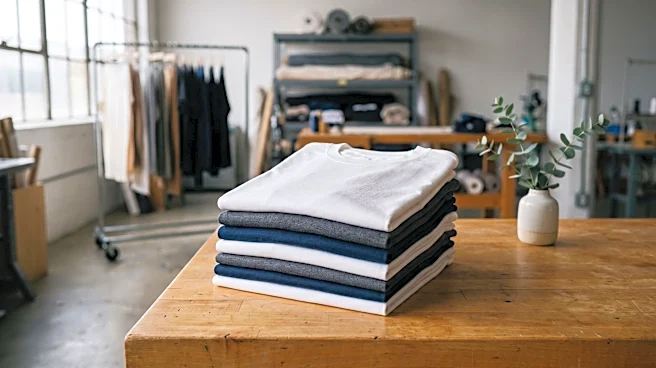
Lonely Kids Club, a Sydney-based fashion label, has implemented a print-to-order production model to combat waste in the fashion industry. Founded in 2011 by Warwick Levy, the company produces graphic tees and other garments only after a customer places
an order. This approach contrasts with the traditional fashion model, which involves mass-producing items based on future demand predictions. By holding blank garments and printing designs only upon purchase, Lonely Kids Club avoids accumulating unsold inventory, which often leads to discounted stock or garments that are never worn. The company emphasizes that this method allows them to offer a wider range of designs, including niche items, without the risk of overproduction. While acknowledging that their process is not entirely impact-free, as blank garments are sourced overseas, the printing, finishing, checking, packing, and shipping are all conducted in-house in Artarmon, Australia. This ensures quality control and reduces the environmental footprint associated with traditional manufacturing.
Why It's Important?
This shift to a print-to-order model by Lonely Kids Club highlights a growing trend in the fashion industry towards more sustainable and ethical practices. The traditional fashion cycle, characterized by seasonal collections and speculative production, contributes significantly to textile waste and environmental pollution. By adopting a made-to-order approach, companies can drastically reduce their unsold inventory, thereby minimizing waste and the resources consumed in producing unwanted goods. This model also empowers smaller brands to offer unique and diverse designs without the financial risk associated with large-scale production runs. For consumers, it means access to more personalized and ethically produced clothing, albeit with potentially longer waiting times. The transparency in production, as practiced by Lonely Kids Club, also sets a precedent for greater accountability within the industry, encouraging other brands to re-evaluate their supply chains and production methods.
What's Next?
The success and visibility of brands like Lonely Kids Club could inspire more fashion companies, particularly smaller and independent labels, to adopt similar print-to-order or made-to-order production models. This could lead to a broader industry shift towards more sustainable manufacturing practices, driven by both consumer demand for ethical products and the economic benefits of reduced waste. As technology advances, such as improved digital printing and supply chain management, the efficiency and scalability of these models are likely to increase, making them more accessible to a wider range of businesses. Furthermore, increased consumer awareness about the environmental impact of fast fashion may put pressure on larger corporations to explore and integrate similar waste-reduction strategies, potentially leading to a more sustainable and responsible global fashion industry.
Beyond the Headlines
The print-to-order model represents a fundamental challenge to the established norms of the fashion industry, which has long prioritized speed and volume over sustainability. This approach not only addresses environmental concerns but also fosters a more intimate relationship between producers and consumers, where each garment is made with a specific buyer in mind. It encourages a move away from disposable fashion towards more thoughtful consumption and production. Ethically, it promotes fair labor practices by allowing for in-house production and better oversight of working conditions, as seen with Lonely Kids Club's control over its Artarmon studio. This model could also lead to a resurgence of local manufacturing and craftsmanship, reducing reliance on overseas factories and their often-opaque supply chains. Ultimately, it signifies a potential paradigm shift towards a more circular and responsible economy within the fashion sector.