
What's Happening?
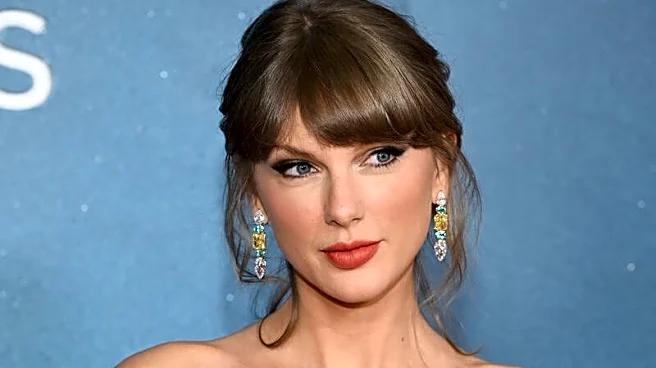
Vanity Fair has published an article titled 'The Mastermind,' written by May Jeong, which profiles an unnamed pop star. The piece refers to its subject only as 'The Star' and 'The Mastermind,' and a music
executive quoted in the article compares her to Regina George from 'Mean Girls.' Despite the anonymity, numerous clues within the article, such as the star's birth in Reading, Pennsylvania, in 1989, signing with a Nashville record label, and a recent marriage using a specific phrase, strongly suggest the subject is Taylor Swift. The article, which claims to be based on interviews with over 100 people, presents a 'B Side' perspective, portraying the star as a 'combination of victim and victimizer' and 'punitive,' according to anonymous sources and former friends. It also references reported fallouts with other artists and her decision not to invite Blake Lively to her July wedding.
Why It's Important?
This Vanity Fair article is significant due to its potential impact on Taylor Swift's public image and the broader media landscape. As one of the most influential figures in music, any critical portrayal of Swift can generate substantial public and industry reaction. The use of anonymity for the subject, while providing plausible deniability for the publication, has led to widespread speculation and strong reactions from Swift's fanbase and media critics. This situation highlights the ethical considerations of journalistic practices, particularly regarding anonymous sourcing and the potential for biased narratives in celebrity profiles. The article's reception could influence how future celebrity journalism is conducted and how publications balance investigative reporting with potential backlash from devoted fan bases. It also underscores the power of celebrity narratives in shaping public perception and the challenges of maintaining a consistent public image.
What's Next?
The immediate aftermath of the Vanity Fair article has seen significant pushback from Taylor Swift's fans, who have criticized the profile as 'petty,' and from media critics, who have questioned its journalistic integrity. Chris Willman of Variety described the publication day as 'a bad day for journalism,' citing the reliance on anonymous sources and the limited number of on-the-record quotes. Neither Taylor Swift, May Jeong, nor Vanity Fair has publicly commented on the piece. The long-term impact will depend on whether the narrative presented in 'The Mastermind' gains traction beyond the initial controversy or if it is largely dismissed by the public. This event could lead to further discussions within the media industry about the standards for celebrity profiles and the use of anonymous sources, especially when targeting highly public figures.
Beyond the Headlines
Beyond the immediate controversy, 'The Mastermind' article touches upon deeper themes concerning celebrity culture, media ethics, and the construction of public narratives. The article's attempt to present a 'B Side' to a beloved pop star's image reflects a broader societal fascination with uncovering perceived flaws or hidden truths about public figures. This practice often blurs the lines between legitimate critique and speculative character assassination, raising questions about the responsibility of media outlets. The strong reaction from fans also highlights the intense parasocial relationships between celebrities and their audiences, where any perceived attack on the idol is met with fierce defense. This incident could contribute to ongoing debates about the nature of fame, the pressures faced by celebrities, and the evolving role of journalism in an era dominated by social media and fan engagement.