







What's Happening?
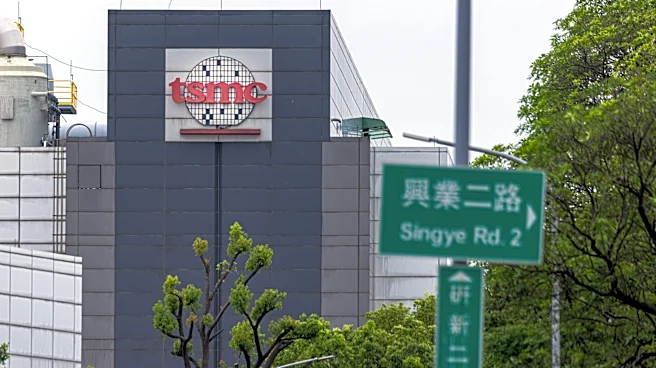
Taiwan Semiconductor Manufacturing Co. (TSMC) reported a significant increase in its October revenue, which rose by 60% to NT$586.9 billion ($17.9 billion). This growth outpaced the 51% growth seen in the September quarter and aligns with Bloomberg analysts'
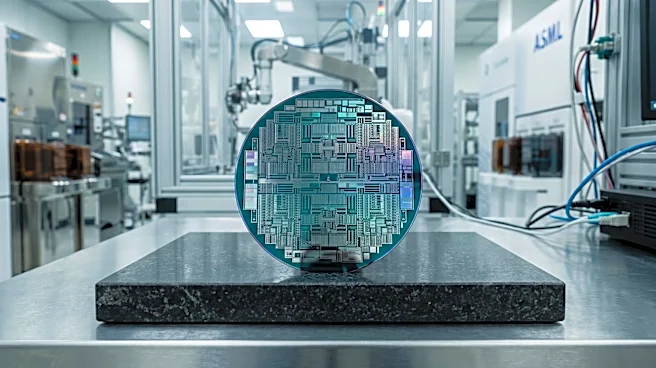
expectations of 63% growth for the current quarter. TSMC, a crucial chipmaker for companies like NVIDIA and Apple, is benefiting from robust demand for advanced semiconductors, particularly those used in artificial intelligence. Despite this positive financial news, TSMC's stock experienced volatility, partly due to a report suggesting NVIDIA might slow its chip orders and broader market fluctuations in the semiconductor sector.
Why It's Important?
TSMC's strong revenue performance highlights the booming demand for advanced chips, especially those powering artificial intelligence, which is a critical driver for the U.S. technology sector. As the primary foundry for leading U.S. tech companies, TSMC's financial health and production capacity directly impact the supply chain and innovation capabilities of American firms. The potential for NVIDIA to slow chip orders, however, introduces an element of uncertainty, as NVIDIA is a major customer. Such shifts could affect TSMC's future revenue and, consequently, the availability and pricing of high-end chips for the U.S. market, influencing everything from consumer electronics to data center infrastructure.
What's Next?
The semiconductor market is expected to remain dynamic, with TSMC's performance closely watched as an indicator of broader industry trends. The company's continued investment in advanced manufacturing processes will be crucial for meeting the escalating demand for AI chips. Any confirmed slowdown in orders from major clients like NVIDIA could lead to adjustments in TSMC's production plans and potentially impact its revenue forecasts. Conversely, other companies like AMD and AVGO might step in to utilize any freed-up capacity. The ongoing geopolitical considerations and the need for supply chain diversification will also continue to shape TSMC's strategic decisions and its interactions with U.S. partners.
Beyond the Headlines
The interplay between TSMC's impressive revenue growth and the market's reaction to potential order adjustments from a key client like NVIDIA reveals the intricate and often volatile nature of the global semiconductor industry. This situation underscores the delicate balance between technological advancement, market demand, and geopolitical factors. For the U.S., the reliance on a single foreign entity for critical chip manufacturing poses strategic challenges related to economic security and technological sovereignty. The continuous evolution of AI and other advanced technologies will only intensify this dynamic, pushing for greater diversification and resilience in the global chip supply chain.