





What's Happening?
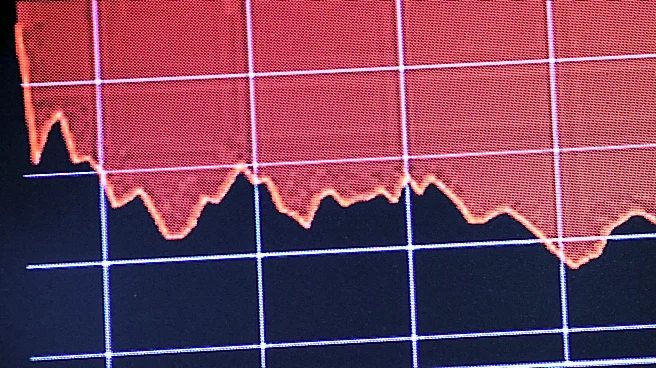
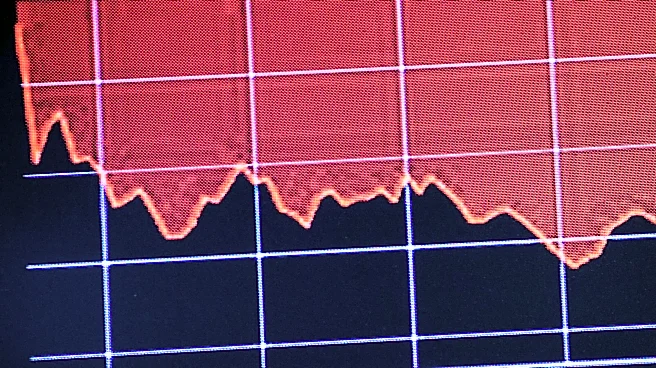
Micron Technology (NASDAQ:MU) shares have experienced a significant decline, falling approximately 47% from their record high of $1,213.56 on June 25 to roughly $647. This drop occurs despite the memory chipmaker's profits continuing to grow, driven by
demand for artificial intelligence (AI) related products. Analysts' average estimates project substantial growth in per-share earnings, with around $175 expected in fiscal 2027 and about $205 in fiscal 2028. However, investors appear to be anticipating the conclusion of the current memory boom. Hewlett Packard Enterprise, a major memory buyer, forecasts that memory supply will not ease before the second half of 2028, indicating a prolonged shortage. Micron plans to increase capital spending in fiscal 2027 and expects new production facilities in Idaho and New York to commence operations in late 2028 and 2030, respectively.
Why It's Important?
The significant decline in Micron Technology's stock, despite strong current earnings driven by AI demand, highlights investor concerns about the cyclical nature of the memory chip industry. This volatility can impact U.S. technology and financial markets, as Micron is a key player in semiconductor manufacturing. The anticipated increase in memory supply by late 2028 and 2030, with new plants in Idaho and New York, could lead to a shift in market dynamics, potentially affecting pricing and profitability across the sector. While multiyear customer agreements might offer some stability, the historical pattern of boom-and-bust cycles in memory chip earnings suggests that even robust demand from AI may not fully insulate companies from future downturns. This situation could influence investment strategies in the broader tech industry, with investors potentially favoring companies with more diversified revenue streams or less exposure to cyclical markets.
What's Next?
Micron Technology is set to increase its capital spending in fiscal 2027, with new production facilities in Idaho expected to begin operations in late 2028 and a New York factory in 2030. These expansions are intended to address the ongoing memory shortage, which Hewlett Packard Enterprise anticipates will last until the second half of 2028. The influx of new supply could potentially alter market conditions, leading to a more balanced supply-demand environment. Investors will be closely watching Micron's earnings reports for fiscal 2027 and 2028, where analysts project significant per-share earnings growth. However, the historical cyclicality of the memory market suggests that a subsequent downturn could follow the current boom, potentially impacting Micron's stock performance and profitability in the long term, despite multiyear customer agreements designed to cushion such events.
Beyond the Headlines
The current situation with Micron Technology underscores a broader challenge within the semiconductor industry: balancing rapid innovation and demand, particularly from emerging fields like AI, with the inherent cyclicality of manufacturing and supply. The substantial investment in new production facilities in Idaho and New York reflects a strategic commitment to meet future demand, but also carries the risk of oversupply if market conditions shift unexpectedly. This dynamic highlights the complex interplay between technological advancement, capital expenditure, and market speculation. The reliance on multiyear customer agreements by Micron suggests an attempt to mitigate some of this risk, indicating a potential shift towards more stable demand forecasting in a historically volatile sector. The long-term implications could include a more mature and less volatile memory market, or conversely, a continuation of boom-and-bust cycles, albeit with larger swings due to the scale of current investments and AI-driven demand.