



What's Happening?
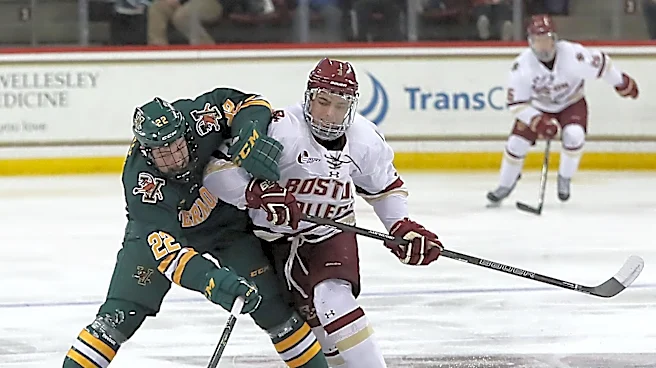
The U.S. Collegiate Selects (USCS) have finalized their front office and support staff for the upcoming 2026 Spengler Cup in Switzerland. This announcement follows the earlier naming of the coaching staff and the near completion of the player roster.
The newly appointed staff comprises 12 individuals representing all six NCAA Division I hockey conferences, as well as independent teams. Steve Metcalf, Commissioner of Hockey East, will return as General Manager, a role he held when the USCS achieved a runner-up finish in 2025. Sean Hogan, Executive Director of College Hockey Inc., will serve as Assistant General Manager. Other key appointments include Doug Christiansen and Michelle Morgan as Senior Advisors, Chris Meriney as Director of Team Operations, and David Berard as Video Coach/Hockey Operations. The support staff also includes an equipment manager, strength and conditioning coach, athletic trainer, communications director, social media manager, and video/photography personnel. These individuals hail from various U.S. collegiate institutions, bringing a wide range of experience to the team.
Why It's Important?
The comprehensive assembly of experienced personnel for the U.S. Collegiate Selects underscores a significant commitment to competitive performance at an international level. By drawing staff from across all major NCAA Division I hockey conferences, the USCS aims to leverage diverse expertise and foster a cohesive team environment. This initiative provides a unique platform for collegiate hockey players to gain international exposure and experience, potentially enhancing their professional prospects. The participation and performance of the USCS in the Spengler Cup can elevate the profile of U.S. collegiate hockey on the global stage, attracting more talent to the NCAA system and increasing its prestige. A strong showing could also inspire greater interest and investment in collegiate hockey programs nationwide, benefiting student-athletes and the sport as a whole. The continuity in leadership, with Metcalf returning as General Manager, suggests a strategic approach to building upon past successes and refining operational efficiency for future tournaments.
What's Next?
With the front office and support staff now in place, the U.S. Collegiate Selects will focus on finalizing their roster, which is currently at 20 players, with additional announcements expected soon. The team is scheduled to open play at the 2026 Spengler Cup on Saturday, December 26, against Frölunda HC of Sweden, followed by a match against host HC Davos on either December 27 or December 28. The staff will be instrumental in preparing the players for these international competitions, managing logistics, player welfare, and media relations throughout the tournament. Their collective efforts will aim to optimize player performance and team cohesion in a high-stakes international environment. The performance of the USCS at the Spengler Cup will be closely watched by collegiate hockey enthusiasts, scouts, and professional organizations, potentially influencing future opportunities for the participating players and staff.
Beyond the Headlines
The meticulous selection of staff for the U.S. Collegiate Selects reflects a broader trend in sports organizations to professionalize all aspects of team management, from on-ice performance to off-ice support. This holistic approach is crucial for maximizing athlete potential and ensuring competitive readiness in elite tournaments. The collaboration among various collegiate institutions and conferences for this national team highlights a spirit of unity within U.S. college hockey, transcending traditional rivalries for a common goal. This collaborative model could serve as a blueprint for other collegiate sports to form national representative teams, fostering greater development and exposure for student-athletes. Furthermore, the experience gained by these staff members in an international setting can contribute to the overall advancement of coaching, training, and administrative practices within their respective collegiate programs, creating a positive feedback loop for the sport's growth in the U.S.