







What's Happening?
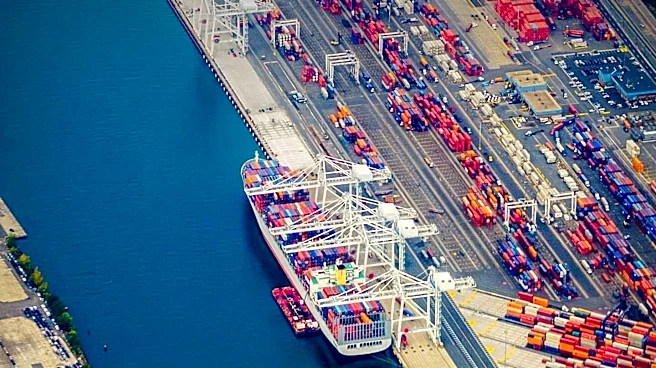
Kazakhstan is actively pursuing a strategic partnership with the Port of Antwerp-Bruges to bolster trade along the Middle Corridor, also known as the Trans-Caspian International Transport Route. This initiative was highlighted by President Kassym-Jomart
Tokayev at the Belgium-Kazakhstan Business Council in Astana, attended by King Philippe and Queen Mathilde of Belgium. Kazakhstan is making significant investments in its railway, road, seaport, and terminal infrastructure along this route, which connects China with Europe via Kazakhstan, the Caspian Sea, and the South Caucasus. The goal is to leverage Belgium's expertise as a major European logistics hub to facilitate wider market access for Kazakh metals, petrochemicals, and agricultural products through its Caspian ports of Aktau and Kuryk. King Philippe expressed Belgium's support for closer links between the Middle Corridor and European logistics networks. Discussions at the business council also addressed practical challenges, such as coordinating handovers between numerous companies and authorities involved in the route, with digitization identified as a key solution to reduce transit times.
Why It's Important?
This partnership is crucial for enhancing the efficiency and economic viability of the Middle Corridor, offering an alternative to traditional East-West trade routes. For the U.S. and its allies, a more robust and diversified global supply chain, less reliant on single points of failure or geopolitical chokepoints, contributes to economic stability and resilience. Kazakhstan's efforts to streamline trade and attract foreign investment, particularly from a key European logistics player like the Port of Antwerp-Bruges, could lead to increased trade volumes and reduced transit times for goods moving between Asia and Europe. This development could also indirectly benefit U.S. businesses by providing more efficient and secure routes for international trade, potentially lowering costs and improving delivery times for goods. Furthermore, Kazakhstan's role as a producer of critical raw materials, supplying 21 of the 34 raw materials deemed critical for European industry, underscores the strategic importance of such partnerships in securing vital resources for global manufacturing and technology sectors.
What's Next?
Negotiations between Kazakhstan and the Port of Antwerp-Bruges are ongoing, with concrete results anticipated in the near future. The focus will be on establishing a formal partnership that links the Kazakh Caspian ports with Antwerp-Bruges, aiming to open wider markets for Kazakh products. Further efforts will concentrate on addressing the practical challenges of the Middle Corridor, particularly through enhanced digitization to improve coordination among the various entities involved in shipments. Kazakhstan plans to continue its investments in infrastructure to increase overall freight volumes along the route, targeting 10 million tonnes. The visit of King Philippe and Queen Mathilde of Belgium is expected to further deepen ties between the two nations, potentially leading to more agreements in logistics, agriculture, artificial intelligence, and critical raw materials, building on the 17 agreements already signed during the forum.
Beyond the Headlines
The development of the Middle Corridor and Kazakhstan's strategic partnerships extend beyond immediate economic gains, touching upon broader geopolitical and environmental implications. By offering an alternative to traditional routes, the Middle Corridor contributes to diversifying global trade arteries, potentially reducing reliance on routes that may be subject to geopolitical instability or congestion. This diversification can enhance global supply chain resilience, a lesson learned from recent disruptions. Environmentally, more efficient logistics and potentially reduced transit times could lead to a lower carbon footprint per shipment, depending on the modes of transport utilized and the overall optimization of the route. The emphasis on critical raw materials also highlights the increasing global competition for these resources, making strategic partnerships vital for securing supply chains for advanced technologies and green energy initiatives. The long-term success of the Middle Corridor will depend on sustained international cooperation, investment, and the ability to overcome complex logistical and bureaucratic hurdles.