






What's Happening?
The government has implemented stock limits on raw jute for balers, stockists, traders, and jute mills. This measure, announced by the Ministry of Textiles on Saturday, November 28, 2026, through an order from the Jute Commissioner, aims to improve raw jute availability,
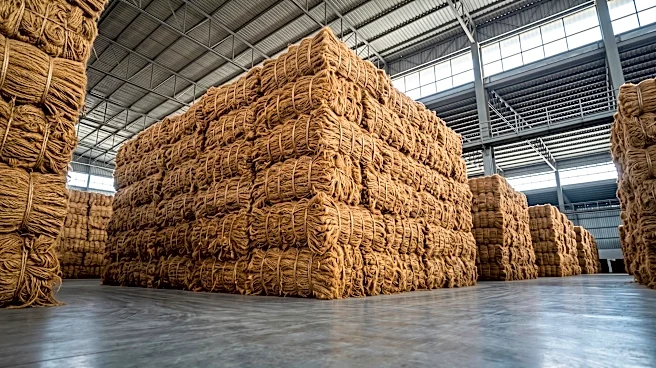
prevent market manipulation, and protect the industry from production and employment disruptions. Registered raw jute balers with baling presses can now hold a maximum of 1,000 quintals, while other registered stockists are limited to 100 quintals. Unregistered entities or those failing to submit stock returns via the Jute SMART portal face a five-quintal limit. Jute mills and manufacturing units are permitted to maintain stocks equivalent to 90 days of consumption. Entities exceeding these limits must sell and deliver surplus stock by December 10, 2026, and suspend new purchases until their inventories comply. Fortnightly stock declarations are now mandatory through the Jute SMART portal. Violations can lead to imprisonment, fines, and confiscation under the Essential Commodities Act, 1955, with authorized officials empowered to inspect premises and seize stocks.
Why It's Important?
This intervention is crucial for stabilizing the raw jute market, which has experienced price volatility and speculative increases. Such fluctuations can severely impact the production and employment within the jute industry, affecting both farmers and manufacturers. By imposing stock limits, the government aims to ensure a consistent and adequate supply of raw jute to mills, thereby maintaining production levels and safeguarding jobs. This move also seeks to protect consumers from inflated prices of jute goods. The previous reduction of stock limits to zero in April and their subsequent withdrawal in July highlight the ongoing challenges in managing raw jute supply and demand. The current measures are a direct response to these persistent issues, demonstrating the government's commitment to preventing hoarding and ensuring fair market practices. The enforcement mechanisms, including inspections and penalties, underscore the seriousness of this regulatory action.
What's Next?
Entities in the jute supply chain must immediately comply with the new stock limits. Those holding excess raw jute have until December 10, 2026, to sell off their surplus and cease new purchases until their stock levels are within the prescribed limits. All registered entities are now required to submit fortnightly stock declarations through the Jute SMART portal, ensuring ongoing transparency and monitoring. The Jute Commissioner and state police officials will actively enforce these restrictions through inspections and record examinations. The effectiveness of these measures will be observed in the coming weeks and months, with the government likely monitoring raw jute prices and availability to assess the impact. Continued price stability and consistent supply to mills will be key indicators of success. Non-compliance will result in legal consequences, including potential imprisonment and fines, reinforcing the need for strict adherence across the industry.
Beyond the Headlines
The government's decision to impose stock limits on raw jute reflects a broader strategy to manage essential commodities and prevent market distortions. This approach is often employed in sectors critical to the national economy and employment, where supply chain stability is paramount. The use of the Essential Commodities Act, 1955, highlights the legal framework available to the government for intervening in markets to protect public interest. This action also underscores the delicate balance between free market operations and regulatory oversight, particularly in agricultural commodities. The repeated interventions, including previous reductions and withdrawals of stock limits, suggest an adaptive policy response to evolving market conditions. This situation could set a precedent for similar interventions in other commodity markets facing volatility, emphasizing the government's role in ensuring equitable distribution and preventing speculative practices that harm producers and consumers alike.