
What's Happening?
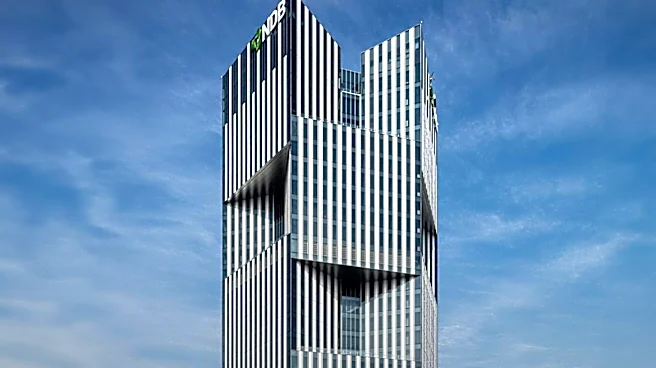
The XRP Ledger has begun carrying fund records for a Brazilian financial-market operator, CSD BR, which oversees over 22 trillion reais (approximately $4 trillion) in registered assets. CSD BR, responsible
for regulated registration, securities-depository, and settlement systems in Brazil, is utilizing the public blockchain to maintain a secondary record of ownership for investment funds managed by BTG Pactual, Latin America's largest investment bank. This initiative aims to streamline the reconciliation process, which traditionally involves banks verifying their records against the depository's, a procedure that can be slow and costly. While the existing CSD BR database remains the official record, fund shares deposited with CSD BR will also be tokenized on the XRP Ledger.
Why It's Important?
This integration of the XRP Ledger into Brazil's financial infrastructure holds significant implications for the U.S. and global financial technology landscape. It demonstrates a practical application of blockchain technology to enhance efficiency and transparency in traditional financial systems. For U.S. financial institutions and technology providers, this case study could serve as a model for adopting similar blockchain solutions to improve their own reconciliation processes, reduce operational costs, and mitigate risks associated with discrepancies in record-keeping. The tokenization of fund shares on a public blockchain also highlights a growing trend towards digital assets and distributed ledger technology in managing conventional securities, potentially influencing future regulatory approaches and market practices in the U.S. and internationally.
What's Next?
The success of this implementation in Brazil could pave the way for similar blockchain adoptions in other financial markets, including the U.S. Financial institutions and regulators will likely observe the outcomes, particularly regarding the efficiency gains and security enhancements. This development may encourage further exploration into how blockchain can be used for various financial operations, such as asset tokenization, cross-border payments, and real-time settlement. The Brazilian securities regulator's task force, with its 60-day deadline for a tokenization proposal, indicates a proactive approach to integrating digital assets into the financial system, which could set a precedent for other nations, including the U.S., to accelerate their own blockchain initiatives and regulatory frameworks.
Beyond the Headlines
The use of the XRP Ledger for maintaining a secondary record of fund ownership signifies a deeper shift in how financial data is managed and verified. It moves beyond the traditional centralized model, introducing a distributed and immutable ledger that can enhance trust and reduce the potential for fraud or errors. This technological advancement could lead to a more interconnected and efficient global financial ecosystem, where reconciliation processes are automated and near-instantaneous. Furthermore, the tokenization of fund shares on a public blockchain raises questions about the future of asset ownership and transfer, potentially democratizing access to investment opportunities and creating new forms of digital securities that are more liquid and transparent. This could fundamentally alter the operational paradigms for custodians, asset managers, and investors worldwide.