




What's Happening?
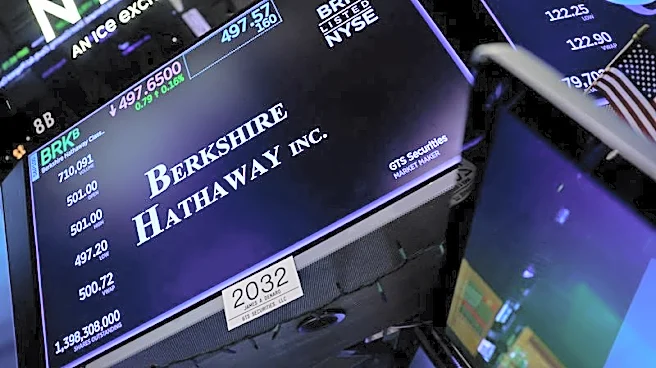
Berkshire Hathaway reported mixed financial results for the third quarter of 2026, with revenue reaching US$105.6 billion but net income falling to US$22.1 billion, a 28% decrease from the previous year. Operating earnings also declined by 5.8% to $12.7
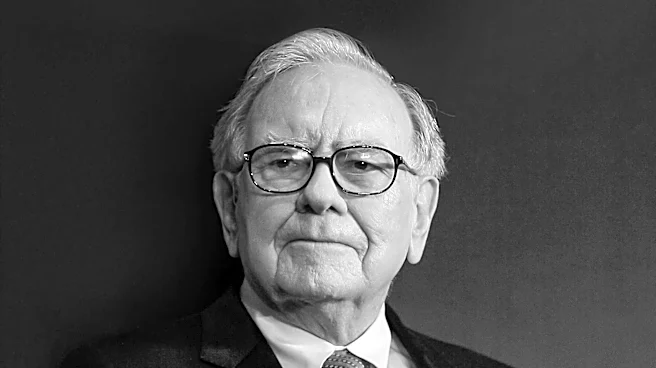
billion, primarily due to a 43% drop in insurance underwriting profit. This decline was attributed to increased losses and underwriting expenses at its auto insurer, Geico, and a 14% decrease in insurance net investment income due to lower short-term interest rates. Despite these pressures, Berkshire Hathaway completed a record US$9.6 billion in share repurchases during the quarter, bringing the total for the year to US$14.4 billion. The company's cash pile grew to US$377.4 billion by the end of September, exceeding its stock portfolio. These results mark a significant period as Greg Abel has formally taken over as Warren Buffett's operational successor, with investors closely scrutinizing his initial performance.
Why It's Important?
Berkshire Hathaway's third-quarter results are significant as they provide the first major financial report under the formal operational leadership of Greg Abel, Warren Buffett's successor. The mixed performance, particularly the decline in net income and operating earnings, highlights the challenges of managing a vast conglomerate with diverse holdings in a dynamic economic environment. The substantial share buybacks, despite the earnings pressure, indicate management's belief that Berkshire's stock is undervalued, a move that can influence investor confidence and capital allocation strategies across the market. The growth of the company's cash reserves to a record US$377.4 billion also signals a cautious approach, potentially positioning Berkshire for future strategic acquisitions or as a hedge against economic uncertainties. As Berkshire Hathaway's performance is often viewed as a bellwether for the broader U.S. economy due to its wide range of businesses, these results offer insights into the health of various sectors, from insurance to transportation and energy. The market's reaction to these results will be crucial in shaping perceptions of Abel's leadership and the company's future trajectory.
What's Next?
Going forward, the market will closely observe how Greg Abel and his management team address the pressures on operating and insurance earnings. Strategies to improve underwriting profitability at Geico and other insurance units will be critical. The deployment of Berkshire Hathaway's substantial cash pile will also be a key focus, with investors anticipating potential large-scale acquisitions or continued share repurchases. Abel's ability to balance capital returns with strategic investments will define his early tenure. The company's performance in sectors like utilities, housing, and long-duration equity stakes will be monitored for their contribution to overall earnings. Analysts will also be looking for signs of how Berkshire Hathaway integrates new technologies, such as artificial intelligence, into its diverse operations to drive future growth. The ongoing evaluation of Abel's leadership will depend on his capacity to navigate market volatility and deliver consistent value, while upholding the company's long-standing investment principles.
Beyond the Headlines
The narrative surrounding Berkshire Hathaway's third-quarter results extends beyond mere financial figures, delving into the complexities of leadership succession and the interpretation of corporate performance. The decline in net income, largely due to accounting rules for unrealized gains and losses on investments, underscores a point Warren Buffett has frequently made: short-term market fluctuations can distort the true operational health of a company. This highlights a broader challenge in financial reporting, where mandated metrics may not always align with long-term value creation. The record share buybacks, alongside a growing cash pile, reflect a strategic tension between returning capital to shareholders and retaining liquidity for future opportunities. This situation prompts a deeper consideration of how large, diversified conglomerates manage capital in an evolving economic landscape. Ultimately, the market's assessment of Greg Abel's leadership will not solely rest on quarterly numbers but on his ability to maintain Berkshire's core values and strategic vision in the long run, demonstrating resilience and adaptability in a post-Buffett era.