






What's Happening?
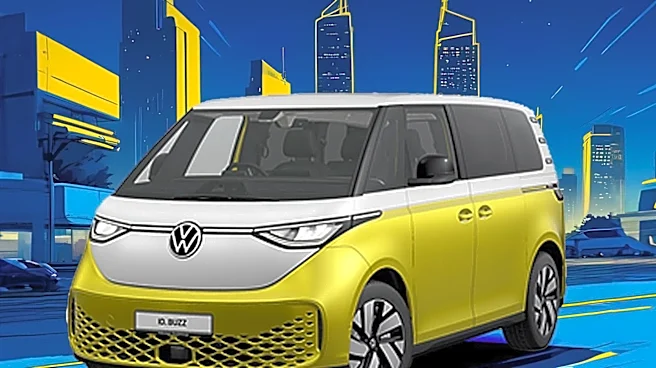
Volkswagen Commercial Vehicles has commenced production of the long-wheelbase ID. Buzz Cargo at its Hanover plant. This new variant expands Volkswagen's electric van lineup by offering increased cargo space, addressing a key demand from fleet customers.
The stretched van provides 4.4 cubic meters of cargo volume and has a starting price of €48,490 (approximately US$53,339) in Germany before VAT. The load length has been extended by 250 mm, adding 0.5 cubic meters of volume and allowing a Euro pallet to fit through the sliding doors, with a second sliding door now standard. The vehicle is available with an 86 kWh battery, offering 210 kW (286 PS) with rear-wheel drive or 250 kW (340 PS) with all-wheel drive, and boasts a towing capacity of 1,800 kg. The Hanover plant, employing 11,000 staff, produces all ID. Buzz versions, including the Multivan and California models.
Why It's Important?
The introduction of the long-wheelbase ID. Buzz Cargo is a significant step for Volkswagen in strengthening its position in the electric commercial vehicle market. This model directly addresses the need for more electric load space, which is crucial for businesses and fleets transitioning to electric vehicles. For the U.S. market, while this specific model is launching in Germany, it signals Volkswagen's commitment to expanding its electric commercial vehicle offerings globally. Increased electric van options can help accelerate the adoption of EVs in commercial sectors, contributing to reduced emissions and potentially influencing logistics and delivery services. The success of such models could encourage further investment in electric commercial vehicle infrastructure and development in the U.S., benefiting businesses seeking sustainable transportation solutions.
What's Next?
Production of the long-wheelbase ID. Buzz Cargo is now underway, with the model joining existing output at the Hanover plant. Volkswagen Commercial Vehicles anticipates strong demand from business customers who require reliable electric vehicles tailored to their operational needs. The latest ID. software integrated into the vehicle includes standard one-pedal driving and optional Travel Assist with traffic light recognition. An optional PowerSocket adapter also allows external devices to be powered from the charging port, enhancing utility for trades working on site. Future plans include an ID. California Cruise camper, further diversifying the ID. Buzz range.
Beyond the Headlines
This development underscores the growing trend of electrification in the commercial vehicle sector, moving beyond passenger cars. The focus on practical features like increased cargo volume and external power options highlights a deeper understanding of commercial user needs. The ability to integrate new models with minimal changes to existing production lines, as noted by Plant Manager Stefan Depka, demonstrates manufacturing flexibility and efficiency in adapting to market demands. This strategic expansion into electric commercial vehicles reflects a broader industry shift towards sustainable logistics and could influence urban planning and infrastructure development to support electric fleet operations in major U.S. cities.