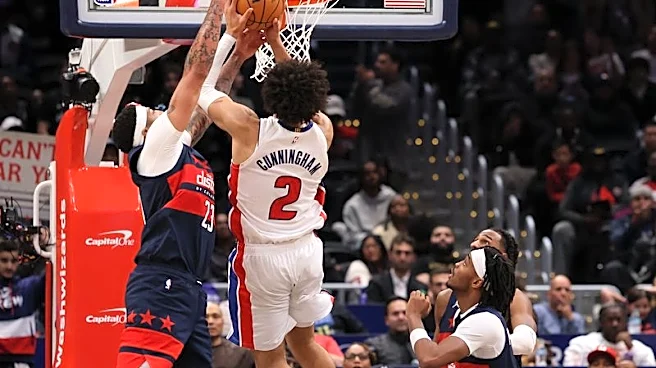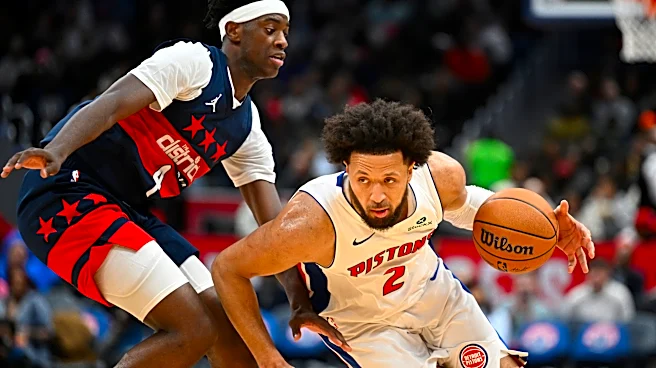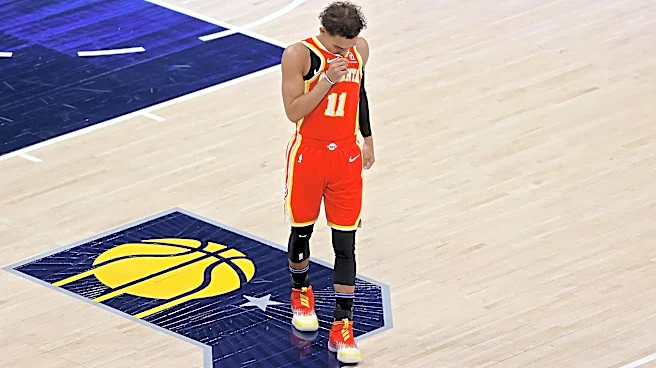

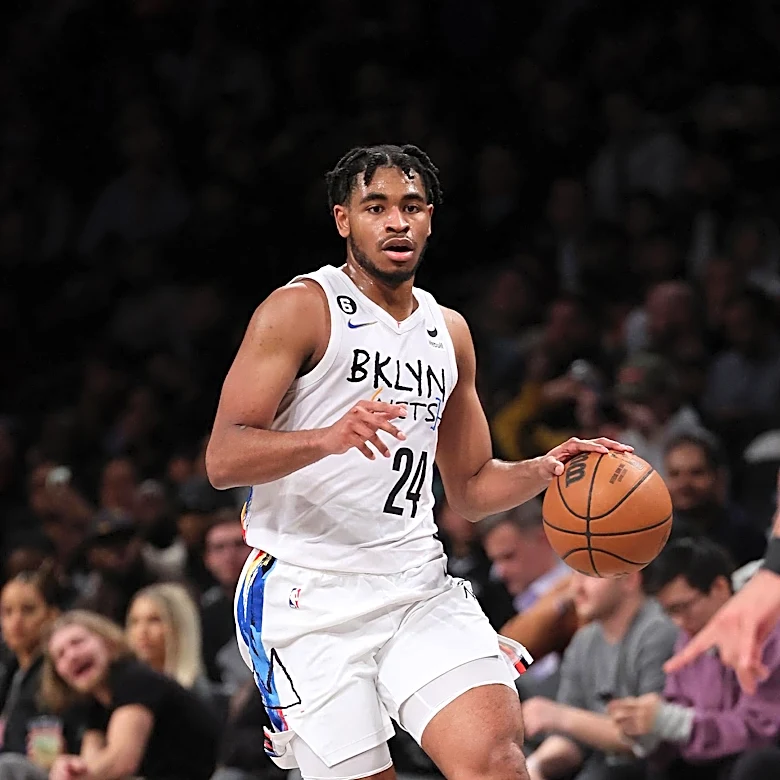
What's Happening?
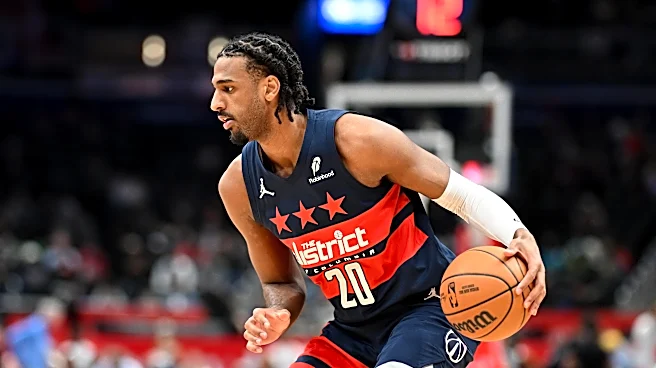
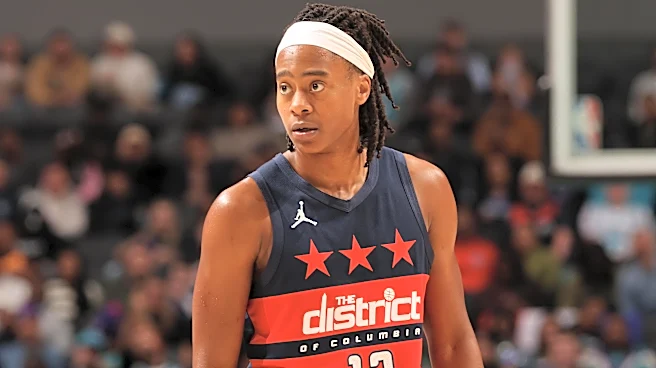
Washington Wizards guard Trae Young is experiencing a significant early-season slump, impacting the team's performance. Through 12 games of the 2026-27 season, Young is averaging 18.3 points, 3.2 rebounds, and 8.3 assists per game, which is notably below
his career averages of 24.9 points and 9.7 assists. His shooting efficiency has been particularly poor, with 40.0% from the field and an underwhelming 29.6% from three-point range. This inefficiency is contributing to the Wizards' struggles, as they currently hold a 4-8 record and are in 12th place in the Eastern Conference after a five-game losing streak. Despite the presence of other talented players like Anthony Davis and AJ Dybantsa, the team has not met expectations. Young's performance in pick-and-roll situations, a strength of his, has also been less effective, with him averaging nearly 3.1 turnovers per game. The team's overall offensive schemes are also under scrutiny, as they rank low in field goals attempted and made.
Why It's Important?
Trae Young's current struggles are significant for the Washington Wizards, as he was acquired with the expectation of being a franchise cornerstone and a floor general to elevate the team. His diminished scoring and shooting efficiency directly impact the team's offensive output and overall competitiveness. The Wizards' investment in Young, highlighted by his four All-Star appearances and an All-NBA selection, suggests a long-term commitment that could be jeopardized if his performance does not improve. The team's inability to capitalize on pick-and-roll opportunities, despite Young's skill in that area and the presence of quality big men, points to deeper systemic issues within the offensive strategy. This situation could lead to increased pressure on the coaching staff to adjust schemes or on Young to adapt his game, potentially affecting team morale and future roster decisions. The contrast with his former team, the Atlanta Hawks, who appear to be thriving without him, further amplifies the importance of his current performance for the Wizards' trajectory.
What's Next?
The immediate future for Trae Young and the Washington Wizards will likely involve a concerted effort to address his shooting slump and the team's offensive inefficiencies. The coaching staff may explore adjustments to their offensive schemes to better utilize Young's playmaking abilities and integrate him more effectively with other key players like Anthony Davis. Young himself will need to work on improving his shooting percentages and reducing turnovers to regain his previous form. Continued poor performance could lead to increased scrutiny from fans and media, potentially impacting his confidence and the team's overall dynamic. The Wizards face a challenging schedule, and their ability to turn the season around will heavily depend on Young's resurgence and the team's collective ability to find a cohesive offensive identity. Decisions regarding strategic changes or player roles may become more pressing if the losing streak continues.
Beyond the Headlines
Beyond the immediate on-court performance, Trae Young's slump raises broader questions about player value, team construction, and the impact of individual performance on franchise direction. The significant investment made in Young by the Wizards implies a long-term vision that could be disrupted if his current form persists. This situation could influence future trade discussions, contract negotiations, and the overall perception of Young as a superstar talent. Furthermore, it highlights the complex challenge of integrating high-usage players into new team systems, especially when expectations are high. The narrative surrounding Young's defensive limitations, which have been a point of criticism throughout his career, also gains renewed attention when his offensive production falters. This could lead to a re-evaluation of his overall impact and whether his offensive contributions consistently outweigh his defensive liabilities, a critical consideration for any team aiming for championship contention.