








What's Happening?
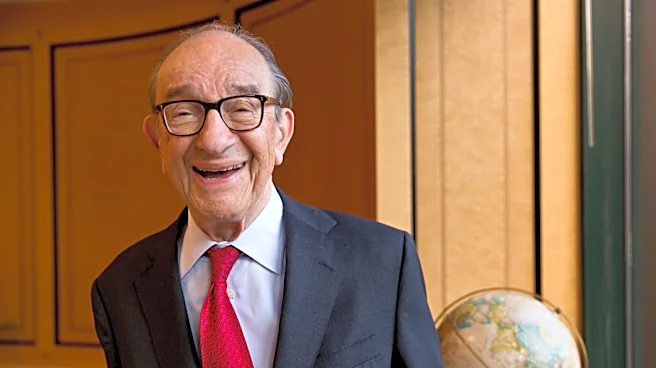
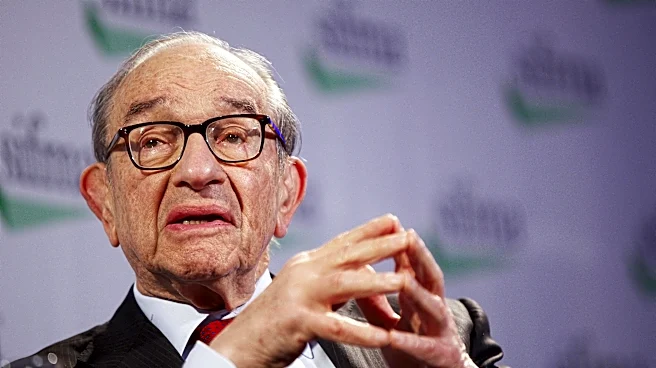
Alan Greenspan, the influential former chairman of the Federal Reserve, has passed away at the age of 100 due to complications from Parkinson's disease. Greenspan, who served as Fed chair from 1987 to 2006, was known for his role in steering U.S. monetary
policy through significant economic events, including the 1987 stock market crash and the dot-com bubble. His tenure was marked by a focus on productivity growth and a looser grip on economic reins, which contributed to a decade of prosperity in the 1990s. However, Greenspan also faced criticism for his role in the 2008 financial crisis, with some arguing that his policies on deregulation and low interest rates contributed to the housing bubble.
Why It's Important?
Greenspan's legacy is a complex one, reflecting both his successes in fostering economic growth and the criticisms of his regulatory policies. His approach to monetary policy, characterized by a focus on productivity and low interest rates, had a lasting impact on the U.S. economy. The criticisms he faced, particularly regarding the 2008 financial crisis, highlight the challenges of balancing economic growth with financial stability. Greenspan's career serves as a reminder of the significant influence that Federal Reserve policies can have on the economy, affecting everything from employment rates to inflation.