




What's Happening?
The Federal Reserve has increased its target interest rate for the first time since 2023. This decision comes as the central bank faces pressure from rising Treasury yields and persistent inflation, which has been a concern for Americans for five years.
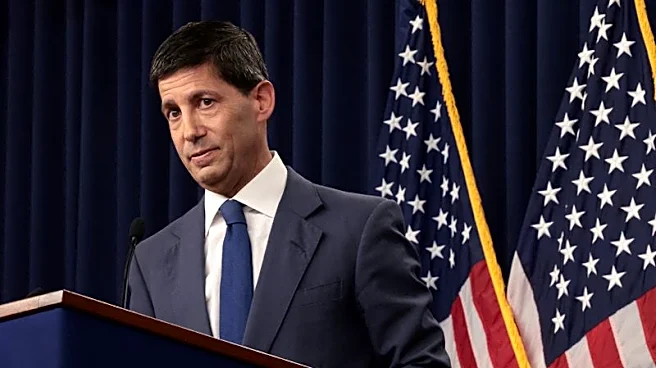
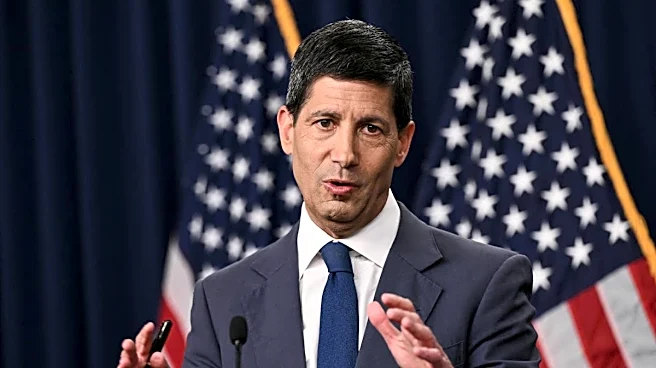
The bond market had effectively pushed the Fed into action, with the benchmark 10-year Treasury yield reaching a 19-year high. While Fed Chairman Kevin Warsh stated the decision was based on the assessment of the economic situation, employment trajectory, and economic strength, some economists, including those from Goldman Sachs, argued that the case for a rate hike was weak. They suggested that the economy was not overheating, demand was not excessive, and the primary drivers of inflation—high energy prices due to the war with Iran and Ukrainian attacks on Russian refineries—were supply shocks that would eventually correct themselves. The Fed typically overlooks such temporary supply shocks, as rate hikes are ineffective against them and risk unnecessarily slowing the economy.
Why It's Important?
This interest rate hike by the Federal Reserve carries significant implications for the U.S. economy. While intended to combat inflation, it is a 'blunt tool' that could inadvertently impact the job market. Higher interest rates increase borrowing costs for businesses and consumers, potentially slowing economic growth. Michael Pearce, chief U.S. economist at Oxford Economics, noted that while the economy is currently solid enough to withstand a few rate hikes, there is a risk that these increases could weaken the labor market. Conversely, Chairman Warsh believes that lower prices resulting from the hike will benefit consumers, leading to increased spending and economic growth, without harming employment. The Fed's action also highlights the powerful influence of the bond market, which effectively compelled the central bank to act, demonstrating its role as a significant force in financial markets. This dynamic underscores the delicate balance the Fed must maintain between controlling inflation and fostering economic stability and employment.
What's Next?
The immediate future will reveal the impact of the Federal Reserve's interest rate hike on the U.S. economy. Observers will closely monitor key economic indicators, particularly inflation rates and employment figures, to assess whether the rate increase effectively curbs inflation without causing significant damage to the labor market. If energy prices, which are a major contributor to current inflation, begin to stabilize or decline due to external factors, the Fed might find itself in a position where interest rates are too high, potentially stifling economic activity unnecessarily. The ongoing geopolitical situation, specifically the war with Iran and its effect on oil prices, will remain a critical external variable influencing the effectiveness of the Fed's monetary policy. Future decisions by the Fed will likely depend on how these economic and geopolitical factors evolve, and whether the current hike achieves its intended anti-inflationary goals without triggering an economic downturn.
Beyond the Headlines
The Federal Reserve's decision to raise interest rates, despite some economists' reservations, reveals a deeper tension between the central bank's dual mandate of maintaining price stability and maximizing employment, and the pressures exerted by financial markets. The bond market's ability to 'bully' the Fed into action raises questions about the independence of monetary policy and the extent to which market sentiment can dictate central bank decisions. This situation underscores the complex interplay between economic theory, market dynamics, and political considerations in shaping financial policy. It also highlights the inherent difficulty in addressing inflation primarily driven by supply-side shocks, such as energy price increases from geopolitical conflicts, with demand-side tools like interest rate adjustments. The long-term implications could include a re-evaluation of the Fed's communication strategies and its perceived credibility in managing economic expectations, especially if the current rate hike leads to unintended consequences for the labor market or fails to significantly curb inflation.