







What's Happening?
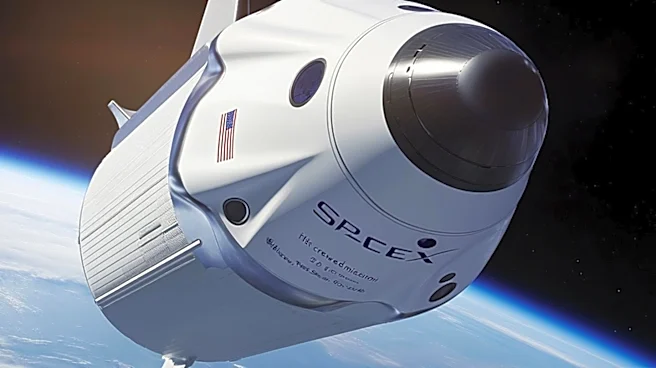
SpaceX, the aerospace company led by CEO Elon Musk, is experiencing a notable decline in its stock value following its recent initial public offering (IPO) on the Nasdaq. The company's shares have dropped approximately 28% from their peak on June 16,
2026, leading to a significant reduction in market value. Despite this downturn, short selling interest remains relatively low, with only about 40 million shares, or 5% to 7% of the publicly tradable float, being sold short. This indicates that while there is some bearish sentiment, many investors are hesitant to bet against SpaceX due to its strong growth narrative and Musk's influence.
Why It's Important?
The situation with SpaceX highlights the complexities of investing in high-profile tech companies. The reluctance of investors to heavily short SpaceX stock underscores the confidence in Musk's leadership and the company's potential for future growth. This scenario also reflects broader market dynamics where high volatility can deter aggressive short selling, especially in companies with strong retail investor support. The outcome of this situation could influence investor strategies and market perceptions of tech stocks, particularly those associated with influential figures like Musk.
What's Next?
As SpaceX navigates this period of market volatility, the company's performance in the coming weeks will be closely watched by investors and analysts. Any strategic announcements or developments in SpaceX's business operations could impact investor sentiment and stock performance. Additionally, the broader market's response to tech stocks and the actions of other major players in the industry may also play a role in shaping SpaceX's market trajectory.