


What's Happening?
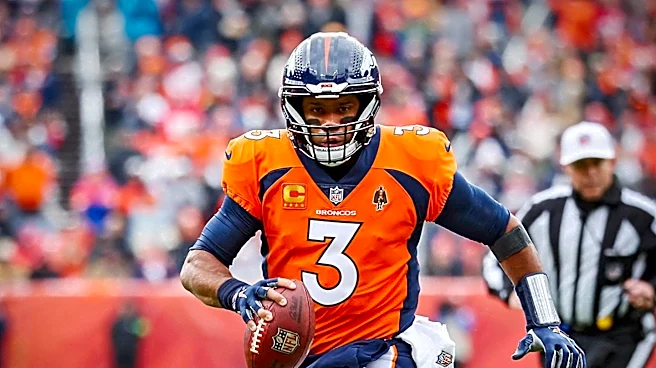
Russell Wilson, former quarterback for the Seattle Seahawks and Denver Broncos, faces a challenging path to the Pro Football Hall of Fame due to a significant decline in performance during the latter part of his career. Wilson, who led the Seahawks to two
Super Bowls and won one, was initially considered a strong candidate for the Hall of Fame. However, his performance dropped sharply after leaving Seattle, with his last four seasons marked by frequent benchings and a poor win-loss record. This decline, coupled with a more stringent Hall of Fame selection process, has cast doubt on his candidacy. Wilson's career statistics, including 46,966 passing yards and 353 touchdowns, are impressive, but his late-career struggles and the perception that Seattle's success was largely due to its defense complicate his Hall of Fame prospects.
Why It's Important?
Wilson's case highlights the challenges faced by players with fluctuating careers in achieving Hall of Fame recognition. The Hall of Fame's recent changes to its selection process, which now enshrines fewer modern-era players, make it more difficult for players with inconsistent careers to be inducted. This situation underscores the competitive nature of Hall of Fame candidacy, especially for quarterbacks, a position with many strong contenders. Wilson's case also reflects broader discussions about the criteria for Hall of Fame induction, such as whether a player's entire career or only their peak years should be considered. The outcome of Wilson's candidacy could influence future discussions about Hall of Fame criteria and the recognition of players with similar career trajectories.
What's Next?
Wilson will not be eligible for Hall of Fame induction until 2031, giving selectors time to evaluate his career in the context of other candidates. The upcoming retirements of notable quarterbacks like Tom Brady and Aaron Rodgers will further crowd the field, making Wilson's path to induction even more competitive. As the Hall of Fame selection process continues to evolve, Wilson's case will be closely watched as a test of the new criteria and the weight given to late-career performance declines. The decision on Wilson's candidacy could set a precedent for how similar cases are handled in the future.