



What's Happening?
Julien Vial, the new Operations Director of WRC Promoter, along with CEO Eric Boullier, has unveiled initial strategies to revitalize the World Rally Championship (WRC). Vial, with 20 years of experience in French rallying and a career at Michelin Motorsport,
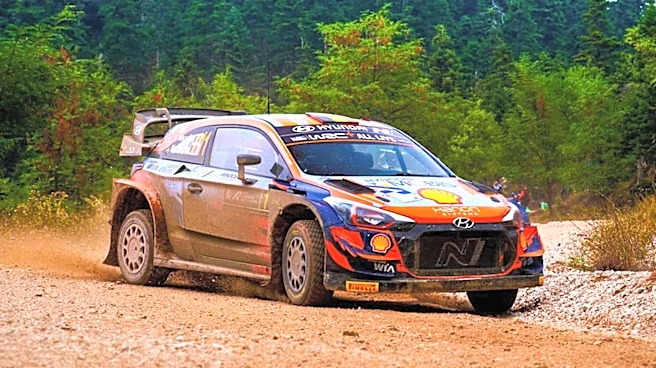
emphasized improving fan experience and accessibility. Key proposals include providing shuttle services to bring spectators closer to special stages, offering diverse viewing spots (like hairpins or jumps), and establishing catering areas for families and friends. The WRC Promoter also plans to develop 'WRC Arena' concepts for Saturday evenings, featuring entertainment, concerts, and activities for children. Regarding regulations, Vial supports the new WRC27 rules, which he believes will offer greater freedom to manufacturers and significantly reduce car costs by a third compared to current Rally1 vehicles. The long-term vision for 2029 includes an open powertrain regulation, allowing manufacturers to choose their engine technology, with torque sensors used for regulation, similar to the Dakar Rally.
Why It's Important?
The proposed changes by WRC Promoter aim to address critical challenges facing motorsports, particularly in attracting new audiences and ensuring financial sustainability for teams and manufacturers. By focusing on fan accessibility and experience, the WRC seeks to broaden its appeal beyond dedicated enthusiasts, potentially drawing in a more diverse demographic. The reduction in car costs under the WRC27 regulations is a significant development, as it could encourage more manufacturers to participate, fostering greater competition and innovation within the sport. This cost-efficiency is crucial for the long-term health of the championship, making it more viable for private teams and potentially leading to a more robust and competitive field. The open powertrain regulation planned for 2029 also signals a forward-thinking approach, allowing manufacturers to showcase their technological advancements and align with broader automotive industry trends, which could attract new investments and partnerships.
What's Next?
The WRC Promoter will focus on implementing the outlined strategies, starting with improvements to fan experience and accessibility. The 2027 calendar is largely set, but future calendars will aim for a mix of countries with high automotive market value and those historically significant to the WRC. Discussions with the FIA are ongoing regarding potential changes to the points system and the reintroduction of qualifications, especially as the performance differences between WRC27, Rally2kit, and Rally2 categories become clearer. The development of the 'WRC Arena' concept will be a key initiative to enhance event engagement. Furthermore, there will be efforts to improve the Rally TV platform, focusing on better real-time data presentation and more compelling storytelling, including behind-the-scenes content and team radio exchanges. Medium-term plans also include increasing the visibility of the Rally3 category and the Junior championship to highlight emerging talent.
Beyond the Headlines
The strategic shift by WRC Promoter reflects a broader trend in sports and entertainment to adapt to changing consumer behaviors and technological advancements. The emphasis on creating a more immersive and accessible fan experience, including family-friendly activities and improved digital content, acknowledges the need to compete for audience attention in a crowded media landscape. The move towards cost reduction and open powertrain regulations also highlights the sport's commitment to sustainability and innovation, aligning with global automotive industry shifts towards diverse propulsion technologies. This could position the WRC as a relevant platform for technological development and demonstration. The challenge will be to balance these modernizations with the traditional adventurous spirit of rallying, ensuring that the sport retains its core identity while evolving to attract new generations of fans and participants.