




What's Happening?
Mercedes-Benz North America, in partnership with Arena Physica, is scaling the deployment of AI agents to improve electrical and electronic (E/E) diagnostics in vehicle production. This initiative utilizes Arena Physica's Atlas platform, which employs
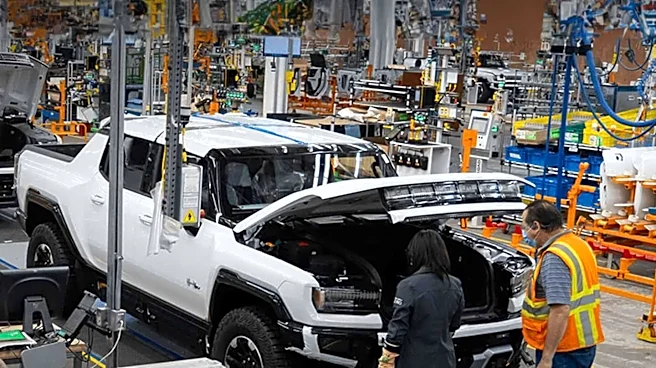
AI to assist technicians in identifying and repairing complex electrical systems more quickly and accurately. The deployment begins at the Tuscaloosa plant in Alabama for the new GLE and GLS models, with plans for pilot rollouts at additional Mercedes-Benz facilities globally. According to Jason Hoff, CEO of Mercedes-Benz North America, this move aligns with the company's global AI strategy, aiming to empower team members and benefit customers by enhancing diagnostic intelligence. The Atlas platform has shown promising results in initial testing, enabling technicians to diagnose and repair issues 20-30% faster, regardless of their skill level. This system is designed to optimize repair plans, capture repair outcomes, and continuously improve its knowledge base, leading to higher first-time-fix rates and reduced rework costs.
Why It's Important?
This deployment signifies a significant advancement in automotive manufacturing quality control and efficiency within the U.S. and globally. Mercedes-Benz's substantial investment in its U.S. operations, averaging over USD 1 billion annually for the past decade, underscores the importance of this region to the company. The integration of AI in diagnostics can lead to a substantial reduction in manufacturing defects related to complex electrical systems, thereby enhancing vehicle reliability and customer satisfaction. For the U.S. automotive industry, this could set a new standard for quality assurance and operational efficiency, potentially influencing other manufacturers to adopt similar AI-driven solutions. Furthermore, the technology's ability to accelerate the onboarding of new technicians and improve production quality through quicker root cause detection has positive implications for workforce development and the overall competitiveness of U.S. manufacturing facilities. The partnership also highlights the growing role of U.S.-based tech companies like Arena Physica in providing innovative solutions to global industrial challenges.
What's Next?
Following the initial deployment at the Tuscaloosa plant for the GLE and GLS, Mercedes-Benz plans to expand the pilot rollout of the Atlas platform to additional plants worldwide. This phased implementation suggests a strategic approach to integrating AI into its global production lines, complementing existing engineering and quality systems. The continuous optimization loop of the Atlas platform, which refines its knowledge base with new data and repair outcomes, indicates an ongoing evolution of its diagnostic capabilities. This could lead to even greater efficiencies and accuracy in the future. The success of this program may also encourage further collaborations between Mercedes-Benz and Arena Physica, potentially extending the application of physics-informed AI to other areas of hardware engineering and vehicle lifecycle management. The broader automotive industry will likely observe the outcomes of this deployment closely, potentially leading to wider adoption of similar AI-powered diagnostic tools across the sector.
Beyond the Headlines
The adoption of AI in complex manufacturing processes, as demonstrated by Mercedes-Benz, raises broader implications for the future of skilled labor and technological integration. While AI tools like Atlas enhance technician capabilities and efficiency, they also necessitate a shift in the skill sets required for the workforce, emphasizing the importance of digital literacy and the ability to work alongside AI systems. This development could lead to a redefinition of roles within manufacturing, where human expertise is augmented by AI, rather than replaced. Ethically, the use of AI in diagnostics could lead to more consistent and objective problem-solving, reducing human error and potentially improving safety standards in vehicles. Culturally, it represents a continued move towards 'smart factories' where data-driven insights and advanced technologies are central to production, pushing the boundaries of what is possible in automotive engineering and quality control. This trend underscores a long-term shift towards intelligent automation and data-driven decision-making across various industrial sectors.