





What's Happening?
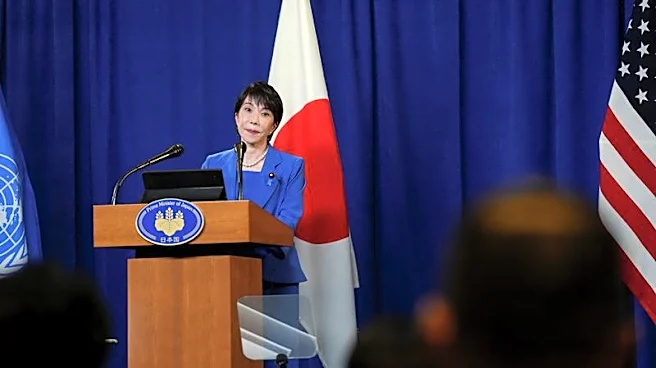
The United States and Japan have formally agreed to collaborate on seabed mining for rare earths and polymetallic nodules. This joint initiative, announced on November 12 after discussions in Toyama, Japan, aims to develop industry partnerships, establish
processing capabilities among 'trusted partners,' and create clearer national regulations to attract private investment. This move comes as the United Nations' International Seabed Authority (ISA), responsible for regulating mining in international waters, has yet to finalize a comprehensive mining code. Japan has already demonstrated its capability in extracting rare earth mud, with its Chikyu drilling vessel recovering approximately 50 metric tonnes earlier this year. A larger trial targeting 350 tonnes of mud per day is scheduled for February 2027. The US is also proceeding with its own offshore mineral auctions, with two tracts off American Samoa set for November 19, despite facing a lawsuit challenging the government's authority to lease the area. The Metals Company is also seeking a US permit under the Deep Seabed Hard Mineral Resources Act for operations in the Clarion-Clipperton Zone.
Why It's Important?
This collaboration is strategically significant for the U.S. and Japan as it seeks to reduce reliance on China, which currently accounts for 91% of global refined magnet rare earths output. These rare earths, including neodymium, praseodymium, dysprosium, and terbium, are crucial for manufacturing electric vehicles, wind turbines, and defense technologies. China has increasingly leveraged export restrictions on these critical materials, creating supply chain vulnerabilities for other nations. By pursuing seabed mining, the U.S. and Japan aim to establish alternative, secure supply chains, bolstering their economic and national security. The development of national regulatory frameworks in parallel with stalled international rules highlights a proactive approach to securing essential resources, potentially setting a precedent for other nations seeking to diversify their critical mineral supplies. Success in these ventures could shift global power dynamics in the rare earth market, benefiting industries reliant on these materials.
What's Next?
The immediate next steps include the U.S. offshore minerals auction off American Samoa on November 19, which faces legal challenges that could delay or block the sale. The National Oceanic and Atmospheric Administration (NOAA) is expected to decide on certification for The Metals Company's application by mid-December, which would assess the company's capacity and plan but not grant a mining permit. Japan's next significant trial for rare earth mud extraction is scheduled for February 2027, with an economic assessment due by March 2028. Further, modifications to processing plants, such as Pacific Metals Company's facility in Hachinohe, Japan, are still underway to handle the extracted materials. The International Seabed Authority (ISA) is set to reconvene from March 8 to 19, 2027, to continue discussions on a mining code, though no adoption date has been set. The outcomes of these legal, regulatory, and operational milestones will determine the pace and scale of seabed mining development.
Beyond the Headlines
The push for seabed mining by the U.S. and Japan raises profound ethical and environmental questions. The lack of finalized international regulations from the ISA means that these operations could proceed without a globally agreed-upon framework for environmental protection and resource governance in international waters. This could lead to potential ecological damage to deep-sea ecosystems, which are largely unexplored and host unique biodiversity. The lawsuit against the U.S. offshore auction also highlights concerns from local communities and indigenous groups regarding potential environmental impacts and resource sovereignty. Furthermore, the strategy of building a 'national-law path' around stalled UN rules could fragment international ocean governance, potentially leading to a 'race to the bottom' in environmental standards. The long-term implications include not only the establishment of new supply chains but also the redefinition of international maritime law and environmental stewardship in the deep sea.