







What's Happening?
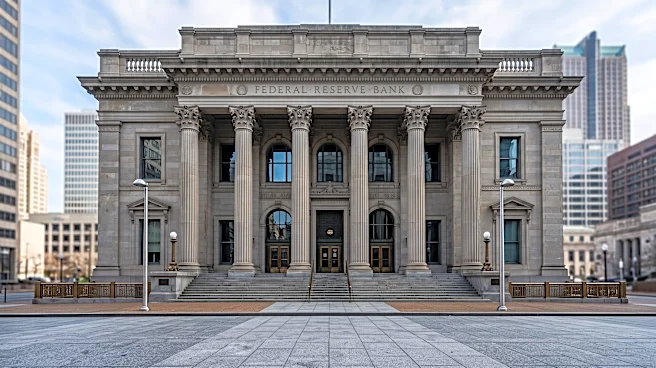
The Treasury General Account (TGA), Treasury's primary checking account held at the Federal Reserve Bank of New York, is under scrutiny for its significant influence on the Federal Reserve's operational independence. As of September 2026, the TGA held $984
billion, making it one of the Fed's largest liabilities. Historically, before 2008, Treasury maintained cash in Treasury Tax and Loan (TT&L) accounts at commercial banks, which helped prevent reserve drains from the banking system. However, when interest rates fell below 25 basis points in late 2008, the TT&L interest formula became negative, leading Treasury to shift balances into the TGA. This shift, coupled with the Fed's expanded reserves, made it easier to accommodate a larger and more variable Treasury balance at the central bank. The TGA acts as a buffer for Treasury, ensuring it can meet obligations even if borrowing is temporarily disrupted, with weekly cash needs potentially exceeding $800 billion. This cash management strategy, particularly during debt-limit impasses, results in large swings in the TGA balance, which directly impacts bank reserves.
Why It's Important?
The substantial and fluctuating balance of the TGA directly affects bank reserves, which is critical because the Federal Reserve relies on interest on reserve balances (IORB) as its primary tool to manage short-term interest rates. When reserves are abundant, TGA-driven declines have minimal impact on rates. However, if reserves become scarce, a similar decline can push rates upward, potentially leading to volatility in money-market rates, as observed after a debt-limit impasse in 2019. This dynamic places a constraint on the Fed's monetary policy implementation, as Treasury's cash management priorities influence the minimum size of the Fed's balance sheet. The need for the Fed to maintain a sufficiently large reserve buffer to accommodate TGA volatility means that fiscal cash management effectively dictates a portion of the Fed's balance sheet size, potentially infringing on the central bank's independence. This situation highlights a conflict between Treasury's need for a flexible cash buffer and the Fed's goal of managing monetary policy effectively.
What's Next?
The current arrangement necessitates the Fed to hold additional assets and reserves to manage the volatility created by the TGA. This implies that any efforts by a Federal Reserve chairman to reduce the balance sheet would require cooperation from the Treasury. Potential solutions could involve Treasury placing some collateralized balances back at commercial banks, or the Fed actively offsetting TGA swings through changes in its bill holdings or lending operations. Each of these options carries its own costs and implications, determining who bears the burden of Treasury's cash flows. The ongoing debate surrounding the Fed's balance sheet will likely continue to confront this independence problem, requiring a reevaluation of the current framework to ensure both fiscal flexibility and monetary policy effectiveness.
Beyond the Headlines
The interplay between the Treasury General Account and the Federal Reserve's balance sheet raises fundamental questions about the division of authority and operational independence between fiscal and monetary policy in the U.S. The current system, where Treasury's cash management decisions can influence the Fed's ability to control short-term rates, suggests a subtle but significant form of fiscal dominance over monetary policy. This dynamic could have long-term implications for the Fed's credibility and its capacity to respond effectively to economic shocks. It also highlights the need for greater coordination and potentially a re-evaluation of the institutional arrangements governing the TGA to ensure that the Fed can maintain its independence and achieve its dual mandate of stable prices and maximum employment without undue external constraints.