







What's Happening?
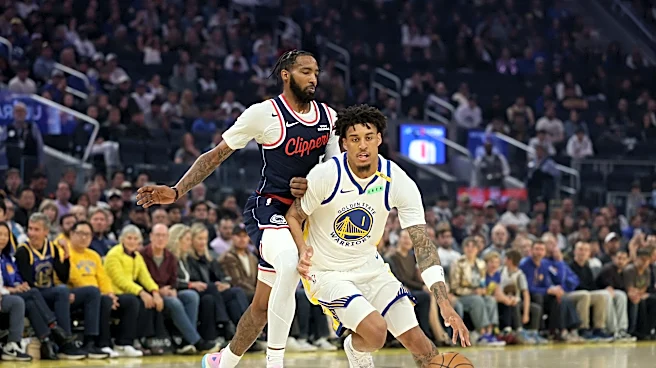
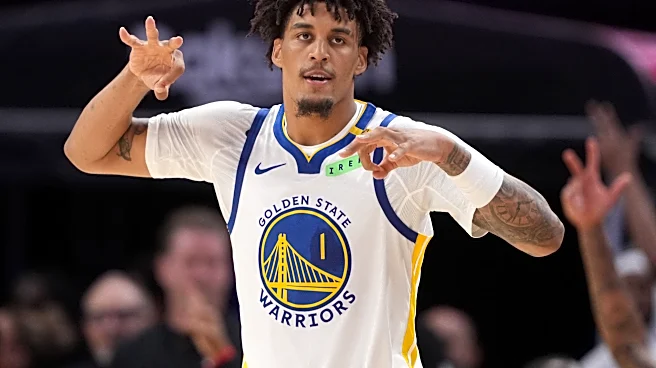
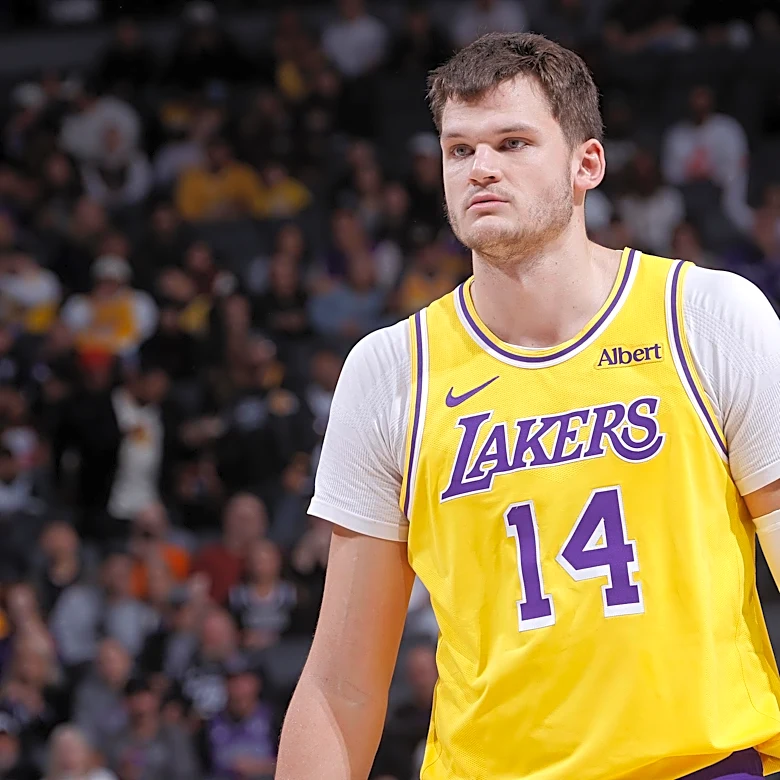
Golden State Warriors rookie Yaxel Lendeborg has emerged as a significant contributor, averaging 21.5 points, 7 rebounds, and 3.9 assists per game. This performance comes after another NBA team, despite ranking Lendeborg fifth on their draft board, chose
not to trade up into the top 10 of the 2026 NBA Draft due to concerns about his personality and 'locker-room fit,' according to ESPN's Tim McMahon. Warriors coach Steve Kerr has praised Lendeborg's offensive skills and strength, noting his ability to get to the free-throw line and his advanced playmaking for a rookie. Kerr anticipates further improvement from Lendeborg, highlighting his potential as a future star for the team.
Why It's Important?
Lendeborg's early success is a significant development for the Golden State Warriors, potentially providing a crucial piece for their future roster. His performance validates the Warriors' decision to acquire him and underscores the impact that draft decisions can have on a franchise's trajectory. For the unnamed team that passed on him, this situation highlights the risks associated with prioritizing perceived 'locker-room fit' over raw talent and potential, especially when a player is highly rated. This scenario can influence future draft strategies across the league, prompting teams to re-evaluate their criteria for player selection and the weight given to non-performance-based factors. Lendeborg's emergence could also shift the competitive landscape, offering the Warriors a new dynamic player to build around.
What's Next?
As Yaxel Lendeborg continues to develop, the Golden State Warriors will likely integrate him further into their offensive and defensive schemes. His ongoing performance will be closely watched, both by the Warriors and by other teams, particularly the one that opted not to draft him. His continued success could lead to increased playing time and a more prominent role within the team, potentially solidifying his status as a cornerstone player. The situation may also spark discussions within the league about the subjective nature of 'locker-room fit' assessments and their potential to overlook exceptional talent. Future draft classes might see teams placing a renewed emphasis on on-court potential, even if it means taking a chance on personality aspects.
Beyond the Headlines
This story touches upon the deeper complexities of player evaluation in professional sports, where subjective factors like 'personality' and 'locker-room fit' can sometimes outweigh objective talent assessments. It raises questions about the criteria teams use to make high-stakes draft decisions and the potential for biases to influence these choices. The narrative also highlights the resilience of athletes like Lendeborg, who can thrive when given the right opportunity, even after being overlooked by others. This situation could serve as a cautionary tale for teams that prioritize perceived character issues over a player's demonstrated skill and potential, reminding them that talent, when nurtured, can often overcome initial concerns.