

What's Happening?
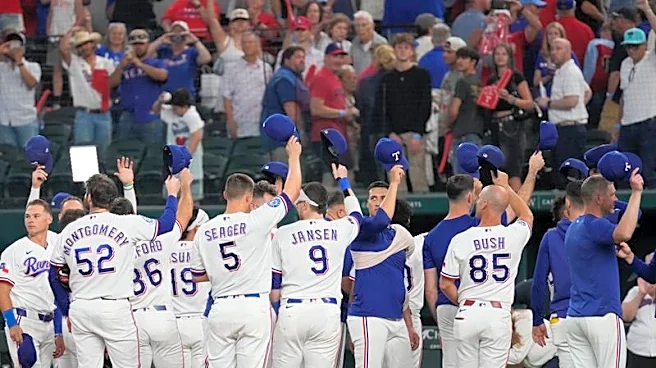
The Texas Rangers are reportedly exploring trade options for shortstop Corey Seager, a key player from their 2023 World Series championship team. This move comes as the team aims to reshape its roster, focusing on becoming younger, more athletic, and
more dynamic, according to Rangers president of baseball operations Chris Young. Seager has five years and approximately $155 million remaining on his 10-year, $325 million contract. The Rangers are looking to shed significant payroll, as they currently have over $100 million committed to four high-priced veterans. Seager's trade value is being assessed despite his recent injury history, which has limited him to an average of 111.5 games per season over the last four years. The team is also seeking to acquire multiple players in return for any veteran trade, with Seager being considered the most tradable asset among their high-salary players.
Why It's Important?
A potential trade of Corey Seager signifies a significant shift in the Texas Rangers' strategy, moving away from their recent championship core towards a more financially flexible and youth-oriented future. This decision reflects the challenges of maintaining a high-payroll team, especially after missing the playoffs for three consecutive years following their 2023 World Series win. For the Rangers, shedding Seager's substantial contract would free up considerable financial resources, allowing them to be more competitive in future free agency periods and acquire players who better fit their new strategic vision. For potential acquiring teams, Seager, despite his injury concerns, represents a proven veteran with significant postseason experience and offensive capabilities, potentially bolstering a contending team's lineup. However, his large contract and no-trade clause complicate any potential deal, limiting the pool of interested teams to those with significant financial capacity and a need at shortstop.
What's Next?
The Texas Rangers are expected to actively gauge the trade market for Corey Seager in the coming weeks, with a potential push to finalize a deal before a likely work stoppage in December. The team's front office will be evaluating offers, seeking to acquire multiple players, including at least one who can contribute immediately in the 2027 season. Seager's no-trade clause, which grants him the right to block any trade due to his '10 and 5' rights (10 years in MLB, 5 with the same team), will play a crucial role in negotiations, as he can influence his destination. Potential trade partners are likely to be large-market teams with a need at shortstop and the financial capacity to absorb a significant portion of his remaining contract. The Rangers may also need to consider paying down a portion of Seager's contract to facilitate a trade. The outcome of these trade discussions will significantly shape the Rangers' roster for the 2027 season and beyond.
Beyond the Headlines
The potential trade of Corey Seager highlights a broader trend in professional sports where teams, even after achieving championship success, often face difficult decisions regarding veteran players and long-term financial commitments. The Rangers' situation underscores the cyclical nature of team building in baseball, where sustained success often requires continuous roster adjustments and a balance between veteran leadership and emerging talent. This move could signal a more aggressive rebuild for the Rangers, prioritizing financial flexibility and youth development over retaining expensive, aging stars. The ethical dimension of trading a World Series MVP so soon after a championship also comes into play, as it can impact fan morale and player loyalty. Legally, Seager's no-trade clause empowers him significantly, demonstrating the increasing influence players have over their careers through collective bargaining agreements. This situation could also influence future contract negotiations, with teams potentially becoming more cautious about long-term, high-value deals for players approaching their mid-30s.