






What's Happening?
Lockheed Martin and IBM have announced the establishment of a quantum innovation hub at ETH Zurich in Switzerland. This initiative, supported by an offset agreement with armasuisse (Switzerland’s Federal Office for Defence Procurement), will host Switzerland’s first
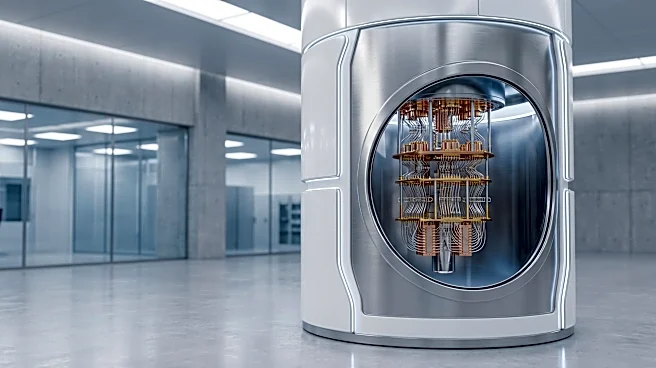
IBM Quantum System Two at the Swiss National Supercomputing Center (CSCS) in Lugano. IBM will operate the IBM Quantum System Two, which will be powered by an IBM Quantum Nighthawk processor. ETH Zurich will provide expertise, resources, and technologies, including access to the quantum computer, for Swiss industries, startups, and academia. The project aims to accelerate the development of new algorithms, technical breakthroughs, and industrial use cases, while also fostering Switzerland’s quantum workforce and talent. This collaboration extends the strategic relationship between Lockheed Martin and IBM in quantum and AI, combining Lockheed Martin’s innovations in quantum sensing and additive manufacturing with IBM’s expertise in quantum computing and AI.
Why It's Important?
This collaboration signifies a significant step in advancing quantum computing capabilities and applications, particularly in the defense and aerospace sectors. For Lockheed Martin, it strengthens its strategic partnership with IBM and allows for the exploration of quantum sensing applications for navigation and improvements in additive manufacturing of metallic alloys, which are critical for defense technologies. For IBM, it expands its global footprint in quantum computing, providing access to its advanced hardware and software to a broader scientific and industrial community. The establishment of this hub in Switzerland positions the country as a leader in critical, cutting-edge fields like quantum and AI, fostering local innovation and talent development. This initiative could lead to breakthroughs in various sectors, including chemistry, materials science, optimization, and financial services, by making world-class quantum hardware and expertise accessible.
What's Next?
The IBM Quantum System Two is expected to be deployed by the end of 2026. Once deployed, organizations joining the innovation hub through ETH Zurich will gain immediate access to IBM’s fleet of quantum computers via the cloud, and eventually to Switzerland’s dedicated IBM Quantum System Two. This access is anticipated to accelerate scientific and industrial research and facilitate the development of new use cases. The collaboration also includes two planned joint development projects between IBM and Lockheed Martin, focusing on quantum sensing applications for navigation and enhancing additive manufacturing of metallic alloys. These projects will build upon ongoing efforts by both companies in advanced technologies for aerospace and defense innovation. Furthermore, the initiative will continue to build on the long-standing collaboration between IBM and ETH Zurich, including a recently launched ten-year effort to advance foundational algorithmic research and provide quantum education and workforce development.
Beyond the Headlines
The establishment of this quantum innovation hub highlights a broader trend of strategic partnerships between defense contractors and technology giants to leverage emerging technologies like quantum computing. This collaboration is not just about technological advancement but also about national security and economic competitiveness. By investing in quantum research and development, nations like Switzerland, with the support of global players like Lockheed Martin and IBM, aim to secure a leading position in future technological landscapes. The focus on quantum sensing and additive manufacturing suggests a long-term vision for enhancing defense capabilities and manufacturing processes, potentially leading to more resilient and advanced military systems. The emphasis on workforce development and academic collaboration also underscores the importance of building a sustainable ecosystem for quantum innovation, ensuring a pipeline of skilled professionals and continuous research breakthroughs.