









What's Happening?
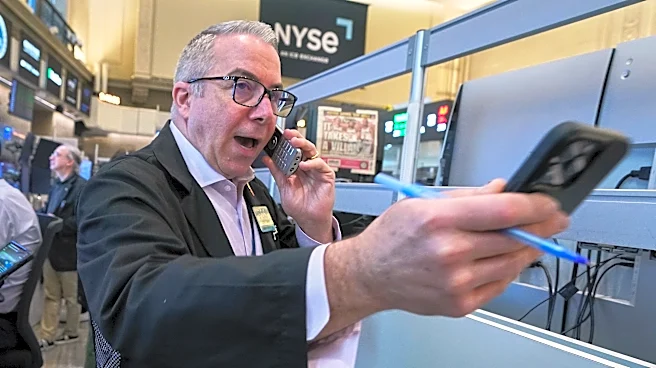
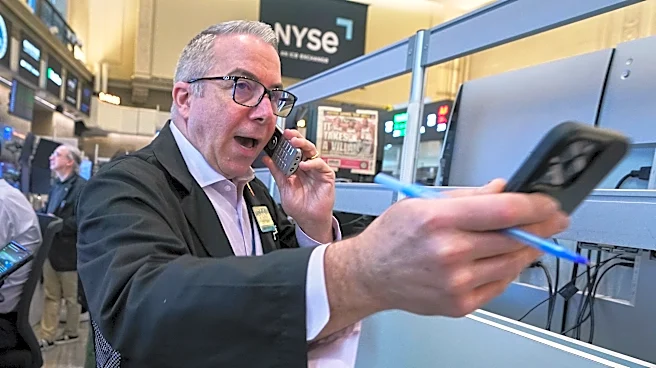
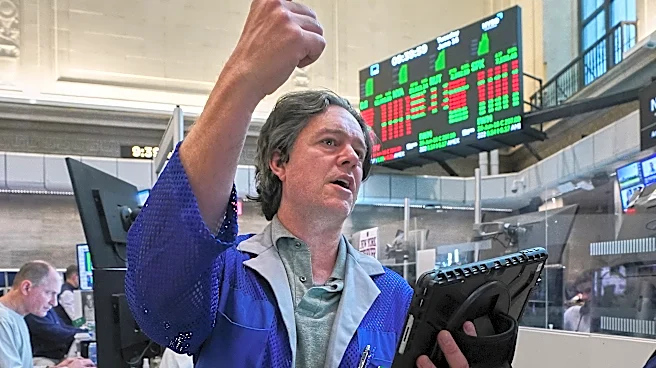
On Monday, Wall Street experienced a mixed trading session influenced by easing oil prices and declining Big Tech stocks. The Standard & Poor’s 500 index fell by 0.4%, while the Dow Jones Industrial Average rose by 0.3%, and the Nasdaq composite dropped
by 1.3%. The decline in Big Tech stocks, including Alphabet, Amazon, and Broadcom, significantly impacted the market. Meanwhile, oil prices decreased following discussions between the United States and Iran aimed at ending their conflict, which could potentially reopen the Strait of Hormuz for oil tankers. Brent crude oil prices fell by 3.2% to $77.52 per barrel, and U.S. crude oil prices decreased by 2.6% to $73.86 per barrel. Despite the drop in oil prices, Treasury yields continued to rise due to speculation about potential interest rate hikes by the Federal Reserve to control inflation.
Why It's Important?
The mixed performance on Wall Street highlights the ongoing volatility in the financial markets, driven by geopolitical tensions and economic policy expectations. The decline in Big Tech stocks reflects investor concerns about high valuations and the impact of rising interest rates on growth stocks. The easing of oil prices, if sustained, could alleviate some inflationary pressures, but the potential for Federal Reserve interest rate hikes remains a significant concern for investors. Rising Treasury yields could lead to higher borrowing costs, affecting consumer spending and business investment. The market's response underscores the delicate balance between economic growth, inflation control, and geopolitical stability.
What's Next?
Investors will closely monitor upcoming economic data, particularly the inflation report expected on Thursday, which could influence the Federal Reserve's monetary policy decisions. The outcome of the U.S.-Iran discussions and the potential reopening of the Strait of Hormuz will also be critical factors in determining future oil price movements. Market participants will continue to assess the impact of rising interest rates on various sectors, particularly technology, which has been sensitive to changes in borrowing costs. The Federal Reserve's actions and geopolitical developments will likely shape market trends in the coming weeks.