





What's Happening?
Amazon and Walmart are adopting fundamentally different strategies regarding AI shopping agents, a battleground within the rapidly growing retail media market. U.S. retail media spending is projected to reach $74.4 billion in 2026, with Amazon and Walmart collectively
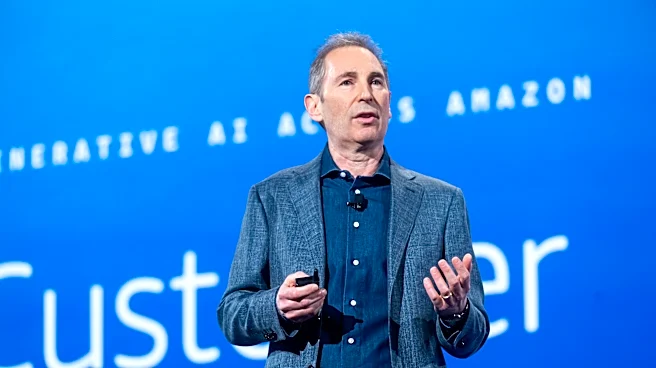
controlling 88% of this market. Walmart has launched its 'Agent Gateway,' allowing approved AI agents direct, structured access to its inventory and checkout systems, and enabling customers to control agent purchases through 'Agent Profiles.' Conversely, Amazon has taken an opposing stance, actively blocking unauthorized AI agents, including Perplexity's Comet browser and Meta's AI agent, from accessing its e-commerce website, citing security and business threats. Amazon is also developing its own AI shopping assistant, Rufus.
Why It's Important?
This strategic divergence by two retail giants has significant implications for the future of e-commerce and retail media in the U.S. AI shopping agents, estimated by Morgan Stanley to represent 10% to 20% of U.S. e-commerce spending by 2030, threaten the traditional sponsored-listing model that underpins much of retail media revenue. Walmart's open approach aims to capture the growing traffic from AI assistants like ChatGPT and Gemini, betting on controlled access to build long-term trust. Amazon's defensive strategy, however, seeks to protect its advertising revenue and maintain control over its platform. This conflict forces brands and marketers to re-evaluate their strategies, focusing on machine-readable product data and adapting to a landscape where AI, not just human eyeballs, drives purchasing decisions.
What's Next?
The legal battle between Amazon and Perplexity, particularly the Ninth Circuit's vacating of Amazon's injunction, will set crucial precedents for agent authorization and data access in e-commerce. Brands must audit their product data feeds for structured, machine-readable accuracy to ensure visibility within AI shopping assistants. Marketers are advised to reallocate test budgets from pure sponsored listings to structured data optimization and AI-assistant partnerships. Companies will also need to establish internal governance for how their brands appear and negotiate prices when AI agents are involved. The rapid adoption of AI tools by consumers, with 51% of U.S. consumers having used an AI tool to shop in the past month as of September 2026, indicates that this shift is accelerating, requiring immediate strategic adjustments from Fortune 500 brands.
Beyond the Headlines
The clash between Amazon and Walmart over AI agents reflects a deeper tension between open innovation and proprietary control in the digital economy. Walmart's 'Agent Gateway' represents a move towards an 'agentic commerce' ecosystem where AI acts as an intermediary, potentially democratizing access to products but also challenging established advertising models. Amazon's stance, while seemingly defensive, aims to protect its significant investment in retail media and maintain a curated shopping experience. This evolving landscape raises ethical questions about AI's influence on consumer choice, data privacy, and the potential for algorithmic bias. The outcome of this strategic fork will not only reshape how consumers shop but also redefine the competitive dynamics and regulatory frameworks governing the future of e-commerce.