






What's Happening?
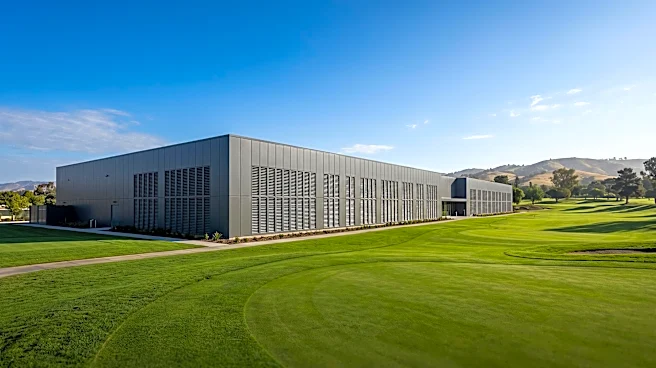
A developer in L.A. County plans to construct a large data center on a golf course, specifically at the California Country Club near Whittier, as a strategy to avoid the growing community opposition that has stalled similar projects elsewhere. The proposal
involves replacing half of the 124-acre golf course with a 374,000-square-foot data center, while retaining a nine-hole course and clubhouse. Ramus Development Inc., the club's owner, and Birtcher Development, the real estate company shepherding the project, argue that the data center would use less water than the golf course and could potentially lower nearby electricity costs. This approach comes as data center projects across the U.S. face increasing resistance, with Data Center Watch reporting 75 projects worth approximately $130 billion disrupted by local opposition in the first quarter of 2026 alone. The developers intend to engage transparently with residents and will be subject to oversight by the California Energy Commission and the South Coast Air Quality Management District, in addition to a city environmental impact report.
Why It's Important?
This development signifies a strategic shift by developers to find less contentious locations for data centers amidst widespread 'Not In My Backyard' (NIMBY) opposition. By targeting golf courses, which often have large land parcels, existing utility access, and are sometimes struggling financially, developers aim to mitigate common objections related to land use, noise, and visual impact. The proposal's emphasis on reduced water usage and potential electricity cost savings directly addresses two major concerns often raised by communities regarding data centers. If successful, this model could become a blueprint for future data center developments in urbanized areas, potentially transforming underutilized golf courses into critical infrastructure hubs. However, it also raises questions about the preservation of green spaces and recreational facilities, even if they are privately owned.
What's Next?
The proposed data center project at the California Country Club will require zoning changes and a thorough environmental review before it can proceed. The developers plan extensive community engagement to gather input and feedback, aiming for a transparent approval process. The project will undergo scrutiny from various regulatory bodies, including the California Energy Commission and the South Coast Air Quality Management District. The City of Industry, where the golf course is located, currently lacks specific restrictions on large-scale data centers, unlike other parts of Los Angeles County. The outcome of this proposal will depend on its ability to navigate the zoning change process, successfully address environmental concerns, and gain sufficient community and regulatory approval. Its progress will be closely watched as a potential test case for future data center developments on golf course sites.
Beyond the Headlines
The trend of repurposing golf courses for data centers highlights a broader societal shift in land use priorities, driven by technological demands. As traditional recreational spaces face economic pressures and urban areas seek to accommodate essential digital infrastructure, the conversion of golf courses represents a pragmatic, albeit controversial, solution. This approach could lead to a re-evaluation of urban planning strategies, balancing the need for green spaces with the imperative to support the digital economy. Ethically, it prompts discussions about the value of private recreational land versus public infrastructure needs. Legally, it may lead to new zoning classifications or environmental impact assessment criteria specifically tailored for such conversions. Culturally, it reflects how the digital age is reshaping physical landscapes, transforming leisure areas into critical components of the global information network.