




What's Happening?
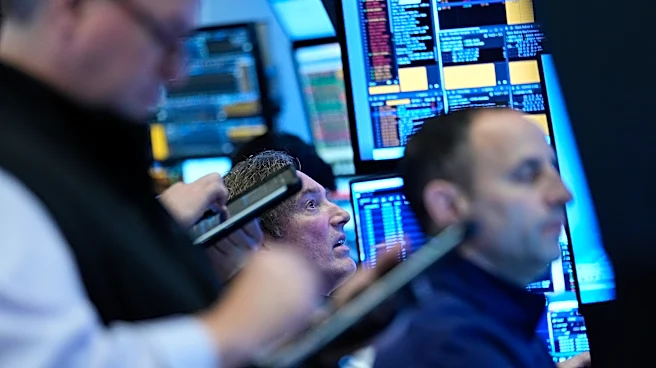
U.S. stock futures experienced a significant jump on Sunday evening, following a challenging week on Wall Street that saw all three major indexes—the S&P 500, Nasdaq Composite, and Dow Jones Industrial Average—enter correction territory. S&P 500 Futures
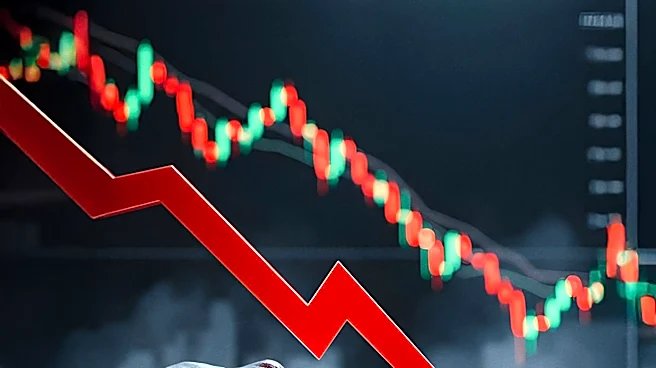
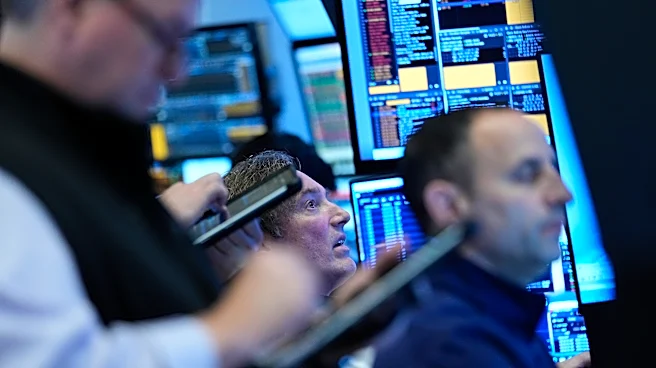
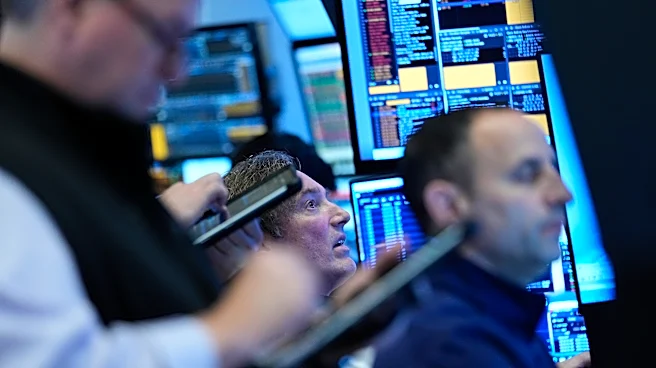
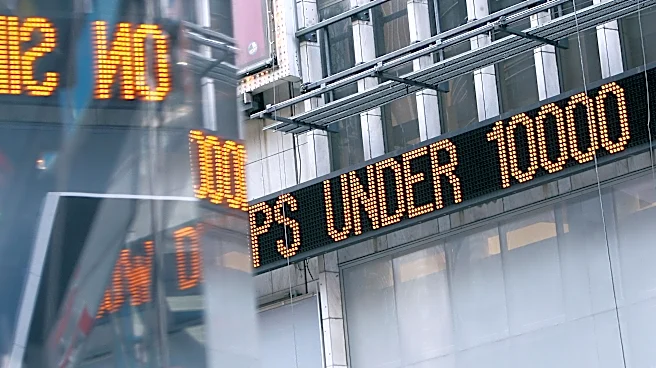
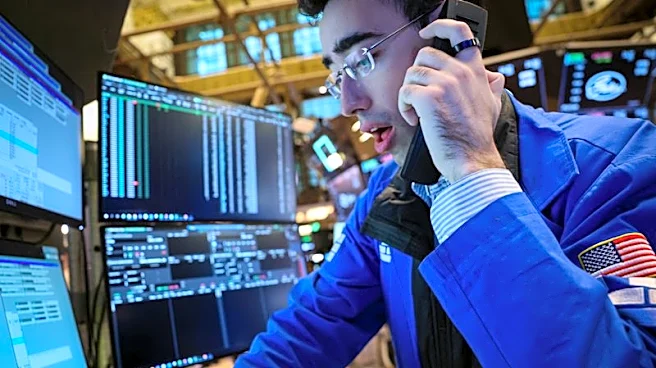
rose 2.2% to 7,090.0 points, Nasdaq 100 Futures surged 2.9% to 25,845.75 points, and Dow Jones Futures climbed 1.6% to 48,964.0 points by 20:10 ET. This rebound comes after Friday's sharp sell-off, which confirmed that the Dow and S&P 500 had joined the Nasdaq Composite in a correction, defined as a decline of at least 10% from recent record closing highs. Last week, the Dow dropped approximately 8%, the S&P 500 shed 8.6%, and the Nasdaq Composite declined 10%, marking some of the steepest weekly losses in years. The Nasdaq also slipped into negative territory for 2026. The Cboe Volatility Index, a key measure of market fear, closed at 35.89 on Friday, its highest level since April 2025, indicating heightened investor anxiety.
Why It's Important?
The recent market correction and subsequent rebound in futures highlight significant investor uncertainty regarding the sustainability of the artificial intelligence investment boom. The substantial selling pressure was largely driven by concerns that the enormous spending on data centers and computing infrastructure may not generate sufficient returns. The disappointing performance of Anthropic shares after their market debut, coupled with pressure on heavyweight Nvidia, amplified losses across the technology and semiconductor sectors. This situation is critical for U.S. industries heavily invested in technology and AI, as a prolonged downturn could impact innovation, employment, and overall economic growth. Investors are currently divided, with some viewing the correction as a buying opportunity for undervalued shares, while others believe it signals a deeper reassessment of valuations and corporate earnings prospects. The volatility underscores a period of re-evaluation for market participants and could influence future investment strategies and capital allocation across various sectors.
What's Next?
Investors will closely monitor market performance in the upcoming holiday-shortened trading week for indications of whether last week's decline has concluded or if further losses are anticipated. The technology sector, which has been at the forefront of both the recent rally and subsequent correction, is expected to remain a key focus. Market participants will be looking for signs of stabilization or continued volatility, which could dictate short-term trading strategies. The debate among investors—whether to buy beaten-down shares or prepare for further declines—suggests that market sentiment remains fragile. Future corporate earnings reports, particularly from major technology companies, will be crucial in shaping investor confidence and potentially determining the market's direction. The performance of the Cboe Volatility Index will also be a key indicator of ongoing investor anxiety or a return to more stable market conditions.
Beyond the Headlines
The recent market correction extends beyond immediate financial implications, touching upon broader themes of technological investment cycles and market psychology. The intense focus on artificial intelligence has created a speculative environment, reminiscent of past tech booms, where valuations may have outpaced fundamental growth. The current reassessment could lead to a more disciplined approach to AI investments, favoring companies with clear revenue models and sustainable profitability over those driven purely by speculative growth. This shift could have long-term implications for venture capital funding, corporate R&D, and the overall landscape of technological innovation in the U.S. Furthermore, the elevated Cboe Volatility Index reflects a deeper undercurrent of investor unease, potentially stemming from broader economic uncertainties or geopolitical factors, suggesting that market participants are becoming more risk-averse. This period of adjustment may ultimately foster a healthier, more sustainable growth trajectory for the technology sector, albeit with short-term pain for some investors.