
What's Happening?
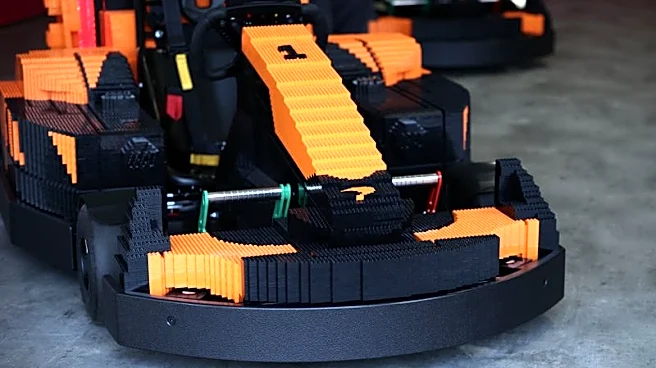
Lego and Formula 1 have expanded their collaboration with a larger Drivers' Parade at the Silverstone Grand Prix. This year, 22 drivable Lego minicars, one for each F1 driver, will participate in the parade,
doubling the number from last year's Miami event. The new minicars are smaller, made with fewer bricks, and can reach speeds of up to 15 mph. The partnership between Lego and F1, which began in 1998, has included various marketing efforts, such as model kits and brick-built trophies. The parade is scheduled to take place two hours before the main race, promising an entertaining spectacle for fans.
Why It's Important?
The collaboration between Lego and F1 highlights the potential for creative marketing partnerships to enhance fan engagement and brand visibility. By integrating playful elements like drivable Lego cars into a high-profile event, both brands can reach broader audiences, including families and younger fans. This initiative also underscores the importance of innovation in sports marketing, as organizations seek to create memorable experiences that resonate with diverse demographics. The success of such collaborations can influence future marketing strategies across industries, encouraging other brands to explore unique partnerships that blend entertainment with traditional sports events.
What's Next?
Following the Silverstone event, Lego and F1 may continue to explore new ways to collaborate, potentially expanding their partnership to include more interactive and immersive experiences for fans. The success of the Drivers' Parade could lead to similar initiatives at other Grand Prix events, further solidifying the relationship between the two brands. Additionally, the positive reception of the parade may inspire other sports organizations to consider similar collaborations, leveraging popular brands to enhance fan experiences and broaden their appeal.