


What's Happening?
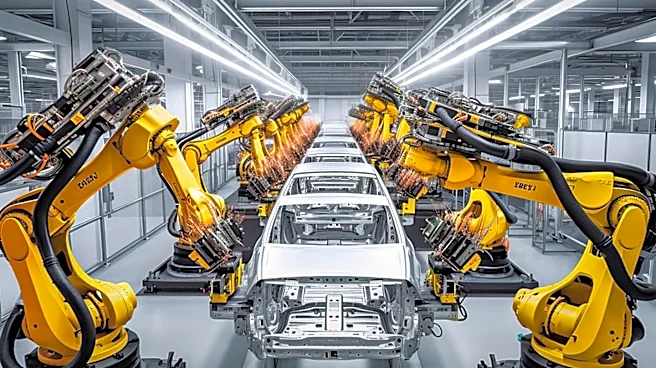
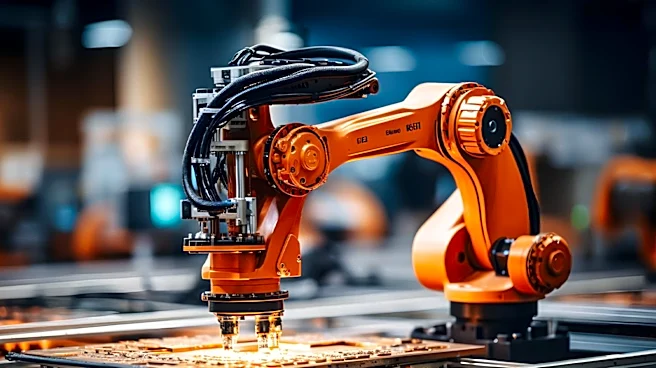
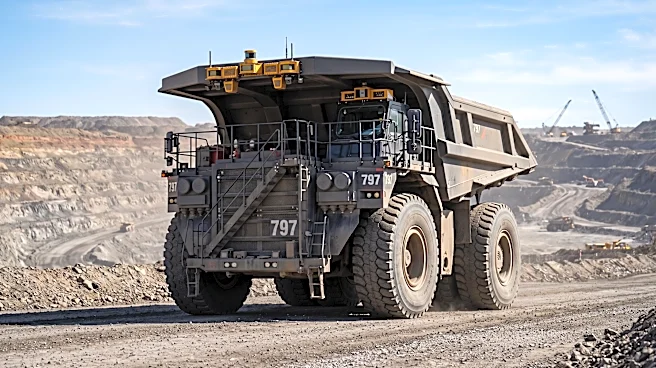
Physical AI is emerging as the next significant chapter in industrial progress, moving artificial intelligence from digital screens directly into physical machines. This shift is anticipated to have profound implications for manufacturing, building upon
previous industrial revolutions that amplified human capabilities through muscle, efficiency, reliability, and connectivity. Historically, industrial advancements have consistently transformed work, company structures, and societal evolution. The current phase, characterized by the integration of AI into machinery, is expected to bring a new level of intelligence to production processes. This development follows the Industry 4.0 era, which focused on connecting machines and factories to the digital world, making data a crucial resource for process monitoring and optimization.
Why It's Important?
The integration of Physical AI into manufacturing is poised to significantly impact U.S. industries by enhancing productivity, efficiency, and innovation. This technological leap could lead to more autonomous and intelligent production systems, potentially reducing operational costs and improving product quality. Companies that adopt Physical AI early may gain a competitive advantage, while those that lag could face challenges in maintaining market relevance. The shift also implies a transformation in the workforce, requiring new skills for managing and interacting with intelligent machines. This could lead to job displacement in some areas but also create new opportunities in AI development, maintenance, and oversight, influencing educational and training priorities across the nation.
What's Next?
As AI continues to move from software into hardware, the manufacturing sector will likely see an acceleration in the development and deployment of intelligent robots, autonomous systems, and sophisticated machinery. This will necessitate further advancements in AI models, simulation capabilities, and agentic AI to coordinate complex tasks. The focus will extend beyond individual machines to interconnected systems, requiring robust frameworks for ensuring reliability and seamless integration. The ongoing evolution of Physical AI is expected to drive continuous innovation in manufacturing processes, potentially leading to more flexible, responsive, and efficient production lines capable of adapting to changing market demands and supply chain dynamics.
Beyond the Headlines
The advent of Physical AI in manufacturing carries broader societal implications, echoing the transformative effects of past industrial revolutions. This shift could redefine the relationship between humans and machines, moving towards a more collaborative and intelligent industrial ecosystem. Ethical considerations regarding automation, job security, and the responsible deployment of AI in physical environments will become increasingly prominent. Furthermore, the enhanced capabilities of Physical AI could foster greater resilience in supply chains and manufacturing operations, reducing vulnerabilities to disruptions. This technological evolution is not merely about improving production but about fundamentally reshaping economic structures and societal norms, prompting discussions on policy, education, and the future of work.