



What's Happening?
Martin Hulbert Design, the studio founded by Martin Hulbert, has undertaken a redesign of the stable rooms, suites, and cottages at Coworth Park, a Dorchester Collection property in Berkshire. This project marks a return for Hulbert, whose studio originated
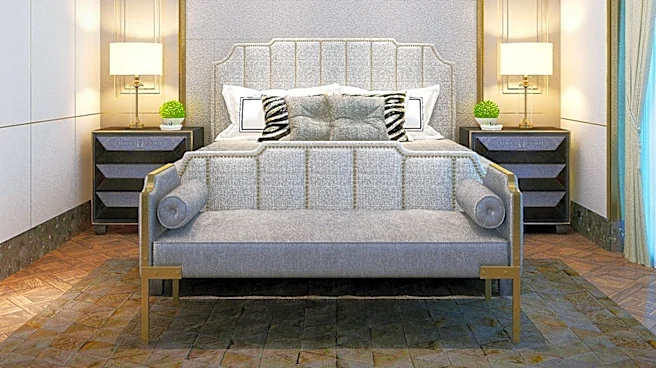
during the property's initial fit-out over 15 years ago. The current commission focuses on an approach termed 'ecological restraint,' where existing elements like oak floors are retained, and wardrobes are repainted rather than replaced. New joinery utilizes storm-fallen walnut, reflecting resourcefulness and the estate's wooded character. Leather upholstery, much of it salvaged from previous iterations, is repurposed. The design philosophy aims to create a 'palimpsest,' allowing successive eras to coexist and blending traditional craft with contemporary fabrication. Botanical motifs from the estate's wildflower meadows are translated into block prints for wall coverings and curtains, and pressed into clay panels in bathrooms. Resin tabletops feature preserved blooms from the grounds, drawing inspiration from mid-century Scandinavian craft. The color palette throughout the rooms is influenced by the estate's changing seasons, incorporating hues from primrose, cowslip, bracken, and oak leaves. Fabric-lined walls contribute to a tactile warmth and acoustic softness, aligning with a broader trend towards material richness in interiors.
Why It's Important?
This design approach by Martin Hulbert Design at Coworth Park highlights a significant shift in the hospitality and interior design industries towards sustainability and historical preservation. By prioritizing ecological restraint and adaptive reuse, the project demonstrates how high-end establishments can minimize their environmental footprint while maintaining luxury standards. The use of storm-fallen timber and salvaged materials sets a precedent for responsible sourcing and reduces demand for new resources, influencing supply chains and material choices within the design sector. The concept of a 'palimpsest,' where historical layers are preserved and integrated, challenges the traditional renovation model of erasure, promoting a deeper appreciation for a property's past and contributing to a unique guest experience. This could inspire other U.S. hospitality businesses to adopt similar practices, fostering a market for sustainable design solutions and skilled artisans capable of working with existing structures and materials. Furthermore, the emphasis on site-specific botanical and seasonal elements creates a strong sense of place, which can be a powerful differentiator in a competitive market, appealing to guests seeking authentic and environmentally conscious experiences.
What's Next?
The completion of the redesign at Coworth Park by Martin Hulbert Design is likely to serve as a case study for sustainable luxury design. Other high-end hospitality brands and interior design firms may observe the project's success in balancing aesthetic appeal with ecological responsibility, potentially leading to wider adoption of similar practices in the U.S. market. The project's emphasis on local sourcing, repurposing, and integrating natural elements could influence future design briefs and material specifications across the industry. There may be increased demand for artisans skilled in traditional craft techniques and for suppliers of reclaimed or sustainably harvested materials. Furthermore, the narrative of 'ecological restraint' and 'adaptive reuse' could become a key marketing point for properties, attracting a growing segment of environmentally conscious consumers. The project's influence might also extend to architectural and design education, with a greater focus on sustainable practices and the preservation of existing structures and materials.
Beyond the Headlines
The design philosophy employed by Martin Hulbert Design at Coworth Park extends beyond mere aesthetics, touching upon deeper ethical and cultural dimensions. The concept of a 'palimpsest' in design encourages a re-evaluation of how we interact with historical spaces, moving away from a disposable culture towards one that values longevity and layered narratives. This approach fosters a sense of continuity and respect for the past, which can have broader societal implications by promoting a more mindful consumption of resources and a greater appreciation for craftsmanship. The integration of storm-fallen timber and salvaged materials not only reduces environmental impact but also imbues the interiors with a unique story and character that new materials cannot replicate. This could lead to a cultural shift where the 'imperfections' and history of materials are celebrated rather than concealed. Moreover, the site-specific botanical and seasonal elements connect the interior design directly to the natural environment, potentially fostering a deeper connection between guests and the local ecosystem, and promoting a more holistic understanding of sustainability that encompasses both built and natural environments.