


What's Happening?
Roborock has launched its Black Friday 2026 sales event, offering substantial discounts on a range of its robot vacuum models, with savings exceeding $1,650 on some flagship products. The sale, which began on November 19 and extends through the end of the month,
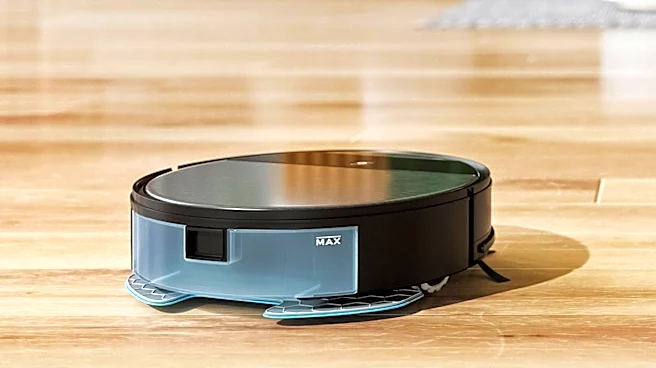
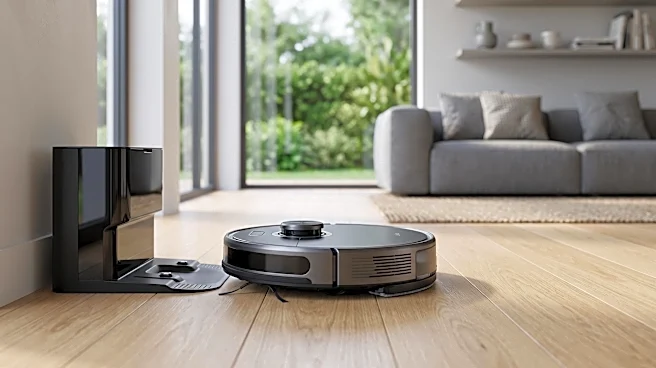
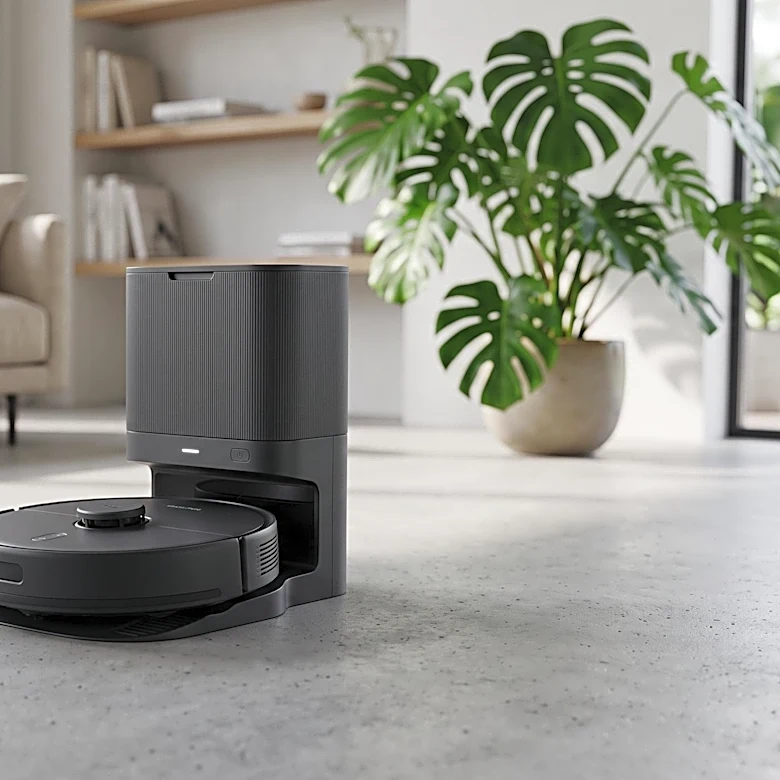
includes top-tier models like the Saros 20, now priced at $989.99 (38% off its $1,599.99 retail price), marking its lowest price ever. The Saros 20 features Roborock’s StarSight Autonomous System 2.0 for obstacle avoidance, AdaptiLift Chassis 3.0 for navigating steps up to 3.46 inches, 36,000 Pa suction power, a Dual anti-tangle system, and an integrated mop that cleans corners. Its self-cleaning dock auto-empties the dustbin and uses heated water and air to clean and dry the mops. Other discounted models include the Qrevo Edge 3 Pro, available for $899.99 (40% off), which shares many features with the Saros 20 but includes a warm-water mopping system. The Qrevo S Pro, offering 18,500 Pa suction and a dual-brush mop, is priced at $379.99. Additionally, Roborock is offering deals on its cordless wet/dry vacuums, such as the F25 Steam and F25 XT, with discounts of 42% and 57% respectively.
Why It's Important?
These significant Black Friday discounts from Roborock are poised to make advanced home cleaning technology more accessible to a wider range of U.S. consumers. The price reductions on high-end models like the Saros 20 and Qrevo Edge 3 Pro mean that features previously considered premium, such as advanced LiDAR navigation, powerful suction, self-cleaning docks, and sophisticated obstacle avoidance, are now available at more competitive price points. This can accelerate the adoption of robot vacuums in American households, transforming how people approach daily cleaning tasks. For the consumer electronics market, these aggressive pricing strategies during key shopping periods like Black Friday can drive sales volume and market share for Roborock, while also intensifying competition among other robot vacuum manufacturers. The availability of both robot vacuums and cordless wet/dry vacuums at reduced prices also caters to diverse cleaning needs, from automated daily maintenance to targeted manual clean-ups, offering comprehensive solutions for modern homes.
What's Next?
The Black Friday sales period will likely see a surge in purchases of Roborock products, potentially setting new sales records for the company. Following this, competitors in the robot vacuum market may respond with their own promotional offers or product innovations to maintain their market position. The increased adoption of these advanced robot vacuums could lead to greater consumer expectations for standard features in future models, pushing manufacturers to integrate more sophisticated AI, better battery life, and enhanced self-maintenance capabilities. Beyond the immediate sales, the data gathered from increased usage of these devices could inform future product development, leading to even more tailored and efficient cleaning solutions. Consumers can anticipate continued innovation in areas like smart home integration, personalized cleaning routines, and eco-friendly features as the market matures and competition remains robust.
Beyond the Headlines
The widespread availability of highly automated cleaning devices at reduced prices during Black Friday reflects a broader societal trend towards convenience and efficiency in daily life. As more households adopt these technologies, there could be subtle shifts in lifestyle, with individuals reallocating time previously spent on chores to other activities. This also highlights the increasing sophistication of AI and robotics in consumer products, moving beyond niche applications to become integral parts of everyday living. The emphasis on self-cleaning docks and advanced navigation systems points to a future where home appliances require minimal human intervention, blurring the lines between automation and autonomy. However, this also raises questions about the environmental impact of increased electronic waste and the energy consumption of these devices. As these technologies become more ubiquitous, discussions around their long-term sustainability and ethical implications, such as data collection from home mapping, will likely become more prominent.