




What's Happening?
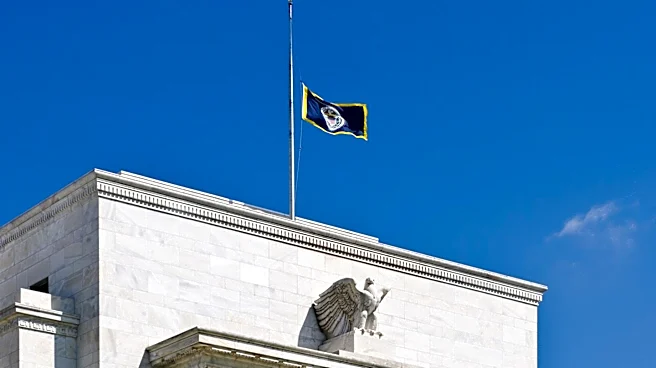
The Federal Reserve, under Chair Kevin Warsh, is facing scrutiny over its communication strategy following its July meeting. Despite holding the federal funds rate steady at 3.50%-3.75%, Treasury yields have increased, leading to market uncertainty. Bank
of America (BofA) has expressed concerns about the lack of forward guidance from the Fed, which they argue is causing a risk premium that acts like a tax on the economy. This uncertainty is affecting Treasury yields, mortgages, and borrowing costs. BofA economists are particularly worried about the Fed's unclear reaction function, which leaves investors guessing about future rate changes. The upcoming Jackson Hole symposium is expected to be a critical moment for Warsh, especially if inflation data remains firm.
Why It's Important?
The Fed's communication strategy is crucial for market stability. Uncertainty can lead to increased borrowing costs, affecting businesses and consumers. The lack of clear guidance from the Fed could hinder economic growth by making financing more expensive. This situation is particularly significant as the U.S. economy is robust enough to handle tighter policies, but inflation remains a concern. The Fed's approach could impact inflation expectations and the overall economic outlook. Investors and businesses need clarity to make informed decisions, and the current strategy may undermine confidence in the Fed's ability to manage inflation effectively.
What's Next?
The upcoming Jackson Hole symposium will be a key event where Fed Chair Warsh might address these concerns. If inflation data remains strong, Warsh may adopt a more hawkish tone, potentially influencing market expectations for future rate hikes. The Fed's next moves will be closely watched, especially as BofA anticipates further rate hikes in 2026. The Fed's ability to communicate a coherent plan to return inflation to its 2% target will be critical in maintaining market confidence and economic stability.