






What's Happening?
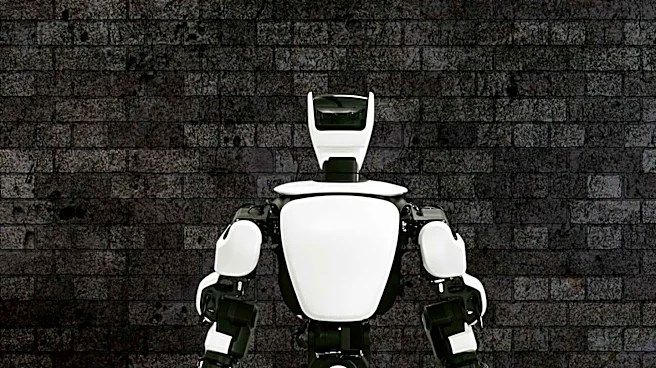
China is significantly increasing its production of humanoid robots, with plans to produce over 100,000 units this year and potentially 1.2 million annually by 2030. This expansion is driven by substantial government subsidies and industrial investment,
aiming to establish a strategic industry similar to its approach with electric vehicles and solar panels. However, despite the rapid production, Chinese factories are struggling to effectively integrate these robots into ordinary work environments. The machines often perform well in staged demonstrations, such as kung fu or dancing, but exhibit difficulties with simple, repetitive tasks requiring precision or deviation from preprogrammed routines. For instance, at a training center in southern China, operators teach robots to sort boxes and package noodles, but a beginner robot may require hundreds of attempts to achieve one usable movement. This highlights a core contradiction: while hardware production is competitive, the robots lack the advanced intelligence needed for general-purpose factory work, particularly in situations demanding intuition or adaptability.
Why It's Important?
This development is important because it showcases China's aggressive strategy to dominate emerging technological sectors, potentially reshaping global manufacturing and labor markets. By heavily subsidizing humanoid robot production, China aims to address its aging and shrinking workforce, which has historically been a key advantage for its manufacturing industry. If successful, this could lead to significant cost savings in labor and increased efficiency, but the current challenges in practical application suggest that the return on investment is not yet clear. The strategy also creates an artificially hypercompetitive environment, intended to accelerate innovation and data collection, but it carries substantial risks for investors and local governments due to high operating costs and low data prices in an immature market. The struggle to move beyond staged demonstrations to reliable factory work indicates that while China can mass-produce hardware, developing the necessary artificial intelligence for practical, adaptable robotics remains a significant hurdle.
What's Next?
The immediate future will likely see continued government investment and an intensified push for data collection to train embodied artificial intelligence models. Companies like UBTech and Unitree, considered potential market leaders, will continue to receive significant support, with local authorities competing to foster their own robotics champions through various incentives. However, industry experts and investors anticipate a period of consolidation, possibly starting in late 2026 or 2027, as authorities may reduce subsidies and focus support on the most promising players. This consolidation is expected to be painful for many companies, as the gap between current capabilities and the long-term commercial goal remains substantial. The industry will also focus on improving 'vision-language-action' models, which require vast amounts of real-world operational data to enable robots to process visual information and convert it into precise physical actions, moving beyond controlled environments to handle variations in lighting, objects, and surfaces.
Beyond the Headlines
The deeper implications of China's humanoid robot push extend to the global technological landscape and ethical considerations. The strategy of creating an 'artificially hypercompetitive environment' to accelerate innovation, while potentially effective in the long run, also raises questions about market sustainability and the potential for significant economic disruption. The current reliance on government procurement and subsidies rather than genuine business demand suggests a top-down, state-driven approach that could lead to overproduction and market inefficiencies before true commercial viability is achieved. Furthermore, the challenge of developing robots that can perform tasks requiring intuition and adaptability highlights the ongoing limitations of current AI in replicating complex human cognitive functions. The long-term success of this initiative will depend not just on hardware production, but on breakthroughs in AI that allow robots to operate reliably and efficiently in unpredictable real-world settings, potentially setting new global standards for automation and human-robot interaction.