



What's Happening?
Sarfraz Maredia, Uber's global head of autonomous mobility and delivery, is set to leave the company next month for an executive position outside the transportation sector. His departure, effective November 16, marks the latest in a series of leadership
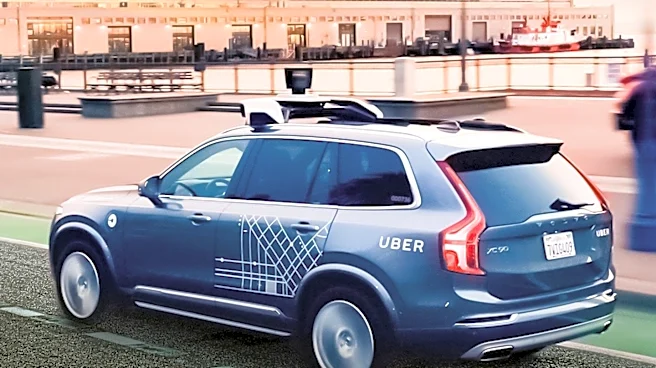
changes within Uber's autonomous division this year. Maredia, who has been with Uber for over 12 years, previously led the core U.S. ride-hailing and delivery businesses. During his tenure in the autonomous unit, Uber invested significantly in technology and infrastructure to support the commercialization of self-driving cars on its platform, despite not building its own vehicles. These efforts included developing charging solutions, fleet management tools, data collection methods, in-vehicle experiences, and remote assistance. His responsibilities will be divided between Samarth Kejriwal, a senior director overseeing driverless vehicle operations, and Aaron Emrich, who leads autonomous delivery. This executive exit follows other departures, including Guy Peterson, former head of business development for autonomous partnerships, and Lando Juarez, former head of legal for the autonomous unit.
Why It's Important?
The departure of a key executive like Sarfraz Maredia from Uber's autonomous mobility and delivery division signals potential shifts in the company's strategy or execution within the highly competitive and evolving self-driving technology sector. Uber has committed over $10 billion to commercializing self-driving technology and aims to offer driverless rides globally through partnerships. However, the string of executive departures, coupled with the unraveling of key partnerships with companies like Alphabet Inc.'s Waymo and Serve Robotics Inc., could indicate challenges in achieving these ambitious goals. The company's vision of a hybrid marketplace, integrating autonomous vehicles with human drivers and couriers, relies heavily on successful technological development and strategic alliances. Leadership instability in this critical area could impact investor confidence, as reflected by the 1.6% drop in Uber shares before market open and a 13% decline year-to-date through Monday's close. The ability to attract and retain top talent is crucial for innovation and market leadership in autonomous technology, and these changes could affect Uber's pace of development and deployment in the U.S. and international markets.
What's Next?
Following Sarfraz Maredia's departure, Uber will proceed with splitting his responsibilities between Samarth Kejriwal and Aaron Emrich, indicating a potential restructuring of leadership within the autonomous division. The company is expected to continue its efforts to scale autonomous vehicles in more cities and achieve higher supply density, as Maredia expressed confidence in the autonomous strategy in his farewell memo. However, the impact of recent executive exits and dissolved partnerships on these plans remains to be seen. Uber will likely focus on strengthening its remaining partnerships and developing its internal capabilities to support its hybrid marketplace model. The company's ongoing investment in technology and infrastructure for self-driving cars suggests a continued commitment to the sector, but the pace and success of commercialization will depend on effective leadership and strategic execution. Future announcements regarding new partnerships, technological advancements, or further organizational changes within the autonomous unit could provide more clarity on Uber's trajectory in this space.
Beyond the Headlines
The series of executive departures from Uber's autonomous division, including Sarfraz Maredia, highlights the inherent volatility and intense competition within the autonomous vehicle industry. Beyond the immediate impact on Uber's stock performance, these changes underscore the significant challenges companies face in bringing self-driving technology to widespread commercialization. The unraveling of partnerships with major players like Waymo and Serve Robotics Inc. suggests that strategic alliances in this sector are complex and often short-lived, requiring constant re-evaluation and adaptation. The ethical and regulatory dimensions of autonomous vehicles also play a crucial role; the limited scale of current deployments in the U.S., Middle East, and Europe is often due to regulatory hurdles and the need for robust safety protocols. The long-term success of Uber's hybrid marketplace model will not only depend on technological breakthroughs but also on navigating a complex landscape of public acceptance, regulatory frameworks, and the ability to integrate autonomous systems seamlessly with human-driven services. The ongoing leadership shifts could either signal a period of strategic re-alignment or indicate deeper structural issues within Uber's autonomous vehicle ambitions.