






What's Happening?
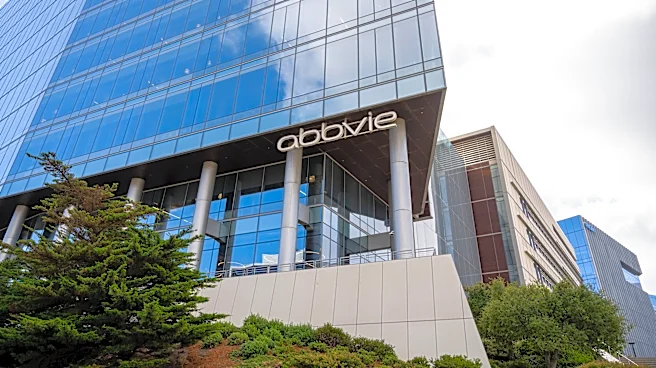
AbbVie, a leading pharmaceutical company, is successfully transitioning beyond the patent expiration of its blockbuster drug, Humira, which previously accounted for over 50% of its total revenues. The company has launched two new immunology medicines,
Skyrizi and Rinvoq, which are performing strongly due to new indication approvals. AbbVie anticipates combined sales for Skyrizi and Rinvoq to exceed $32 billion in 2026, representing over 20% growth, with $23.1 billion already recorded in the first nine months of 2026. Beyond immunology, AbbVie's oncology franchise, anchored by Venclexta and Elahere, and its neuroscience portfolio, driven by Botox Therapeutic, Vraylar, Ubrelvy, Qulipta, and Vyalev, are also contributing significantly to top-line growth. The company has also engaged in strategic acquisitions, including Capstan Therapeutics and Apogee Therapeutics, to bolster its pipeline in immunology, oncology, and neuroscience.
Why It's Important?
This strategic shift is crucial for AbbVie's sustained growth and market position in the highly competitive pharmaceutical industry. Successfully navigating the 'patent cliff' of a major drug like Humira demonstrates the company's ability to innovate and diversify its product offerings. The strong performance of Skyrizi and Rinvoq, coupled with growth in oncology and neuroscience, ensures continued revenue streams and reduces reliance on a single product. This diversification strategy mitigates risks associated with patent expirations and competitive pressures, positioning AbbVie for long-term stability and growth. The company's investment in R&D and strategic acquisitions also highlights a proactive approach to pipeline development, which is vital for addressing future medical challenges and maintaining a competitive edge.
What's Next?
AbbVie expects continued strong revenue growth, projecting a rise of approximately 10% in 2026, primarily driven by its immunology and neuroscience products. The company anticipates high single-digit revenue growth through 2029. While facing increased competition in the immunology space, particularly from new oral IL-23 receptor inhibitors like J&J's Icotyde, AbbVie has not reported any substantive impact on Skyrizi's momentum. The company's ongoing M&A activities and its unique 'reverse translation' approach to drug research, which involves analyzing patient samples to better understand treatment biology, are expected to further strengthen its pipeline and potentially lead to new treatment pathways, including for conditions like obesity.
Beyond the Headlines
AbbVie's strategy of 'reverse translation' in drug research represents a significant shift in pharmaceutical development. By starting with patient biology and working backward to identify new treatments, the company aims to address unmet medical needs more effectively. This approach could lead to more targeted and personalized therapies, potentially transforming how certain diseases are treated. The company's aggressive acquisition strategy, particularly in immunology, also underscores the intense competition and the need for continuous innovation in the biopharmaceutical sector. This focus on R&D and strategic growth positions AbbVie not just for commercial success but also for potentially making substantial contributions to global health by developing advanced treatments across various therapeutic areas.