
What's Happening?
Carbon Performance, a Tennessee-based fitness company, is expanding its unique 'more than a gym' concept across the U.S. after securing a partnership with private equity firm Maxim Partners in 2023. Founded
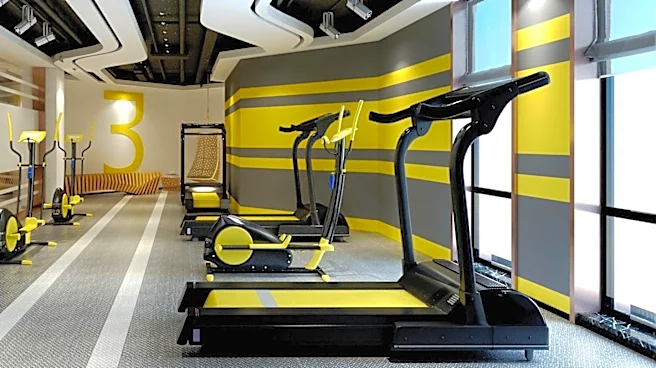
by Brent and Victoria Laffey, the company began as Carbon Culture in Franklin, TN, in 2020, aiming to combine high-end equipment and a serious training environment with the quality of a five-star hotel. This vision quickly gained traction, leading to significant growth, including the acquisition of the 32,000-square-foot Franklin Athletic Club in 2022, which became Carbon Performance and attracted 2,000 new members within six months. The expansion continued with a second Nashville location in 2024, Carbon Performance Atlanta in 2025, and a third and largest location in Charlotte, North Carolina, in July 2026. The company plans further expansion, including Carbon Performance Salt Lake City by the end of 2026, with a goal of ten gyms in seven or eight states within five years. Each club maintains a consistent culture of specialty strength equipment, an upscale environment, expert staff, advanced recovery amenities, and an inclusive atmosphere, while also adapting to region-specific market demands, such as a women's-only training area in Charlotte.
Why It's Important?
This expansion signifies a notable shift in the U.S. fitness industry, moving beyond traditional gym models towards comprehensive wellness ecosystems. Carbon Performance's success, attracting both a large member base and significant investment, indicates a growing consumer demand for facilities that offer more than just basic workout equipment. The 'more than a gym' philosophy, which integrates elite equipment, structured personal training, nutrition coaching, advanced recovery infrastructure, and a community-driven approach, addresses a market gap identified by co-founder Brent Laffey. This trend suggests that fitness businesses focusing on holistic health, longevity, and an elevated member experience are poised for significant growth. The involvement of a private equity firm like Maxim Partners highlights the financial sector's recognition of this evolving market, potentially leading to increased investment in similar wellness-focused ventures. For consumers, this means access to more specialized and high-quality fitness and recovery options, while for the industry, it sets a new standard for what a premium gym membership entails, potentially challenging larger corporate chains.
What's Next?
Carbon Performance plans to continue its aggressive expansion, with Carbon Performance Salt Lake City slated to open by the end of 2026, marking its first venture outside the Southeast. The company aims to have ten gyms across seven or eight states within the next five years, demonstrating its commitment to broader geographical reach. This expansion will likely involve continued market research to adapt each club to local demands, as seen with features like barbershops in Carbon Nations and women's-only training areas in Carbon Charlotte. The partnership with Maxim Partners is expected to provide the necessary infrastructure, resources, and operational support for this growth, while the company strives to maintain its community-driven model. This trajectory suggests that Carbon Performance will continue to influence the premium fitness market, potentially inspiring other fitness brands to adopt similar comprehensive wellness approaches to meet evolving consumer expectations.
Beyond the Headlines
The rise of Carbon Performance and its 'more than a gym' model reflects a deeper societal shift towards prioritizing holistic well-being and longevity over mere aesthetics. In an era where social media often promotes unrealistic fitness ideals, Carbon's emphasis on a comprehensive wellness ecosystem, including advanced recovery and an inclusive atmosphere, offers a counter-narrative. This approach not only caters to elite athletes and bodybuilders but also welcomes beginners, fostering a more accessible and sustainable fitness culture. The integration of specialized services and an upscale environment suggests a consumer desire for fitness experiences that are both effective and enjoyable, moving away from the utilitarian gym model. This trend could lead to a redefinition of what constitutes a 'healthy' lifestyle, emphasizing overall physical and mental health rather than just physical appearance. The success of Carbon Performance also highlights the potential for localized, community-focused businesses to thrive and expand, even in a market dominated by larger corporate entities, by offering tailored and high-quality experiences.