



What's Happening?
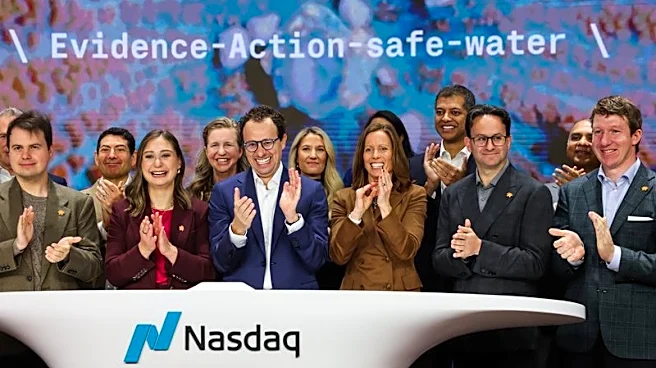
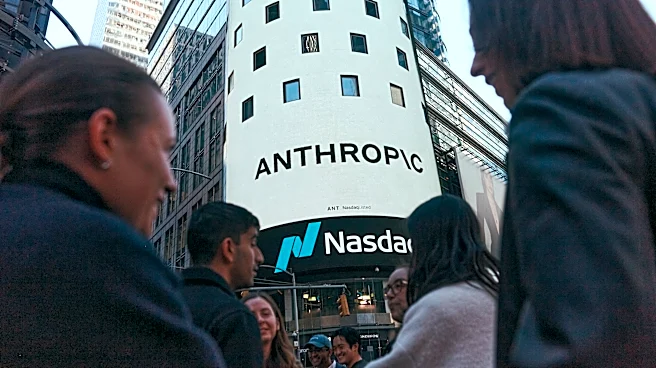
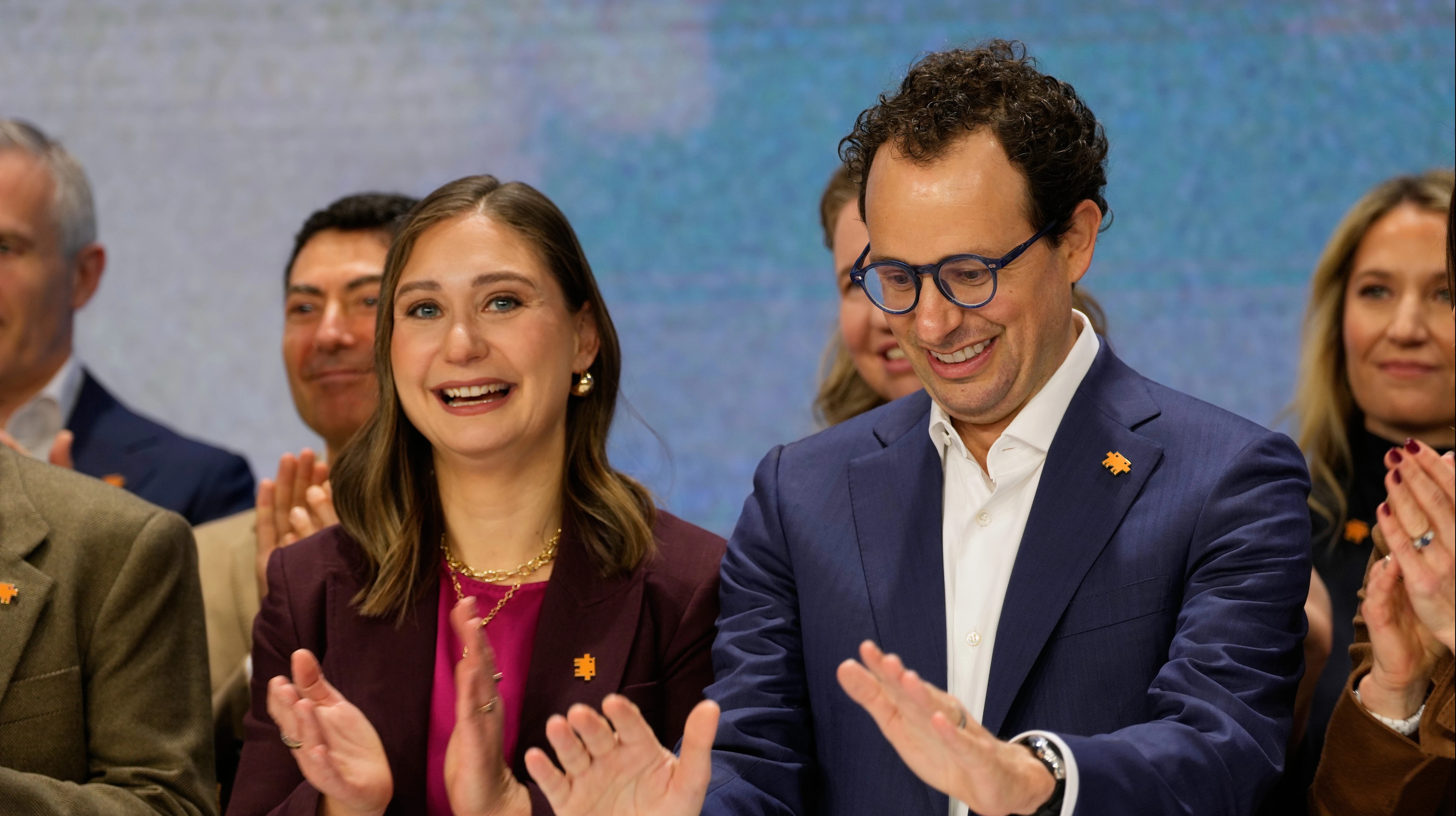
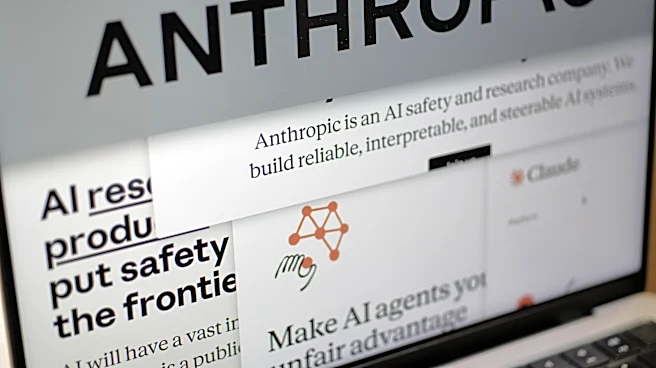
Anthropic, a U.S. technology company known for developing the AI chatbot Claude, made its Wall Street debut on Thursday, November 19, in a significant stock market listing. The company successfully raised $81.3 billion by selling shares at $83 each. This
event has reportedly led to substantial financial gains for several high-profile investors from the entertainment and sports industries. Among these investors are actor Ashton Kutcher, who invested through his venture capital firm Sound Ventures, Black Eyed Peas frontman will.i.am, and former NBA player Tristan Thompson. Anthropic, founded in January 2021 by former OpenAI employees, specializes in artificial intelligence systems capable of assisting with writing, research, data analysis, and computer programming. The company's successful listing is seen as a major milestone in the global competition for AI dominance.
Why It's Important?
Anthropic's record-breaking Wall Street debut underscores the escalating investor confidence and financial interest in the artificial intelligence sector. The substantial capital raised and the reported wealth generated for investors, including celebrities, highlight the growing mainstream appeal and perceived profitability of AI technologies. This event signals a significant shift in investment trends, drawing attention from traditional tech investors and public figures alike. The success of companies like Anthropic can accelerate the development and deployment of advanced AI systems, potentially transforming various industries through enhanced automation, data processing, and creative applications. It also intensifies the 'global AI race,' pushing for further innovation and competition among AI developers, which could lead to more sophisticated and integrated AI solutions in daily life and business operations.
Beyond the Headlines
The involvement of high-profile celebrities like Ashton Kutcher, will.i.am, and Tristan Thompson in Anthropic's success extends beyond mere financial investment; it also serves to popularize and legitimize the AI industry in the public eye. Their participation can influence broader investment trends, encouraging more individuals and institutions to consider AI as a viable and lucrative investment avenue. This celebrity endorsement could also shape public perception of AI, moving it from a niche technological concept to a more accessible and understood part of the future economy. However, it also raises questions about the democratization of access to such high-growth investment opportunities and the potential for widening wealth disparities as a select few benefit significantly from these technological advancements. The rapid financial growth of AI companies also brings into focus ethical considerations surrounding AI development, data privacy, and the societal impact of increasingly powerful AI systems.