





What's Happening?
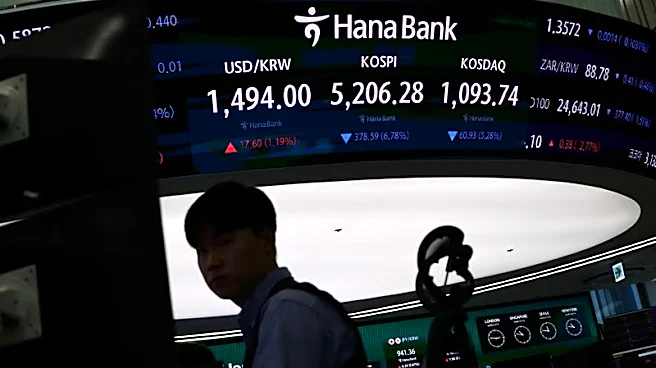
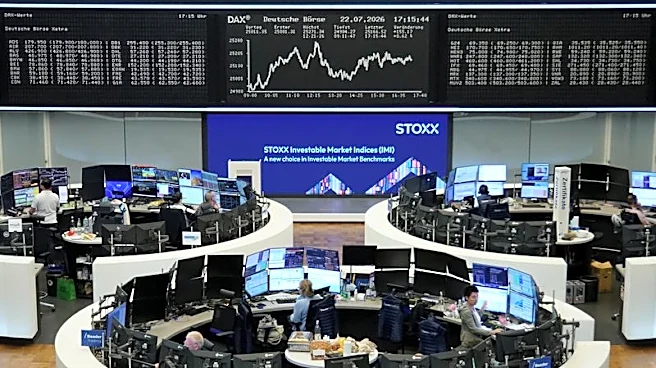
South Korea's stock market has experienced a significant downturn, with the KOSPI index dropping sharply over two consecutive sessions. The market lost approximately $2.18 trillion in value, marking one of the steepest monthly declines on record. The downturn was
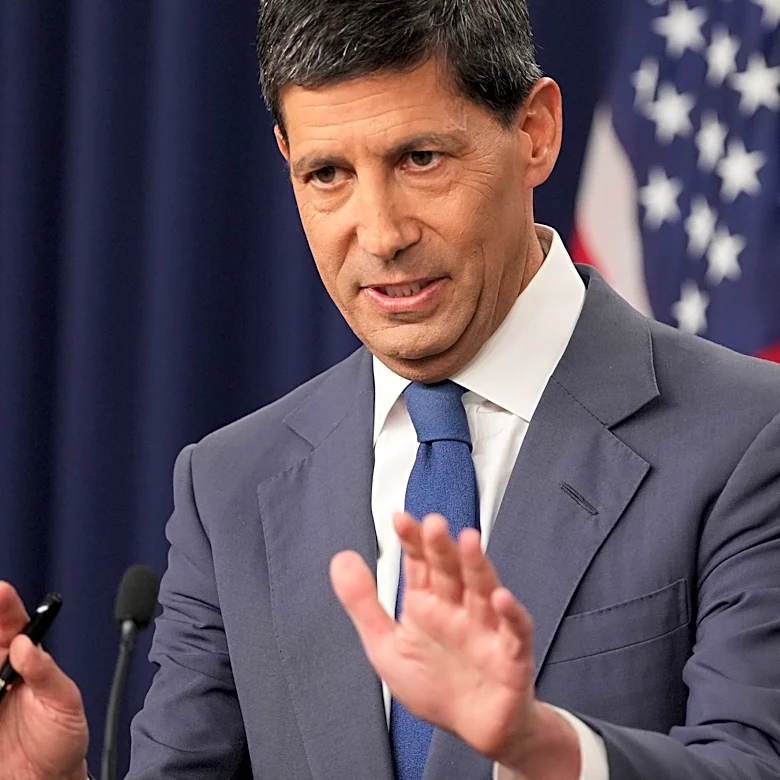
primarily driven by a decrease in interest in chip stocks, which had previously seen growth due to AI investments. Finance Minister Koo Yun-cheol apologized for the introduction of single-stock leveraged exchange-traded funds (ETFs), which have been blamed for increasing leveraged trading. The government is considering market stabilization measures, including further regulation of these funds. The Ministry of Finance plans to implement curbs on single-stock leveraged products, such as individual investment limits and higher trading costs, to deter excessive trading activity.
Why It's Important?
The sharp decline in South Korea's stock market highlights the volatility and risks associated with leveraged trading, particularly in tech stocks. The situation underscores the need for regulatory oversight to prevent excessive speculation that can destabilize financial markets. The losses have significant implications for retail investors and the broader economy, as they may lead to reduced consumer confidence and spending. The government's response, including potential regulatory changes, could set a precedent for how financial markets are managed in the future, impacting both domestic and international investors.
What's Next?
The South Korean government is expected to continue reviewing and implementing measures to stabilize the market. This includes potential restrictions on leveraged trading products and increased oversight of financial markets. The outcome of these measures will be closely watched by investors and financial analysts, as they could influence market behavior and regulatory approaches in other countries facing similar challenges. Additionally, the response from major stakeholders, such as financial institutions and investors, will be critical in determining the market's recovery trajectory.