





What's Happening?
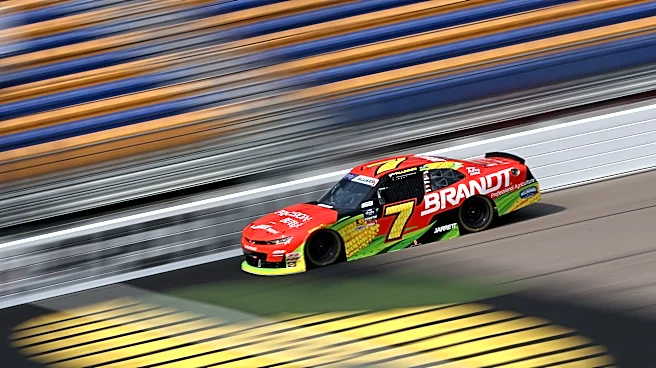
NASCAR races are known for their high-speed collisions, which are managed through advanced engineering and safety protocols. Teams invest heavily in simulations and wind tunnel testing to optimize how cars handle impact forces. The cars are designed with
crumple zones to absorb energy and protect the driver. NASCAR's regulations focus on predictability and cost control, enforcing uniformity in car design to ensure safety. The Gen-7 car is engineered to distribute impact energy across multiple vehicles, reducing the force on any single car. Safety measures include advanced helmets, fire-resistant suits, and HANS devices to protect drivers during crashes.
Why It's Important?
The safety measures in NASCAR are crucial for protecting drivers and maintaining the sport's integrity. By focusing on energy management and uniform car design, NASCAR reduces the risk of severe injuries during crashes. This approach not only safeguards drivers but also ensures the sport remains competitive and fair. The continuous evolution of safety protocols reflects NASCAR's commitment to driver safety and the sport's sustainability. The engineering advancements and regulatory changes in response to past incidents demonstrate NASCAR's proactive stance in minimizing risks associated with high-speed racing.