
What's Happening?
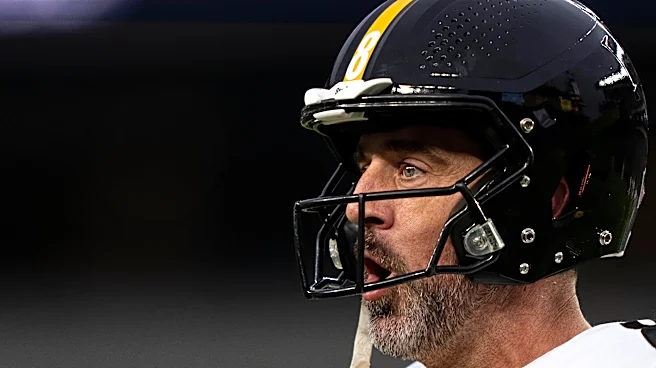
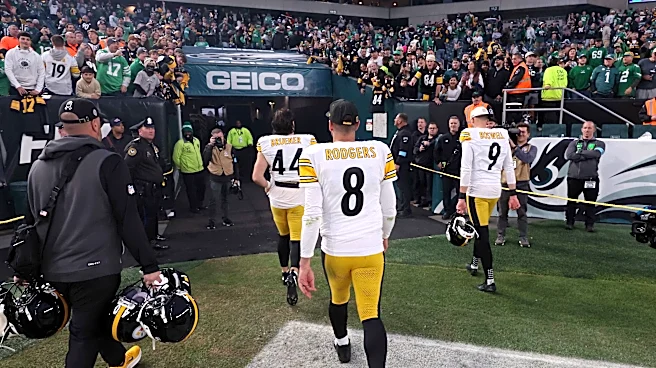
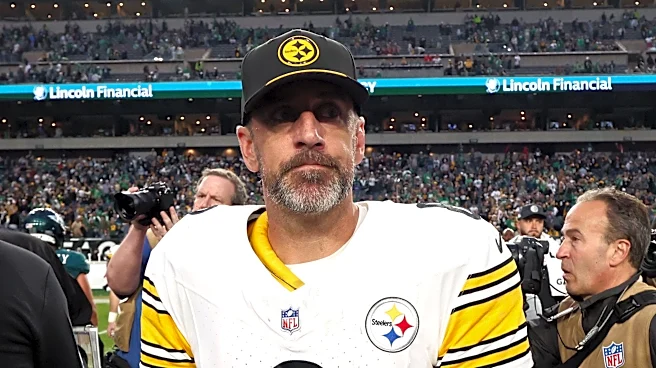
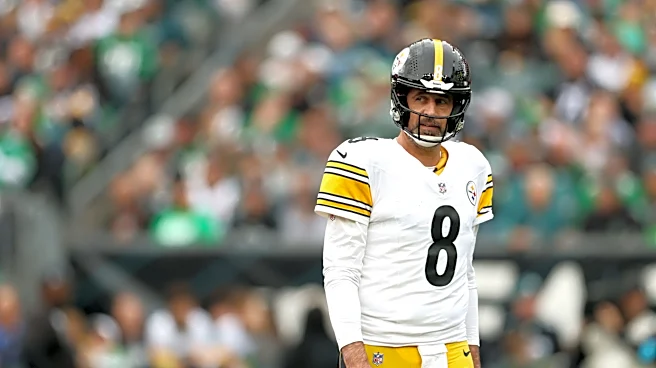
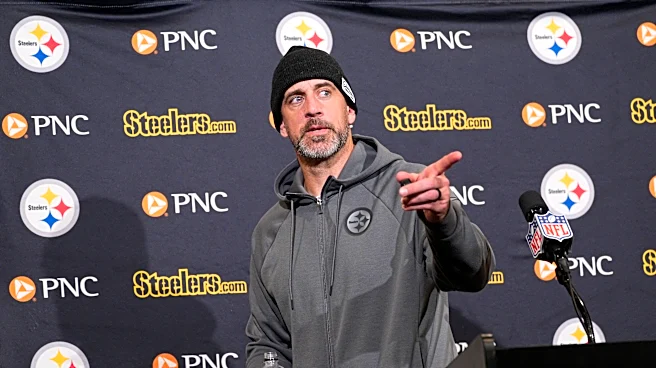
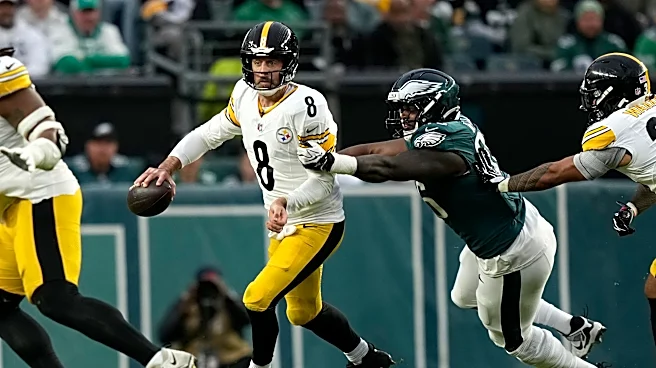
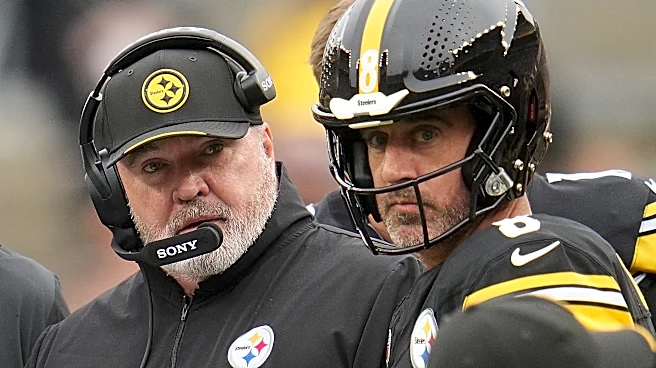
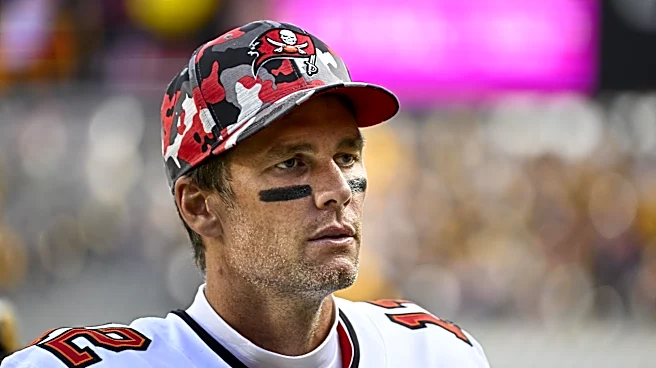
Tom Brady has publicly criticized Aaron Rodgers for his comments made after the Pittsburgh Steelers benched Rodgers for Mason Rudolph. Rodgers publicly lashed out at coach Mike McCarthy, accusing him of
falling asleep during team meetings and failing to connect with players. Brady stated that 'nobody wins when the family feuds' and emphasized the sanctity of an NFL locker room, suggesting that private matters should not become public. He described Rodgers' admissions as selfish, highlighting that a great teammate prioritizes the team's accomplishments over individual promotion. McCarthy, in response, took the high road, calling their discussions 'private conversations' and acknowledging a 'difference of opinion.' McCarthy and Rodgers had a 13-season working relationship in Green Bay, which included a Super Bowl XLV victory in 2011.
Why It's Important?
This public dispute between two prominent NFL figures, Tom Brady and Aaron Rodgers, underscores the delicate balance between individual player expression and team cohesion in professional sports. Brady's comments, coming from a highly respected veteran, reinforce the traditional values of locker room privacy and team-first mentality within the NFL. Rodgers' actions and subsequent criticism from Brady could influence how current and future players handle disagreements with coaching staff, potentially leading to more internal resolutions rather than public airing of grievances. The incident also highlights the pressures faced by coaches and players in high-stakes environments, where performance and team dynamics are constantly under scrutiny. The 'braintrust' that McCarthy and Rodgers once formed in Green Bay, leading to a Super Bowl victory, now serves as a stark contrast to their current public disagreement, illustrating the potential for even successful partnerships to deteriorate.
What's Next?
The immediate aftermath of Rodgers' comments and Brady's criticism will likely see continued discussion within sports media regarding player-coach relationships and the unwritten rules of NFL locker room conduct. While Rodgers has been benched, the long-term implications for his career and his relationship with the Steelers organization remain to be seen. The Steelers will need to manage the internal dynamics of their team, particularly as they move forward with Mason Rudolph as quarterback. Other NFL teams and players may observe this situation as a cautionary tale, potentially leading to a renewed emphasis on internal communication and conflict resolution to avoid similar public disputes. The incident could also spark broader conversations about the role of social media and public platforms in professional sports, and how athletes choose to voice their concerns.
Beyond the Headlines
The public feud between Aaron Rodgers and Mike McCarthy, and Tom Brady's subsequent commentary, delves into the deeper cultural aspects of professional sports. It highlights the tension between individual celebrity and team collective, a recurring theme in high-profile leagues like the NFL. Brady's emphasis on the 'sanctity of an NFL locker room' speaks to an unwritten code of conduct that values discretion and internal resolution over public confrontation. This incident could be seen as a reflection of evolving athlete empowerment, where players feel more comfortable voicing grievances, but also the enduring expectation of loyalty and unity within a team structure. The 'dumpster fire' description by former Steelers coach Mike Tomlin further illustrates the perceived damage to the sport's professional image when such disputes become public, raising questions about the long-term impact on player-coach trust and organizational stability.