





What's Happening?
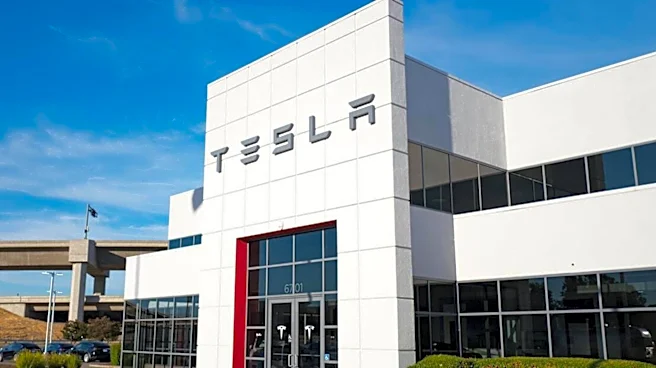
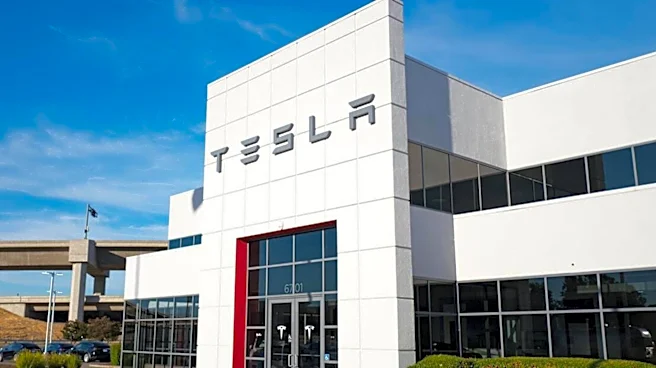
Tesla is actively campaigning to retain its chairwoman, Robyn Denholm, who faces a renewed push for removal from the board by influential investor advisory firms Institutional Shareholder Services (ISS) and Glass Lewis. These firms, which guide large
investors on voting at corporate meetings, are advocating for Denholm's ouster due to concerns over her support for large executive pay packages for CEO Elon Musk and allegedly poor governance. Denholm, who became chair in 2018, is up for re-election for a three-year term. Tesla is running paid advertisements on social media, featuring its cybercab self-driving taxis and humanoid robots, to highlight Denholm's accomplishments and defend her tenure. The company's ads direct shareholders to a website that criticizes the advisory firms' recommendations as 'myopic, misguided and based on misconceptions.' The re-election vote is scheduled for December 3.
Why It's Important?
The challenge to Robyn Denholm's position as Tesla chairwoman carries significant implications for corporate governance and shareholder influence within major U.S. technology companies. The push by ISS and Glass Lewis reflects a growing demand from institutional investors for greater accountability and transparency from corporate boards, particularly concerning executive compensation and board diversity. If Denholm is removed, it could signal a shift in power dynamics, empowering shareholders to exert more control over board compositions and corporate policies. Conversely, if Tesla successfully defends her position, it could reinforce the current board's autonomy and potentially set a precedent for how companies respond to shareholder activism. The outcome will also be closely watched as Denholm is involved in negotiating a potential merger between Tesla and SpaceX, a deal that could be the largest ever if it materializes, impacting the future trajectory of both companies and the broader technology and aerospace sectors.
What's Next?
The immediate next step is Tesla's annual meeting on December 3, where shareholders will vote on Robyn Denholm's re-election. Denholm requires a majority of votes cast to secure another three-year term. The ongoing social media campaign by Tesla aims to sway shareholder opinion in her favor, directly countering the recommendations from ISS and Glass Lewis. The outcome of this vote will determine the immediate future of Tesla's board leadership and could influence the ongoing discussions regarding the potential merger with SpaceX, where Denholm is a key negotiator. Should she be re-elected, it would likely strengthen the current board's position and its approach to governance and executive compensation. If she is not re-elected, it could lead to a significant shake-up in Tesla's leadership and potentially alter the course of the proposed merger and other strategic initiatives.
Beyond the Headlines
This situation highlights a broader tension between corporate boards and shareholder advisory firms regarding governance standards and executive compensation. The use of social media advertising by Tesla to directly address shareholder concerns and defend its chairwoman represents an evolving strategy in corporate communications and investor relations. This approach bypasses traditional channels and directly engages with the shareholder base, potentially setting a new precedent for how companies respond to activist investor pressures. Furthermore, the criticism from advisory firms regarding the board's lack of responsiveness to past shareholder votes on director terms and insufficient disclosure of board demographics points to deeper issues of corporate transparency and diversity within the technology sector. The outcome of this re-election bid could influence future corporate governance practices across the U.S. market, particularly concerning the balance of power between management, boards, and institutional investors.