








What's Happening?
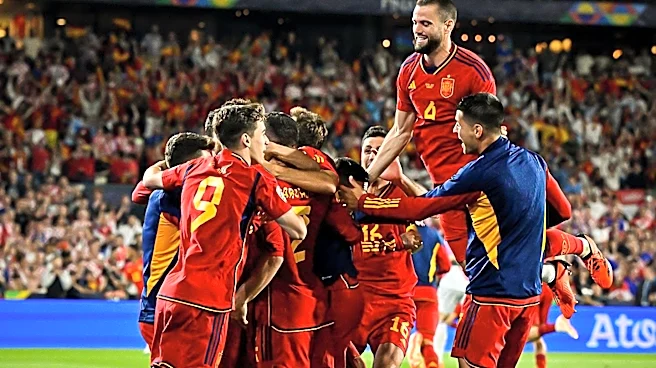
The 2026 FIFA Men's World Cup is reaching its climax with the final match set between Spain and Argentina. The tournament, which has seen 103 matches and nearly 300 goals, culminates in a highly anticipated showdown. Spain enters the final as the favorite
after a dominant performance against France in the semi-finals. Argentina, led by Lionel Messi, aims to secure their fourth World Cup title. The final is scheduled to take place in New Jersey, with Spain's tactical prowess and Argentina's attacking flair expected to create a thrilling contest. Predictions from various sources, including The Athletic's experts, a predictive algorithm, and even a six-year-old named Wilfred, all favor a Spanish victory.
Why It's Important?
The World Cup final is a significant event in international sports, drawing global attention and impacting national pride. For Spain, a victory would solidify their status as a dominant force in world football, potentially marking the success of a new golden generation. For Argentina, winning would not only add a fourth star to their jersey but also provide a fitting farewell to Lionel Messi's international career. The match also has economic implications, as it boosts tourism and global viewership, impacting advertising and sponsorship revenues. The outcome could influence future team strategies and player transfers in the international football market.
What's Next?
Following the final, the focus will shift to the aftermath and the implications for both teams. Spain's potential victory could lead to increased investment in their football infrastructure and youth development programs. For Argentina, regardless of the outcome, the focus will be on transitioning from Messi's era to a new generation of players. The World Cup's conclusion will also prompt discussions on the tournament's organization and the performance of the host cities. Additionally, attention will turn to the next World Cup cycle, with teams beginning preparations for the 2030 tournament.
Beyond the Headlines
The World Cup final between Spain and Argentina highlights broader themes in sports, such as the role of technology in predictions and analytics. The use of algorithms and data-driven insights in forecasting match outcomes reflects a growing trend in sports management. Additionally, the cultural impact of the World Cup extends beyond the pitch, influencing national identity and international relations. The tournament serves as a platform for showcasing talent and fostering global unity through sportsmanship and competition.