





What's Happening?
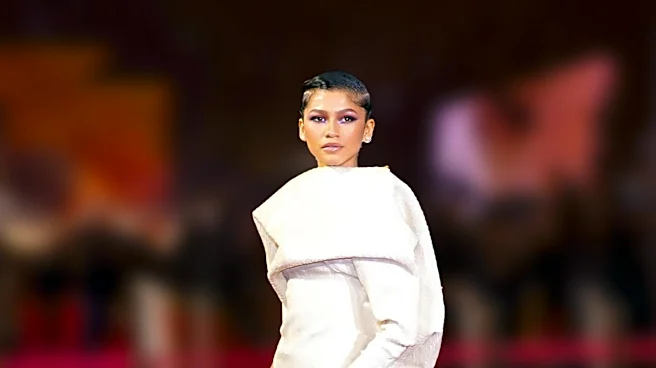
Zendaya and her 'image architect' Law Roach are being credited with popularizing 'method dressing,' a styling trend where actors wear outfits that visually or thematically align with the characters or films they are promoting. This approach extends the narrative
of their roles beyond the screen, creating memorable red-carpet moments. Examples include Zendaya's butterfly gown for 'The Greatest Showman,' futuristic and desert-inspired looks for 'Dune,' tennis-themed attire for 'Challengers,' and a 'something old, something new, something borrowed, something blue' concept for 'The Drama.' Roach, who has worked with Zendaya for over a decade, views his role as constructing a client's entire visual identity, using fashion as a form of storytelling rather than just selecting clothes. This collaborative effort has established Zendaya as a style icon whose fashion choices are as impactful as her acting career.
Why It's Important?
Method dressing, as exemplified by Zendaya and Law Roach, has significant implications for the entertainment and fashion industries in the U.S. It transforms red-carpet appearances from mere celebrity showcases into strategic marketing opportunities, generating heightened media attention and public engagement for films and television shows. This innovative approach elevates fashion to a critical component of a project's promotional campaign, influencing trends and setting new standards for celebrity styling. For designers and brands, being featured in a method-dressed ensemble offers unparalleled exposure and cultural relevance. Moreover, it encourages a deeper appreciation for the artistry behind fashion, demonstrating how clothing can convey complex narratives and character development. This trend also impacts how audiences perceive actors, blurring the lines between their on-screen personas and public image, thereby enhancing their star power and influence.
What's Next?
The success of Zendaya and Law Roach's method dressing is likely to inspire other actors and stylists to adopt similar strategic approaches to red-carpet fashion. This could lead to a more conceptual and narrative-driven era in celebrity styling, where each public appearance is meticulously crafted to tell a story. Fashion houses and public relations teams will increasingly seek to collaborate with talent to create these impactful moments, further integrating fashion into the broader entertainment marketing ecosystem. We may see a rise in bespoke creations and thematic collections designed specifically for promotional tours. The trend also suggests a future where celebrity fashion becomes an even more integral part of pop culture discourse, with fans and critics alike analyzing the deeper meanings behind each outfit choice. This evolution could solidify the role of 'image architects' as essential figures in the entertainment industry.
Beyond the Headlines
Beyond its immediate impact on fashion and entertainment, method dressing touches upon deeper cultural and psychological aspects of identity and self-presentation. The concept of 'dressing for the person you want to be' or 'the role you want to live' extends beyond celebrity, offering a powerful metaphor for personal growth and aspiration. It highlights how clothing can serve as a form of 'armor' or a visual language to narrate one's story without words, influencing first impressions and self-perception. This approach encourages individuals to consider their wardrobe as a tool for intentional self-expression and personal branding, whether in a professional setting or in daily life. Ethically, it raises questions about authenticity versus performance in public life, as celebrities meticulously craft their images. Culturally, it reinforces the idea that fashion is not merely superficial but a profound medium for communication, identity formation, and societal commentary, reflecting and shaping contemporary values.