
What's Happening?
RareX (ASX:REE) plans to file a procurement complaint by December 10, 2026, challenging the Government of Kenya's decision to award the Mrima Hill Niobium, Rare Earth Elements, and Other Minerals Development
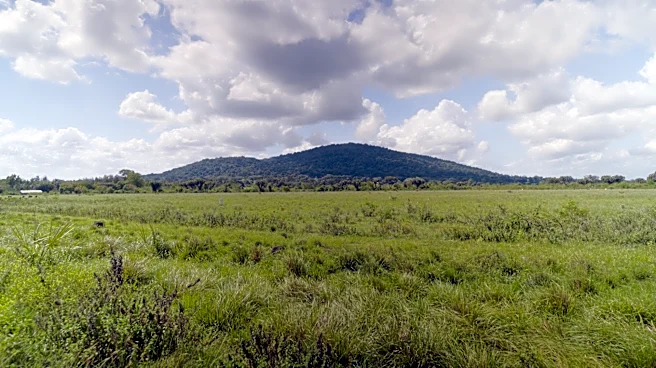
Project to a US-led consortium. The project, located in Kwale County, was awarded to the Frontier Minerals-led consortium, which includes Bunker Hill, ReElement Technologies, and American Resources Corporation (NASDAQ:AREC), following a multi-stage tender. RareX, in partnership with Iluka Resources (ASX:ILU), ranked second among the shortlisted bidders. RareX's complaint will argue that the winning bidder was ineligible to compete, specifically alleging that the Frontier Consortium missed the expression of interest deadline and was admitted to the tender under circumstances of serious administrative irregularity. The Mrima Hill deposit is valued at approximately US$62.4 billion and contains critical minerals like niobium, yttrium, thorium, strontium, and lanthanum.
Why It's Important?
This dispute highlights the intensifying global competition for critical mineral supply chains, particularly between the United States and China. China currently dominates about 90% of global rare earth processing, prompting the U.S. and its allies to seek alternative sources. The Mrima Hill project, one of the largest undeveloped rare earth and niobium deposits outside China, is crucial for securing minerals vital to defense, electric vehicles, and advanced electronics. A successful challenge by RareX could alter the strategic control over these resources, impacting U.S. efforts to diversify its critical mineral supply. The outcome will also test the transparency and fairness of international tender processes, potentially influencing future foreign investment and resource development in emerging markets. The project's development also carries implications for local communities and environmental concerns due to its location near a sacred forest area.
What's Next?
RareX intends to request a debriefing on its evaluation by November 26, 2026, before formally lodging its procurement complaint by December 10, 2026, with Kenyan legal advisers. The company will argue that the Frontier Consortium did not meet the necessary entry conditions. While RareX acknowledges there is no certainty its complaint will succeed, it seeks equal enforcement of threshold requirements under domestic legal protections. If the complaint is upheld, the award could potentially be redirected to the RareX–Iluka Consortium, which proposed a fully integrated supply chain with value addition in Kenya, including beneficiation in Kwale County and refining in Mombasa, with final separation in Australia. The resolution of this complaint will set a precedent for future critical mineral tenders in Kenya and potentially other nations seeking to develop their resource sectors.
Beyond the Headlines
The contest over Mrima Hill extends beyond a simple tender dispute; it reflects a broader geopolitical struggle for control over essential resources. The U.S.-led consortium's proposed award aligns with Washington's strategy to reduce reliance on Chinese-controlled supply chains for critical minerals. This situation underscores the ethical and legal complexities involved in international resource acquisition, particularly concerning the enforcement of tender rules and the potential for administrative irregularities. The involvement of a site sacred to local communities also raises questions about cultural heritage and environmental stewardship in the pursuit of economic development. The outcome could influence how developing nations manage their critical mineral assets, balancing national interests with international investment and environmental responsibilities, and potentially shaping new models for resource governance.