
What's Happening?
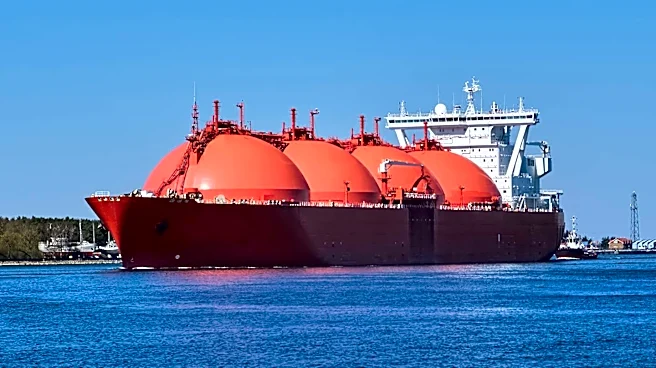
China is currently importing less liquefied natural gas (LNG) despite the onset of its peak demand season. This reduction is attributed to an abundant domestic gas supply, which has led to significantly
lower prices within the country. The Chinese national average for LNG stands at $21.97 per million British thermal units, nearly $10 below the Japan/Korea Marker benchmark, according to Bloomberg. State-owned energy majors in China have concluded their gas stockpiling efforts and are now releasing gas from their inventories. This sufficient domestic supply has made spot market LNG purchases less attractive for Chinese buyers. Earlier in the year, Chinese energy traders had already curbed LNG imports when prices exceeded $20 per mmBtu, with these curbs extending into September as prices remained elevated. Chinese gas buyers are also exploring alternatives to Middle Eastern LNG.
Why It's Important?
This development holds significant implications for the global LNG market, particularly for other Asian importers and Europe. With China, one of the world's largest and most price-sensitive LNG buyers, reducing its imports, more LNG becomes available on the spot market. This increased availability can help alleviate supply concerns and potentially stabilize or lower prices for other nations scrambling to secure gas for the winter. European buyers, who often have deeper pockets and can outbid Asian counterparts when prices are high, may find more favorable conditions. The shift in China's purchasing behavior, driven by domestic supply and price sensitivity, underscores the interconnectedness of global energy markets and how a major player's internal dynamics can ripple outwards, affecting energy security and pricing for numerous countries.
What's Next?
The continued abundance of domestic gas in China and its impact on LNG import decisions will likely influence global LNG pricing and availability in the coming months. Other Asian and European importers will closely monitor China's purchasing patterns as they continue to build their winter reserves. Should China maintain its reduced import levels, it could contribute to a more balanced global LNG market, potentially easing price pressures that have been observed in recent times. The situation also highlights the ongoing strategic importance of domestic energy production and stockpiling for major economies to mitigate reliance on volatile international markets. Future developments in China's domestic gas production and consumption will be key factors in shaping the global LNG landscape.
Beyond the Headlines
The situation in China reflects a broader trend among major economies to enhance energy independence and resilience. By prioritizing domestic gas supply and strategic stockpiling, China is demonstrating a proactive approach to energy security, which could serve as a model for other nations. This move also has environmental implications, as a shift towards greater domestic gas utilization could influence the country's energy mix and carbon emissions targets. Furthermore, the dynamic interplay between domestic supply, international spot prices, and geopolitical factors, such as the search for alternatives to Middle Eastern LNG, underscores the complex challenges and opportunities in the global energy transition. The long-term impact on global energy trade routes and supplier relationships will be a critical area to watch.