

What's Happening?
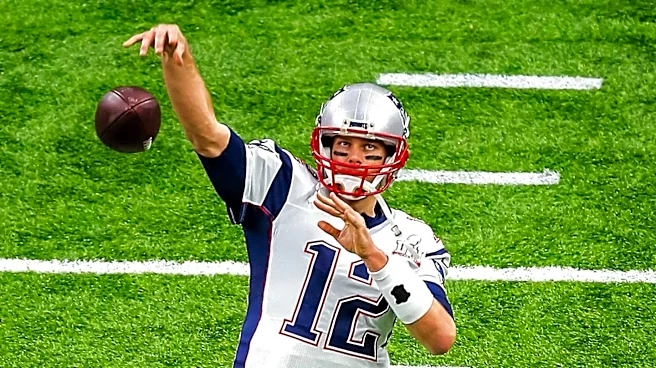
Tom Brady, the seven-time Super Bowl champion, has voiced his disapproval of the growing trend among NFL players to sit out preseason games. Brady shared an old clip of himself playing deep into a 2010 New England Patriots preseason game on his Instagram
Story, stating, “Preseason… Regular season… I never wanted to be taken off the field. Practice makes perfect.” He added, “Too many people looking for easy ways out these days.” In the 2010 game, Brady played through the first offensive series of the fourth quarter, completing 18 of 22 passes for 273 yards and three touchdowns, achieving a perfect 158.0 passer rating. This performance occurred despite him already having three Super Bowl rings and two Super Bowl MVP awards at that point in his career. Brady concluded his statement by asserting, “When you’re a football player, and it’s football season, your job is to play football.”
Why It's Important?
Brady's comments highlight a significant debate within the NFL regarding player safety, team strategy, and the value of preseason games. With the NFL now playing 17 regular-season games, coaches often prioritize protecting their star players from potential injuries in what are considered less meaningful exhibition matches. However, Brady's perspective emphasizes a traditional view of dedication and continuous engagement, suggesting that skipping games, even preseason ones, reflects a lack of commitment or a search for an 'easy way out.' This creates a tension between player welfare and the competitive ethos that has long defined professional sports. His remarks could influence younger players' attitudes towards preseason participation or spark further discussion among coaches and team management about balancing player health with competitive readiness and the development of team chemistry.
What's Next?
Brady's strong stance may prompt further discussion among NFL players, coaches, and the league itself regarding the role and importance of preseason games. While it's unlikely to immediately change established practices of resting key players, it could lead to a re-evaluation of how teams approach preseason preparation and player development. Some players might be inspired by Brady's work ethic to seek more playing time, while others may continue to prioritize injury prevention. The league might also consider adjustments to the preseason format or rules to address these concerns, potentially exploring ways to make these games more meaningful or to better integrate player development with star player participation. The debate will likely continue as the league balances competitive integrity with the long-term health and careers of its athletes.
Beyond the Headlines
Beyond the immediate implications for NFL preseason games, Brady's comments touch upon broader themes of work ethic, resilience, and the changing culture of professional sports. His perspective, rooted in an era where playing through minor discomforts and maximizing every opportunity was more common, contrasts with a modern approach that often prioritizes long-term health and strategic rest. This shift reflects evolving understandings of sports science, player longevity, and the financial investments teams make in their athletes. Brady's statement can be seen as a call for a return to a more 'old-school' mentality, where every moment on the field is valued, regardless of its official significance. This cultural tension between traditional grit and contemporary player management will likely continue to shape the landscape of professional sports, influencing how athletes are trained, managed, and perceived by fans and peers alike.