

What's Happening?
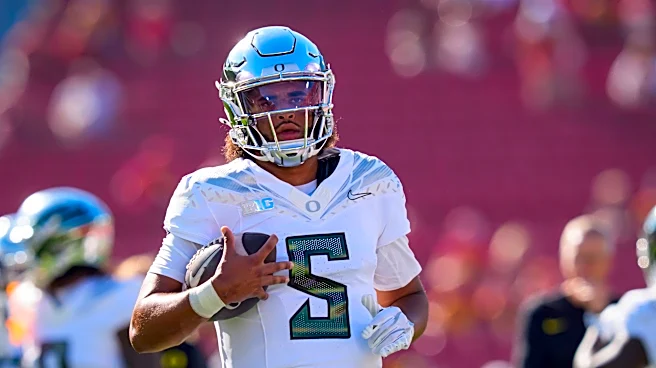
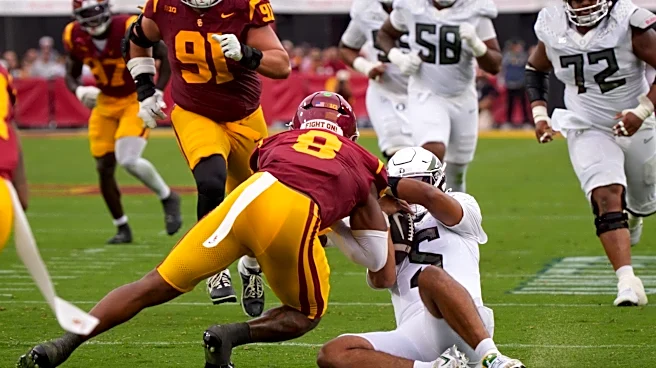
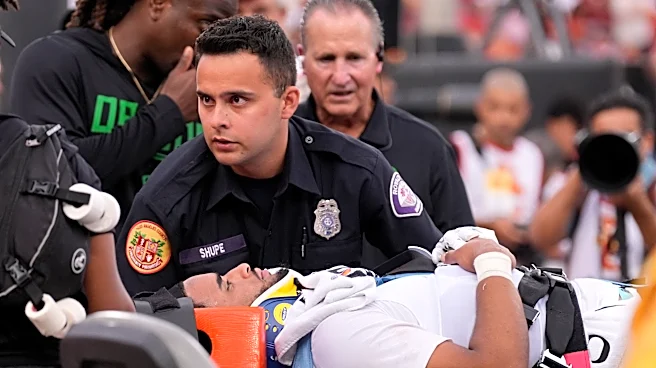
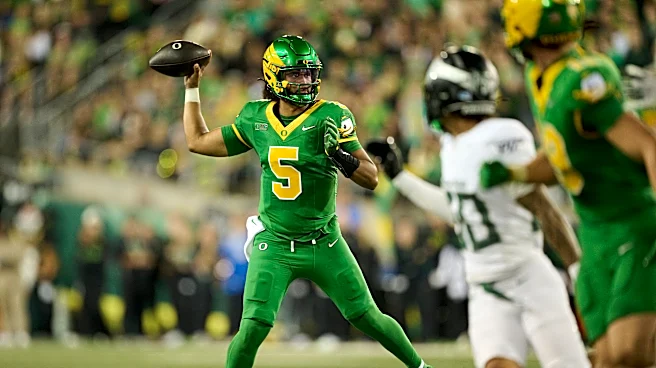
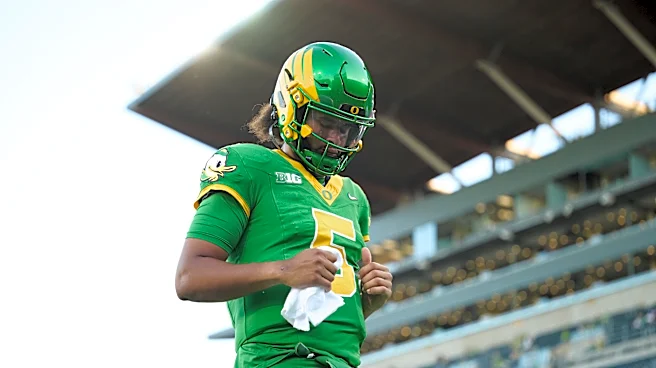
USC Trojans coach Lincoln Riley expressed concern for Oregon Ducks quarterback Dante Moore after Moore sustained a brutal hit during a college football game. The incident occurred when USC linebacker Desman Stephens II delivered a targeting hit on Moore as
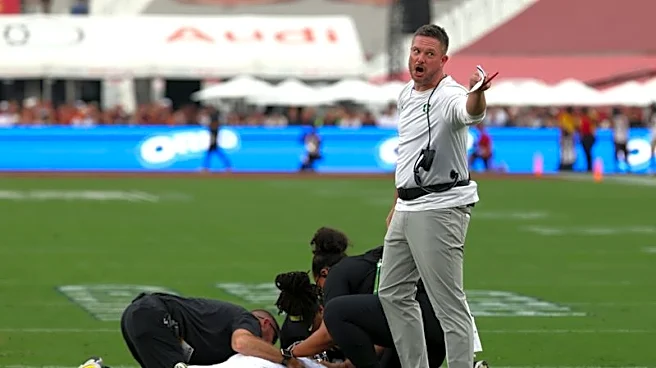
he was sliding, leading to Stephens' ejection from the game. Moore remained motionless on the field and was eventually transported to LA General Medical Center for evaluation. Riley stated at his press conference, 'First of all, I want to say that I hope Dante is OK. You never want to see that out of any opponent. No matter how competitive the game gets. These are all people at the end of the day on both sides. So we wish him a speedy recovery.' He also clarified that he did not witness Stephens celebrating the hit.
Why It's Important?
This incident highlights the ongoing concerns about player safety in college football, particularly regarding hits to defenseless players. The targeting rule is in place to protect athletes from severe injuries, and this event underscores the critical need for its enforcement. The immediate and visible concern from a rival coach like Lincoln Riley emphasizes the shared understanding among coaches and players about the inherent risks of the sport and the importance of sportsmanship, even in highly competitive environments. The injury to Dante Moore, a quarterback with significant preseason expectations, also has substantial implications for the Oregon Ducks' season, potentially affecting their performance and championship aspirations. Such high-profile injuries often reignite discussions about rule changes, coaching techniques, and player education to minimize dangerous plays.
What's Next?
Dante Moore's immediate future involves medical evaluation and recovery, with the extent of his injury and his return timeline yet to be determined. This will significantly impact the Oregon Ducks' quarterback situation and their strategy for upcoming games. For the USC Trojans, the incident may lead to internal reviews of player conduct and coaching on targeting rules, despite Riley's statement about not seeing any celebration. The broader college football community will likely continue to discuss player safety, targeting penalties, and the responsibility of coaches and players to ensure fair play. This event could also influence officiating standards and the interpretation of targeting rules in future games, potentially leading to stricter enforcement or further clarification of guidelines.
Beyond the Headlines
Beyond the immediate impact on the teams and players involved, this incident touches upon the ethical dimensions of competitive sports. The tension between aggressive play and player safety is a constant challenge in football. While the targeting rule aims to mitigate dangerous hits, the intensity of the game can sometimes lead to actions that result in severe consequences. Lincoln Riley's public expression of concern, despite the rivalry, underscores a fundamental human element in sports—acknowledging the well-being of an opponent. This event also contributes to the ongoing societal conversation about the long-term health risks associated with football, particularly head injuries, and the moral obligations of sports organizations to protect their athletes. It serves as a stark reminder of the physical toll the sport can take and the need for continuous efforts to make it safer.